









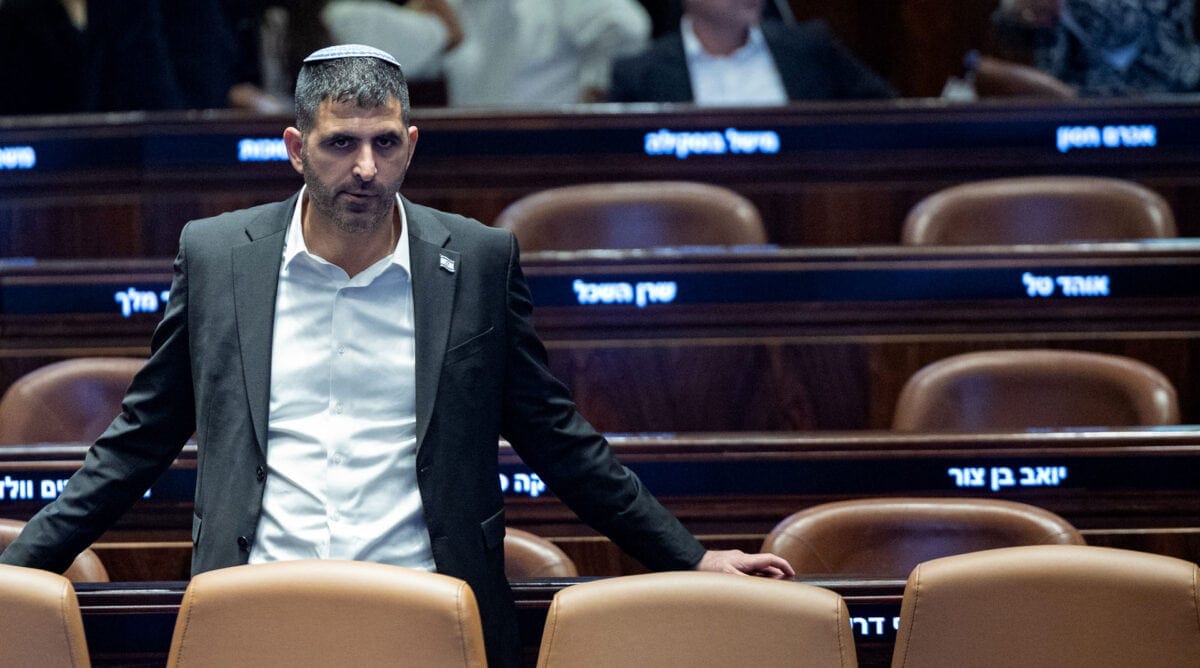


Supreme Court judges stopped the power move by Communications Minister Shlomo Karhi, which led to the shutdown of the Second Authority Council – and paved the way for approval of the deal intended to save Channel 13. In a decision issued on June 17, the judges expressed "strong suspicion" that Karhi had tried to undermine and invalidate earlier court decisions.
The basis for the decision, and the sharp judicial criticism leveled at the minister, was described in petitions filed against Karhi and the Netanyahu government as an attempt to carry out a political takeover of the Second Authority, a regulator whose job is to oversee commercial television and radio broadcasts in Israel.
In March of this year, the government hastily dissolved the Council and appointed in its place a new, ultra-political Council headed by Dr. Yifat Ben-Hai Segev. Several of the petitioners claimed that one of the motives for the appointment was to thwart the transfer of control of Channel 13 to the philanthropic Merit Spread Foundation, which is supported by a group of high-tech entrepreneurs who are unpalatable to Prime Minister Benjamin Netanyahu.
The new Council includes increased representation of members with personal ties to the government, including two prominent Netanyahu mouthpieces: media figures Kinneret Barashi and Chaim Shein. The chairwoman, Ben-Hai Segev, is a witness in "Case 4000," the prime minister's bribery case, and used her testimony in order to attack Netanyahu's investigators and recant her original version.
Five petitions filed against the government move caused the High Court of Justice to freeze the activities of the new Council and revive the previous Council, headed by former Director General of the Ministry of Communications Mordechai Mordechai.
As revealed by The Seventh Eye, shortly thereafter members of the old Council began receiving calls from Elad Zamir, Karhi’s chief of staff, who urged them to resign out of "commitment" to the minister. Seven of them complied – and the Council was neutralized. Karhi and Zamir hid the move: They did not respond to press inquiries, and one of the Council members who resigned, Dr. Marlyn Vinig, stated in an affidavit that Zamir asked her to keep their conversation secret.
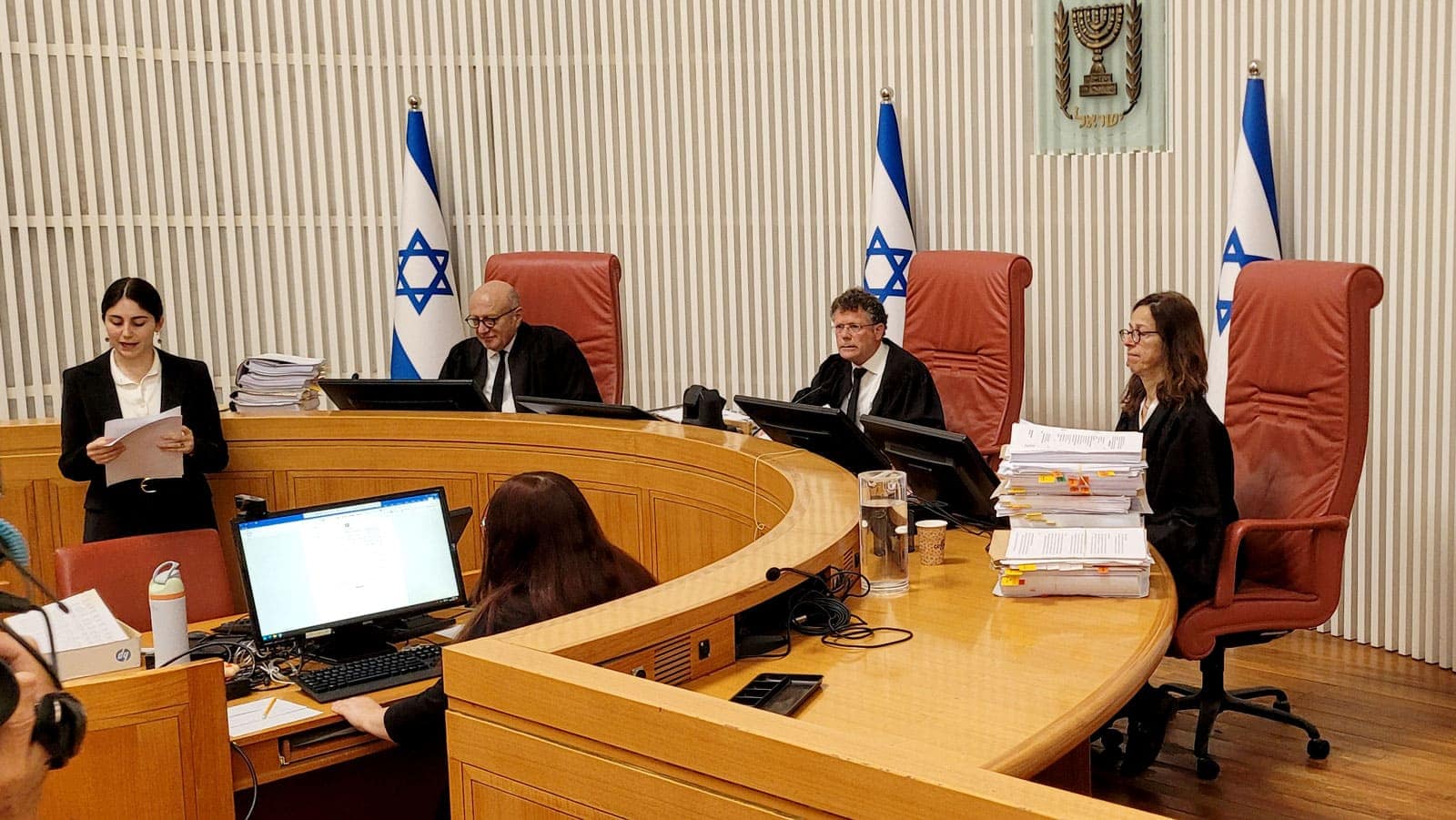
Justices Yitzhak Amit (center), Ruth Ronnen and Alex Stein. The Supreme Court, June 16, 2026 (Photo: Itamar Benzaquen)
Minister Karhi and the resigning Council members were forced to admit to the existence of the pressure campaign only later, by order of the High Court, following requests that relied on revelations by The Seventh Eye and The Marker, where the existence of the campaign was first revealed.
The affidavit of Dr. Vinig, who tried to withdraw her resignation after understanding Karhi's objective, provided for the first time a detailed and personal picture of the conversation with the minister's chief of staff. "The conversation was conducted in a manipulative manner to demonstrate to me the feasibility of this resignation," Vinig wrote. "He continued to persuade me on this matter, emphasizing that the minister was the one who extended my term." Karhi refused to reinstate Vinig to her position, and later fired another Council member, Isfahan Bahloul.
In a hearing held yesterday before Supreme Court President Yitzhak Amit and Justices Alex Stein and Ruth Ronnen, representatives of the government and the suspended Council tried to argue that Karhi’s chief of staff had merely informed the members about the minister's position – and that he had no way of imposing it on them. The decision reached a day later indicates that the High Court rejects this argument out of hand.

Elad Zamir, advisor of Communications Minister Shlomo Karai (Photo by Yonatan Sindel/Flash90)
"A review of the minister's affidavits and the affidavits of the resigning Council members raises a serious suspicion that their resignations were intended solely to thwart previous decisions made by us in this proceeding, while obstructing this court's ability to clarify the entirety of the claims at issue," wrote Justices Amit, Stein and Ronnen in their decision.
"These words are said, among other things, in light of the picture emerging regarding the involvement of the minister or a person on his behalf in the dismissal decisions, while directly addressing the resigning Council members; the puzzling proximity of the resignation decisions between themselves, and between them and the minister's appeals and the court's decisions; and the fact that most of the resigning Council members chose to resign only from the 'outgoing' Council, while insisting on their desire to serve on the 'incoming' Council."
The judges ruled in an interim order that the conduct of the resigning Council members was inconsistent with their duty of loyalty, and decided not to recognize the collective resignations. Following the resignations, the Council was left with fewer than ten members, a situation that, according to the Second Authority law, automatically deprived it of its powers.
"In these unique and exceptional circumstances, and in order to prevent deliberate failure and paralysis of the Council's activities during the interim order period and in the period until the ruling in the petitions is issued – we found it appropriate to determine that at this stage the resigning Council members will not be taken into account in the matter of the quorum of the 'outgoing' Council members, with all that this implies," the judges ruled.

Yifat Ben-Hai Segev with Channel 13 News journalists Matan Hodorov and Noga Nir-Neeman, and Journalists' Association representatives Haim Har-Zahav and Anat Saragusti. The Supreme Court, June 16, 2026 (Photo: Itamar Benzaquen)
The judges also saw fit to remove a restriction included in previous orders: Last month, when the council headed by Mordechai Mordechai was temporarily reappointed, the High Court ruled that it would not be allowed to make decisions on "essential" matters. This ruling prevented the temporary Council from discussing the sale of Reshet 13.
In the new decision, the judges ruled that this restriction is no longer in effect – and in fact authorized the Council to discuss the Reshet 13 deal and other substantive issues until a final verdict is issued. The judges made it clear that the ultra-political Council appointed by the government, headed by Dr. Ben-Hai Segev, will remain suspended until further notice.
The petitions against Karhi and the Netanyahu government were submitted by the Union of Journalists in Israel, News 12, the Movement for Quality Government, the Israel Press Council, and the Association for the Preservation of Legal Values, better known as the "Black Robes Protest."
Karhi in response: I will not respect the High Court's decision
Shortly after the publication of the High Court's decision, Minister Karhi released a message in which he attacked the judges and announced that he did not recognize their authority. "The High Court is not above the law, and therefore no matter what it rules, we will win. Democracy will defeat the dictators in robes who decide time after time to trample on the law. Like a vesture shalt thou change them, and they shall be changed. Soon, God willing," the minister wrote in a message published on his social media accounts.
Karhi claimed that the decision was illegal, based on a section of the Second Authority law that deprives the Council of its powers if its members number fewer than ten. "Since the High Court does not have the authority to overturn the law, in practice neither this decision, nor any decision made by the remaining seven Council members, has any legal validity," he wrote.
Actually, in a hearing held yesterday at the High Court, a legal interpretation was presented according to which the validity of the section to which Karhi referred is not absolute — and can be bypassed in exceptional cases such as the one created by the minister. The judges' decision recognizes this interpretation.
This article was published in Hebrew on June 17, 2026
Translation: Harriet Brown