








One of the key points that a future Israeli state investigation committee into the Gaza war will investigate is the connection between the October 7 massacre and the Qatari money that Prime Minister Netanyahu approved transferring to Hamas, including through suitcases full of dollars.
Since the outbreak of the war, Prime Minister Netanyahu has continued to help fund Hamas, this time through his total control of the entry of humanitarian aid to the Gaza Strip.
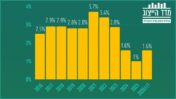
There is no dispute that Hamas loots some of the aid that comes in, hoards it and sells it at exorbitant prices to the starving population. Mida website, which is affiliated with Netanyahu's supporters, claimed that between December 2023 and July 2024, Hamas earned about $700 million in this way. In January 2025, a "senior security source" told Israel Hayom that "sales from international aid are the organization's largest source of income." On June 12, Carmela Menashe published on Kann News that "the IDF has revealed intelligence findings that shed light on how Hamas tried to take control of the aid that entered the Strip."
Prime Minister Netanyahu has used this to justify his decisions to limit and stop the entry of aid, and more recently, to allow it only through the Gaza Humanitarian Fund (GHF). For example, in a video from May 19, he said, "We decided to provide minimal aid, but we discovered that Hamas was looting some of the aid, so we stopped it."
It is clear that the fund, which is run in complete chaos and by definition is intended to distribute only "a minimum amount of food," will not solve the enormous shortages that exist in the Strip and is not a real substitute for the UN and international aid organizations. On some days of the week, its distribution sites were closed and on others they were looted by hungry crowds. A week after starting its operations, the fund simply placed the food boxes outside the distribution sites and claimed that "local merchants" would collect and distribute them themselves. From time to time, hungry Gazans waiting to receive food are shot dead by Israeli soldiers.
Prime Minister Netanyahu, who defines himself as "Mr. Economy," knows full well that when supply is low and demand is high, prices rise. Therefore, when the prices of eggs, dairy products, honey, and more rose in Israel, the governments he led decided to increase import quotas and reduce tariffs. Netanyahu usually takes credit for using this simple economic "trick" to lower prices, and from time to time his office issues statements stating that he was the one who "ordered" it.
In contrast, in the Gaza Strip, Prime Minister Netanyahu is doing exactly the opposite. Only the ones who benefit from the price increases are not the grocery and retail chains and their shareholders, but Hamas.
If Prime Minister Netanyahu wanted to economically collapse Hamas, instead of creating a shortage, he would have allowed the Gaza Strip to be flooded with humanitarian aid. In this way, not only would the horrific famine from which the civilians are suffering be avoided, but it would also have caused a drop in prices that would reduce Hamas' profits from the sale of loot.
But instead of depriving Hamas of one of its main sources of income, it is more important for Prime Minister Netanyahu and his government partners to conduct a policy of "medieval" siege on the Gaza Strip.
As long as Hamas has sources of income, and an inexhaustible pool of new fighters that it can pay, there is no reason for the terrorist organization to surrender or flex.
The Israeli public, which is largely indifferent to the suffering and hunger in Gaza, instead of thinking about how egg prices work in the supermarket near home, mostly buys the Netanyahu government's false statements that there is wisdom behind the siege policy and that it will lead to the defeat of Hamas.
Stopping the famine in the Gaza Strip and flooding it with humanitarian aid is a moral and diplomatically veracious position.
The article was first published in Hebrew on June 18