








The decision by IDF Chief of Staff Lt. Gen. Eyal Zamir to pursue legal action against those involved in the provocative documentary NAZA (“Collateral Damage”) brings to mind the famous saying attributed to the Bourbons: “They learned nothing and forgot nothing.”
The Bourbon monarchy, restored to power after the French Revolution, refused to understand that the world had changed. It refused to forgive, sought revenge and ultimately lost power again.
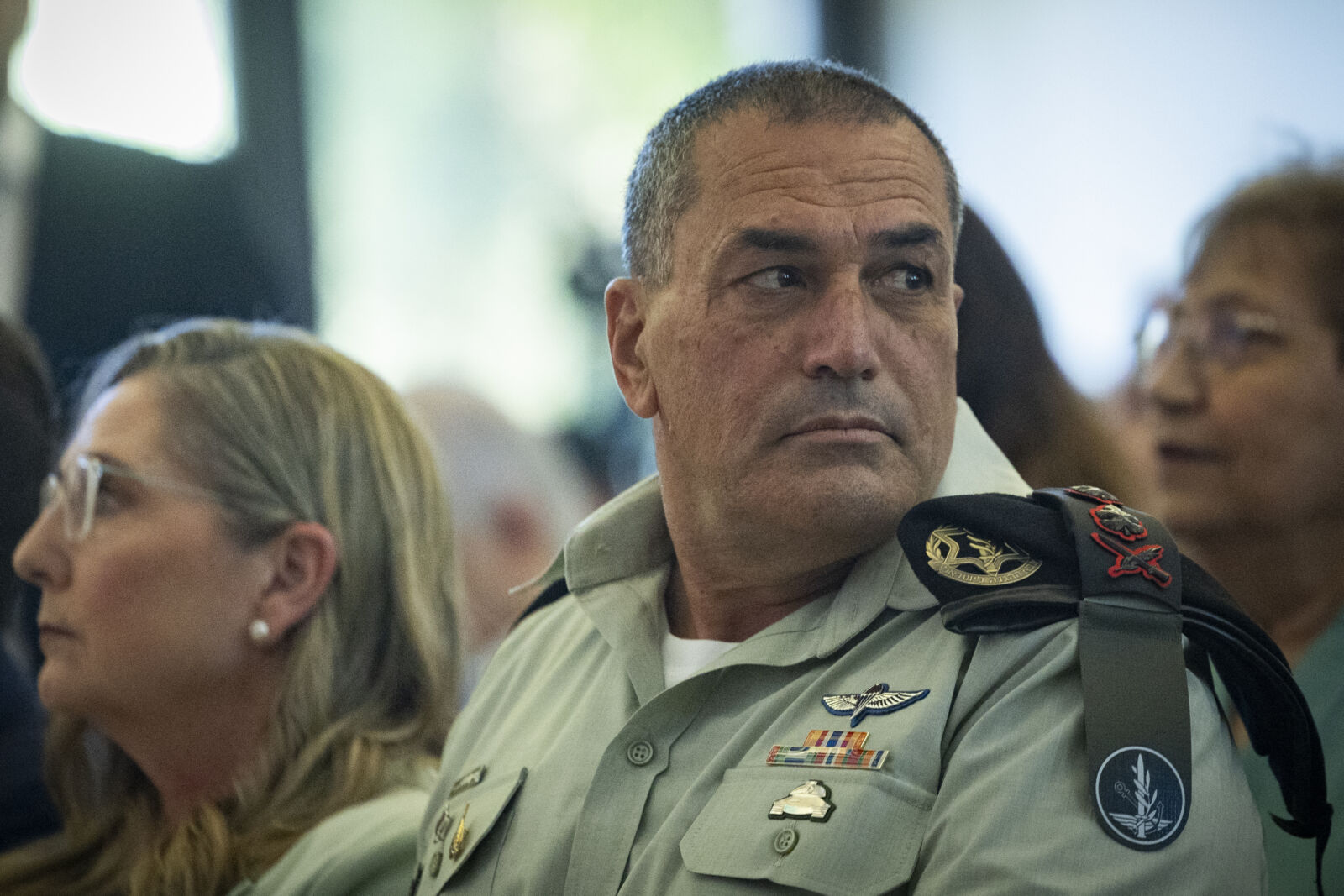
Zamir convened senior General Staff officers and instructed them to examine whether legal action could be taken against the film’s creators and whether disciplinary action could be taken against the soldiers and officers interviewed for it.
The film contains disturbing testimony about unlawful acts by IDF soldiers–acts that, if substantiated, could amount to war crimes or, according to some interpretations, even genocide. It won the Special Jury Prize at the Venice Film Festival and received a 25-minute standing ovation.
Zamir himself had not seen the film. According to the IDF spokesperson, the filmmakers, Yuval Abraham and Rachel Szor, refused a request to allow the IDF to view it. The spokesperson said that “the Chief of Staff stressed that this was a deliberate attempt to directly undermine the legitimacy of the IDF and the State of Israel,” despite the fact that “the IDF acts in accordance with international law, the Spirit of the IDF and its values, and leads the effort to minimize harm to non-combatants, while maintaining a ratio of harm to non-combatants relative to terrorists that is significantly lower than that of other armies around the world.”
It is highly doubtful that this decision and whatever follows it will produce the results Zamir hopes for. At most, the IDF could sue the filmmakers for defamation under Israel’s Defamation Law. If it did, the testimony could be heard in court for years, long after the film has left the headlines.
Identifying the people interviewed for the film will be very difficult. They appear with their faces in shadow and do not identify themselves by name. In any event, since most, if not all, are civilians who have completed their military service, the Military Police Criminal Investigation Division would need help from the Shin Bet, Israel’s internal security service.
In the past, Shin Bet chiefs have been reluctant to pursue investigations aimed at identifying leakers, particularly when journalists were involved. Yuval Diskin was very hesitant to comply with then-Chief of Staff Lt. Gen. Gabi Ashkenazi’s demand that he investigate the leak of thousands of classified documents to Haaretz reporter Uri Blau.
Only because of the unwise conduct of Haaretz’s editors, Blau, and their lawyers did Diskin become deeply involved in the affair. In 2009, he exposed the source: Anat Kamm, who had completed her military service and was then a student and a junior journalist at the Walla! news website. She was arrested, confessed, tried, and sentenced to three and a half years in prison.
Once again, by the time all the investigations and legal proceedings have run their course, the filmmakers, producers, and distributors will have enjoyed free publicity that will only amplify the film’s reach to an even larger audience.
In other words, the chief of staff and his advisers will become the film’s leading publicists and marketers.
This is precisely what happened in 1990, when Mossad director Shabtai Shavit adopted a vengeful “justice at any cost” approach in an attempt to prevent the publication of a book by the former Mossad trainee Victor Ostrovsky. Shavit sent two senior Mossad operatives to Canada to persuade Ostrovsky not to publish the book. When they failed, Shavit and his legal advisers went to courts in Canada and the United States to prevent its distribution.
Shavit had either forgotten–or never heard of–the First Amendment to the U.S. Constitution, which enshrines freedom of expression and the press: the right of citizens and journalists to express opinions, publish information, and criticize the government without censorship.
The result was that, thanks to Shavit, Ostrovsky’s book–large portions of which were fabrications born of his fertile imagination–became an international bestseller and made Ostrovsky a wealthy man.
The Mossad learned its lesson. Since then, it has ignored several books published by former personnel or people who had assisted the agency, in violation of employment contracts that required them to keep secrets.
If Zamir were smart, rather than merely driven by a desire to prove that he is right, he could simply ignore the film and the hype around it and let the storm subside.
But the chief of staff is captive to the spirit of the times: a sense of victimhood, a fervent belief in Israel’s righteousness, a desire for revenge, an unwillingness to examine facts or apologize when necessary, and, of course, the incendiary frenzy of social media.
Zamir has decided that he must appease the angry mob–the one in the streets and the one in government. Among them is Culture Minister Miki Zohar, who has called for the filmmakers to be stripped of their Israeli citizenship. Incidentally, the populist politician Yosef Lapid, father of Yesh Atid chairman Yair Lapid, once called for Ostrovsky to be killed.
I have not seen the film and do not know its creators. But based on interviews I have conducted with several people who have seen it, as well as other testimony, my impression is that the accounts are indeed shocking, while the film itself is rather simplistic and stripped of historical context.
It says very little about the circumstances that led Israel to commit atrocities in Gaza in the wake of Hamas’s massacres, rapes, looting, and arson in the communities around Gaza on October 7, 2023.
The film also lacks a comparative examination of the concept of collateral damage, coined in the 1960s by the American economist and strategist Thomas C. Schelling. Civilian casualties in wartime are as old as war itself, but the term was a sanitized euphemism devised by the U.S. military and became part of its official jargon during the Vietnam War.
In the wars in Iraq and Afghanistan, the U.S. military used a rigid numerical threshold known as a “non-combatant casualty cutoff value.” It set the maximum number of civilians a commander in the field was allowed to kill “incidentally” while striking a target without requiring special approval from higher political or military authorities, such as the secretary of defense or the president.
These thresholds changed drastically between theaters of war and at different stages of the conflicts, in keeping with American political and strategic interests. At the beginning of the Iraq War–during the invasion and the campaign to eliminate senior regime figures–the cutoff was set at 29 or 30 innocent civilians.
This meant that if a collateral-damage assessment found that a strike on a senior figure, such as Saddam Hussein or another key member of the regime, would kill fewer than 30 civilians, approval could be granted immediately at the field-command level. If the expected number was higher, the attack required the personal authorization of Defense Secretary Donald Rumsfeld.
In Afghanistan, the cutoff was reduced significantly, to a single civilian casualty in some circumstances. Yet in both theaters there were exceptional cases in which many dozens of civilians were killed.
The IDF has adopted this approach but does not disclose its own cutoff value for collateral harm to non-combatants. This lack of transparency gives the military room to be flexible with the facts and to justify civilian casualties after the fact.
The chief of staff’s decision–which included a call on government ministries to fight back through “proper public diplomacy”–is rather pathetic.
Even if you are waging a just war, you cannot justify it after killing approximately 70,000 people–about 3 percent of Gaza’s population–including tens of thousands of women and children, and destroying or severely damaging about 70 percent of its buildings.
Not to mention the soldiers and officers, including some very senior ones, who took the law into their own hands, acted without authorization and beyond their authority, violated orders, and allegedly committed war crimes.
Even without NAZA, Israel has already been irreversibly branded as a state that deliberately committed war crimes. That should come as no surprise. When ministers, members of the Knesset, and former generals such as Giora Eiland called for Gaza to be flattened, for nuclear bombs to be dropped on it, or for its population to be starved, they supplied–in their own words–the evidence that fuels world public opinion accusing Israel of war crimes and, in some quarters, genocide.
If the two chiefs of staff who have led the Gaza war–Herzi Halevi and Eyal Zamir–had devoted even a fraction of the energy they have invested in denouncing the whole world to holding their own subordinates to account–by thoroughly investigating violations of orders and the laws of war and punishing those responsible–Israel’s standing in global public opinion might have been better.
Today, no public-relations campaign, and certainly no punishment of journalists or documentary filmmakers, will erase the mark of Cain stamped on Israel’s forehead for generations to come.
This article was published in Hebrew on September 14, 2026.