












“We are facing a Prime Minister who, in the midst of a war that has raged since the murderous Hamas attack of October 7th, while hostages are still being held in Gaza, is preoccupied with filing a series of SLAPP lawsuits. The sole purpose of these lawsuits is to shut down any public discussion about his own ties, and those of his office, to the enemy state of Qatar,” said Yair Golan, former Deputy Chief of Staff and current chairman of The Democrats party.
Last April, Israeli Prime Minister and Likud Party Chairman Benjamin Netanyahu filed a lawsuit against Yair Golan and his party. The case is one of at least eight defamation suits Netanyahu has initiated, most of them targeting individuals who have connected him to alleged Qatari involvement in his office and to multimillion-shekel payments to his close adviser Jonatan Urich and others.
The lawsuit against Golan, amounting to 320,000 shekels (roughly one hundred thousand dollars), focused on two statements. The first was an SMS distributed on behalf of the Democratic Party, which asserted that there is “serious suspicion that Netanyahu sold Israel’s security for monetary gain.” The second was a message Golan himself posted on social media, in the context of suspicions surrounding the Qatar–Netanyahu affair, declaring that “Netanyahu and his people sold Israel’s security, and even the security of Israeli children, for monetary gain.”
Netanyahu’s attorney, Hur Uriel Nizri, argued that “the Prime Minister has never been under investigation—certainly not on suspicions as grave as selling Israel’s security—and he has never received any monetary gain.” Nizri further insisted that “the Prime Minister did not receive a single shekel from Qatar, the allegations on this matter are outright lies, and he certainly never acted out of financial interest.”
In his defense, Golan—represented by attorneys Giora Erdinast, Almog Gil-Or, Ilan Sternberg, and Omri Sagiv—contends that the case against him is a SLAPP that should be dismissed. Nevertheless, he insists that the proceedings move forward to their full conclusion.
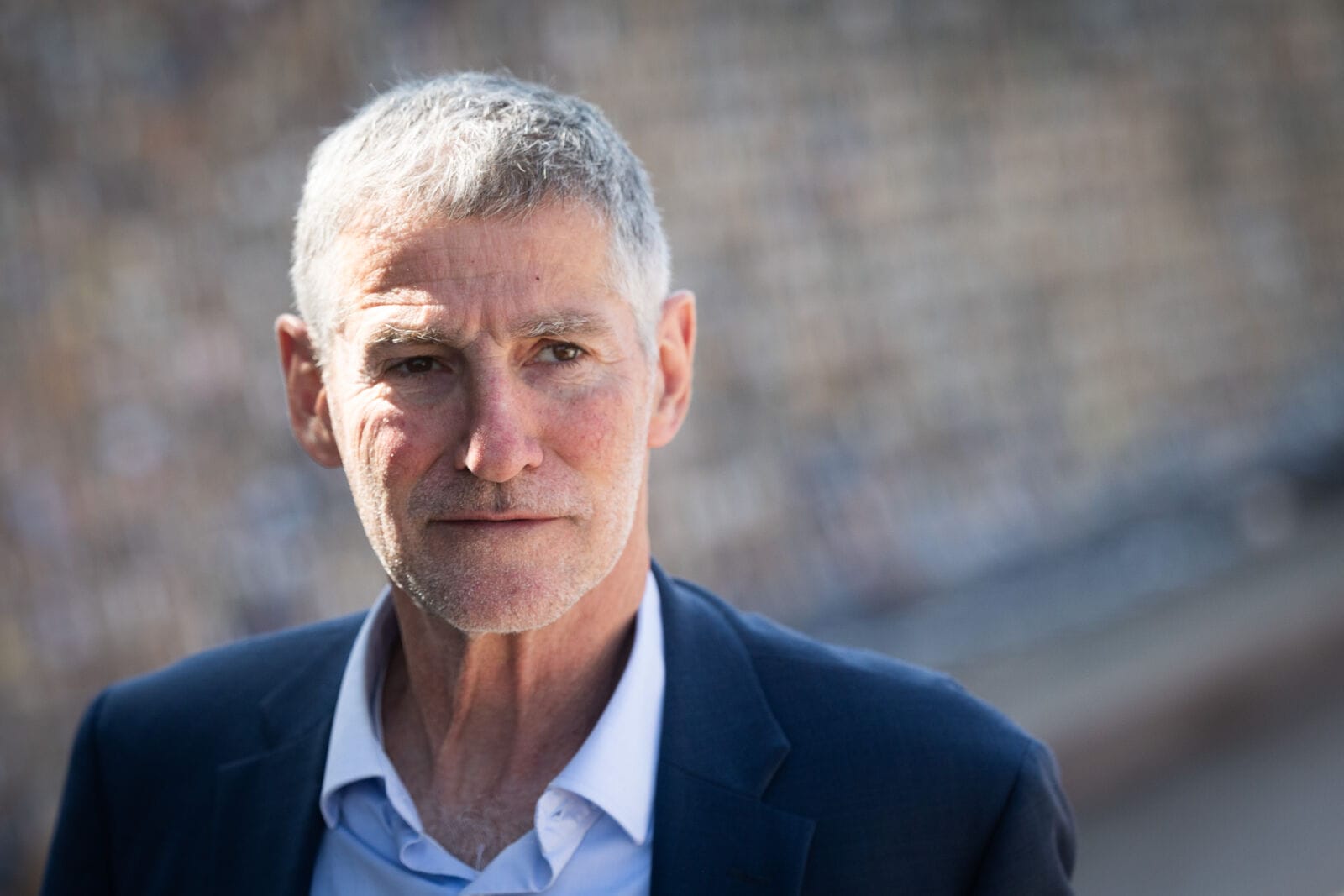
Yair Golan, Former Deputy Chief of Staff and Chairman of The Democrats Party (Photo: Flash90)
Golan makes clear that he intends to demand Netanyahu disclose a wide range of documents. These include: details of funding provided to Netanyahu and the Likud Party during the 2013 and 2018 elections; information on bank accounts and other assets belonging to Netanyahu and his family, in Israel and abroad; records of meetings, calls, or contacts with Qatari officials over the past decade (excluding those related to hostage negotiations); Netanyahu’s schedule at the times when his associates issued statements praising Qatar; as well as other relevant materials and documents tied to the “Qatargate” affair and related publications.
Addressing the core allegations in the lawsuit, Golan argues that the recently exposed criminal affairs involving Netanyahu’s closest associates “would lead a reasonable person to harbor serious suspicions that Netanyahu and his office staff harmed state security—and even suspicions that they ‘sold’ the security of Israeli children for Qatari money.”
In this context, Golan cites, among other examples, “Project Raven” and documents published by Yigal Carmon, head of the MEMRI research institute, which describe Qatari directives to transfer tens of millions of shekels to Netanyahu and Avigdor Lieberman. He also points to Netanyahu’s actions to secure the continued flow of Qatari funds into Gaza - despite warnings that the money was reaching Hamas’s military wing - as well as the so-called Qatar–Netanyahu affair, in which Netanyahu’s close spokesperson Jonatan Urich is suspected of receiving Qatari funds to promote Qatar’s image while simultaneously working for Netanyahu.
Golan also points to payments received by another Netanyahu spokesperson, Eli Feldstein, and in this context accuses Netanyahu of having accepted benefits from Qatar, a state he describes as a sponsor of terrorism.
According to Golan, “The fact that the salary of Eli Feldstein, Netanyahu’s spokesperson and one of his close advisers, was paid by entities linked to the Qatari government leaves no room for doubt: Netanyahu avoided paying Feldstein’s salary himself and thus received a benefit from a state that is a key financier of terrorism and a patron of Hamas. And this, at a time when Israel was waging a bloody war against Hamas.”
Additionally, Golan alleges that “further events raising suspicions about Netanyahu’s actions in service of Qatar include information and documents from sources to be presented during the proceedings. These pertain to suspicious funds that flowed to Netanyahu and his family members, apparently originating in Qatar, linked, among other things, to an apartment in England purchased by Netanyahu’s son under a false identity, as well as other assets and funds of family members; the 2017 closure, attributed to Netanyahu, of the Mossad’s ‘Harpoon’ unit, which had worked to prevent terror financing and trace Qatari money trails; and Netanyahu’s delay in shutting down the Qatar-controlled Al-Jazeera channel, which he himself had referred to as ‘Hamas’s mouthpiece.’”
Golan stresses in his defense brief that the Democratic Party’s publication referred to a “suspicion” that arises and did not assert any established facts. Concerning his own social media post, Golan argues that “the statement ‘Netanyahu and his people sold Israel’s security for monetary gain’ accurately reflects reality and is protected under the defense of 'truth publication'.”
Additionally, Golan asserts that “the publication comes from political rivals” and therefore, “it is clear to any reader that the defendants issued it from their own perspective and as part of their political role. A reasonable person would thus interpret the publication as an expression of critical opinion rather than as objective news reporting.”
The article was published in Hebrew on September 3, 2025