








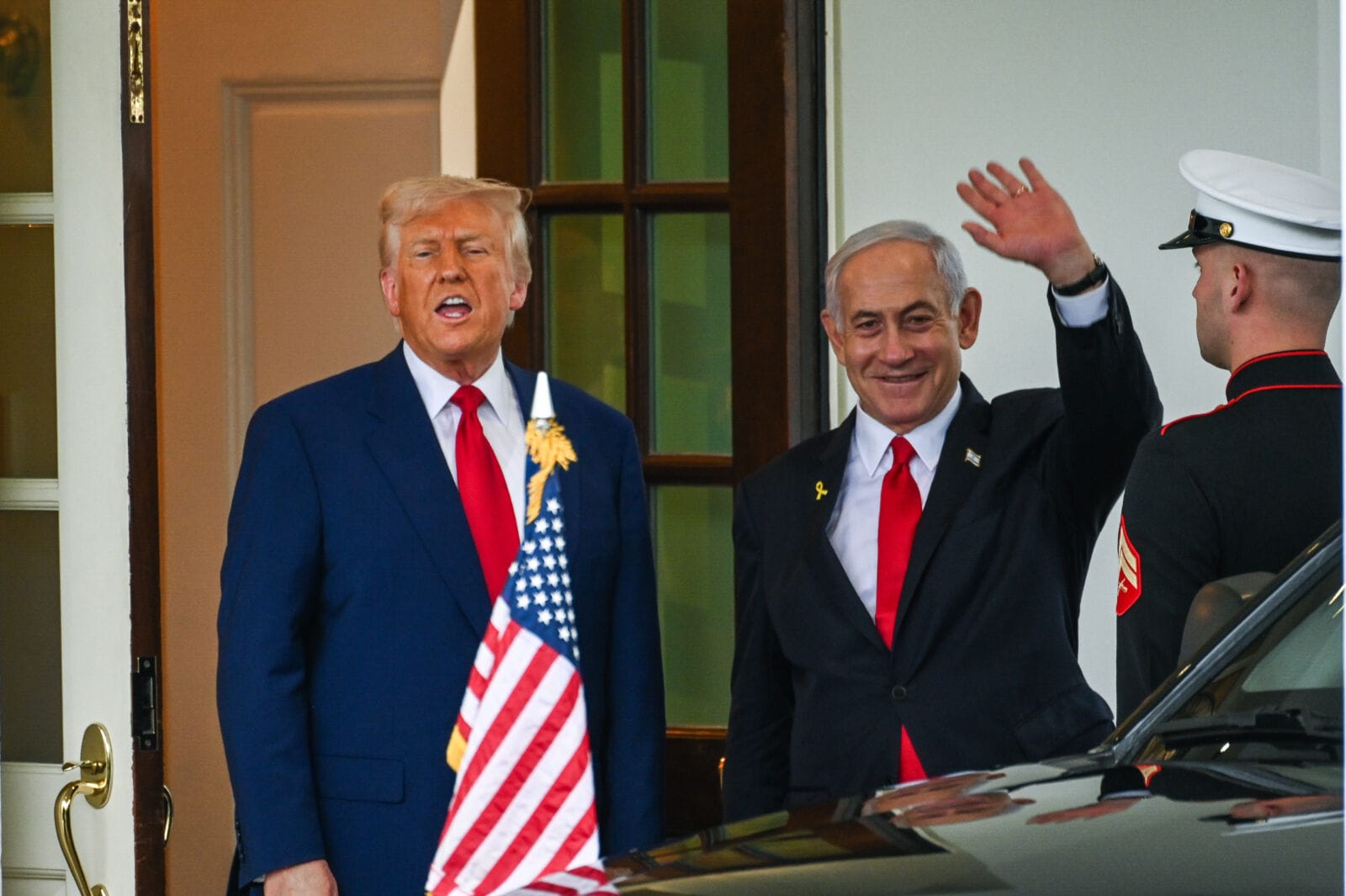


Before the "ink had dried" on the teleprompter from which Prime Minister Netanyahu read his declaration of a "historic victory, which will stand for generations" over the Iranian nuclear program in an operation that would "go down in the annals of Israel," the New York Times published a contradictory initial assessment by the Pentagon's Defense Intelligence Agency (DIA), according to which the U.S. attack on Iran delayed its nuclear program by only a few months and that most of Iran's enriched uranium had been transferred to other locations ahead of time. In addition, sources in Israel told the newspaper that they believe Iran held secret sites that were not bombed.
Despite of the celebrations of Prime Minister Netanyahu, the opposition in the Knesset and the news studios in Israel, there is a good chance that before the "Am Kalavi" operation go down in the annals of Israel, it will be recorded in the minutes of the discussions in the U.S. Congressional committees, and perhaps even of an investigative committee in Congress. This could happen after the Democrats win the midterm elections in 2026 or later.
While President Trump's first term was accompanied by the Russia-gate affair, which dealt with Russian interference in the 2016 elections, President Trump's second term will henceforth be accompanied by the Iran-gate affair. This is a rare issue that has managed to unite the ranks in Congress between mainstream Republicans, the MAGA movement and Democratic representatives.
Before the U.S. attack on Iran, members of Congress strongly opposed it joining the war, and some even publicly expressed doubt about the reliability of the talking points that came out of Prime Minister Netanyahu's office and the White House. After the attack, some also called for an investigation into the legality of the US entering the war without prior approval from Congress.
In addition to the ideological positions and political interests of each of them, during the twelve days of the war in Iran, a number of "red lights" were lit. Among other things, when President Trump replied that he did not care what his Director of National Intelligence, Tulsi Gabbard, said in response to a journalist's question about his position on her testimony to Congress on March 25 of this year. At that time, Gabbard said that Iran had not built nuclear weapons and that its Supreme Leader had not authorized the construction of one, even though the country had enriched uranium to higher levels (only following President Trump's remarks did Gabbard back down).
In a series of investigations, The New York Times revealed how President Trump underwent a rapid "evolution" from opposing an Israeli attack, to distancing himself from it once it began, to taking credit for its success, to authorizing an American attack on the nuclear facilities, and announcing a "ceasefire." Each stage of this evolution was capricious, surprising, and done while ignoring professional figures and political allies in the U.S. itself and around the world.
Like Prime Minister Netanyahu, who was quick to declare that this was a "victory for generations," President Trump is also trying to quickly "close the event", and stifle public interest expressed in press investigations and congressional engagement. In a series of publications on the TRUTH network and in interviews, he claimed that the nuclear facilities were completely destroyed and that the Iranian nuclear program had been set back decades.
The last and only time that the State of Israel found itself at the heart of discussions and investigations in the U.S. Congress was in the Iran-Contra affair: the US Congress decided to limit military aid to armed groups called Contras who carried out terrorist acts inside Nicaragua. Elements in the Reagan administration conspired with the State of Israel to continue the aid. Among other things, by diverting profits from illicit arms deals with the Khomeini regime in Iran to benefit armed activity in Nicaragua. The State of Israel also transferred looted weapons it had seized in Lebanon to the Contras, and in its conduct violated congressional laws for receiving aid from the U.S.
To try to minimize the damage, for the only time in its history, the State of Israel agreed to cooperate with an investigation by a foreign entity into a matter related to its defense export policy. The exposure of the affair in the American media, the congressional hearings into Israel's conduct, and the publication of the serious findings of the investigation to the public, caused enormous damage to Israel's standing in the U.S.
A series of telegrams from 1986, sent from the embassy in Washington and the consulate in Los Angeles to the Foreign Ministry in Jerusalem, in light of the affair and the congressional investigation, also appear relevant to the current Iran-gate affair.
Among other things, in a telegram dated November 27, 1986, Israeli Ambassador Meir Rosen wrote, "It must be assumed that the Americans involved in the affair will try to shift responsibility for many of the actions to Israel. This will be convenient for them both to escape their personal responsibility and to protect the U.S. President, who is in serious distress."
The embassy's report on Israel's status in the US, dated December 8, 1986, stated that "Israel has undoubtedly suffered another blow here in terms of its image in the eyes of the average American. What happened was only a further confirmation of Israel's being a country that has its hand in everything, that stirs up every dark corner, and about which everything can be believed."
A telegram from the consulate in Los Angeles dated November 25, 1986, stated that "Israel is involved in the affair up to its neck... It appears from the reports that Israel has in fact dragged the president into a line of action that contradicts his stated policy. In my opinion, this trend can be seen as the preparation of an alibi by U.S. government officials and the use of Israel as a scapegoat."
Unlike the complicated Iran-Contra affair, in which Congress was required to investigate the involvement of a large number of senior figures from the Israeli political and security establishment, this time the focus will be on Prime Minister Netanyahu alone. Obviously, no one suspects that President Trump consulted with Netanyahu's puppet Defense Minister Israel Katz. In fact, the praise that Netanyahu receives in Israel, as the only Israeli politician who was able to convince President Trump to change his position and join the war, could cause trouble to the former if it is determined in Congress that he misled the latter.
Thus, Netanyahu will be the first Israeli prime minister to be simultaneously indicted in corruption cases in Israel, accused of crimes against humanity at the International Criminal Court in The Hague, and his actions will also be investigated by the US Congress in Washington.
We can only hope that the Israeli media will soon join the American media and remember that its strength lies not in its unity but in clarifying the facts and presenting them to the public without fear or bias.
The article was first published in Hebrew on June 26