




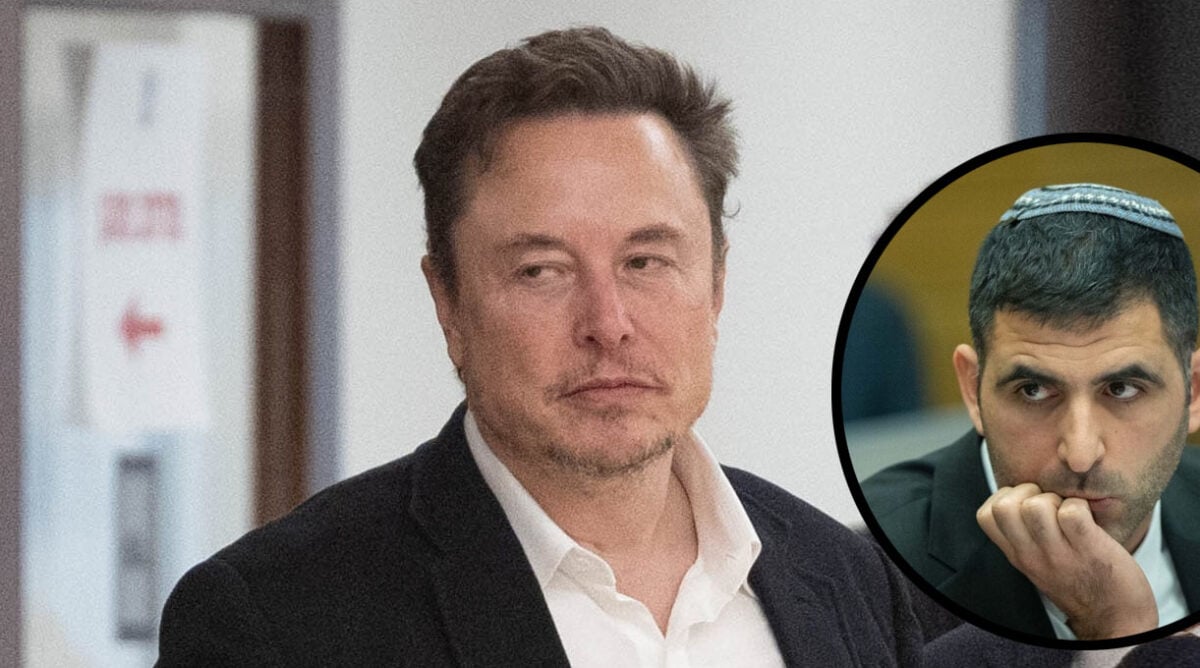


The Ministry of Communications refuses to say whether they were aware of the security concerns about the eccentric multi-billionaire Elon Musk, in connection with the introduction of SpaceX's StarLink system to Israel.
The New York Times recently revealed that the security establishment in the US and other countries, including Israel, expressed concern about the behavior of Elon Musk, who controls SpaceX. The company has military contracts in many countries, which expose it to classified military technologies and other security secrets.
“Elon Musk and his rocket company, SpaceX, have repeatedly failed to comply with federal reporting protocols designed to protect state secrets, including failing to disclose certain details about his meetings with foreign leaders, according to people familiar with the company and internal documents," the newspaper reported last week.
The concerns are even greater because Musk is not only the controlling shareholder of SpaceX, but also its CEO and thus even more exposed to information passing through the company. According to the New York Times, these concerns have led to at least three federal investigations specifically into Musk, one of which led to the revocation of his security clearance in the US Air Force.
The Times also reports, citing company sources, that SpaceX compliance officers allowed Musk to ignore many reporting Procedures, fearing for their livelihoods (employees who complained about the company's reporting procedures were fired or forced to leave), and that in recent years Musk has ignored the obligation of high-security personnel to report their schedules and the people they meet with, as well as the obligation to report his frequent use of drugs, which is prohibited for security clearance holders (Musk regularly uses ketamine).
Other employees have pointed that Musk, who has made his account the most popular on Twitter and aggressively promotes it online, tweets freely and without restriction on various topics, which also poses a security risk.
Senator Jeanne Shaheen, a member of the Senate Armed Services and Foreign Relations committees, recently requested that the Air Force and the Defense Department investigate Musk's ties to foreign leaders, including Russian dictator Vladimir Putin and the Chinese Communist Party: "When someone who has significant contracts with the government is in a position to pass on - whether intentionally or unintentionally - secrets, it is concerning," she said.
The Defense Ministry finally approved Starlink's entry into Israel, as did the Communications Ministry, and Communications Minister Shlomo Karhi even boasted about it. However, the Communications Ministry is now refusing to say whether they were aware of the security concerns surrounding Musk himself.
Musk the Avenger
Like electric car manufacturer Tesla, which has benefited from billions of dollars in subsidies over the years, Musk's other businesses are also heavily dependent on the governments of the countries in which they operate and rely on public budgets. SpaceX has contracts with the US government worth at least $10 billion in recent years.
In order to protect his financial interests in the federal government, Musk purchased the social network Twitter (which he renamed X) several years ago as a political influence tool. When it became clear that former President Donald Trump had a high chance of winning this year's presidential election, Musk bet on him, harnessed Twitter to his advantage and even donated $300 million to him.
The gamble paid off: After Trump was elected president, he appointed Musk to head a government body that would cut federal budgets. From this position of influence, Musk could also evade the requirement that he will not pose a security risk to the United States. Indeed, according to the newspaper, senior Pentagon officials ordered that Musk not be investigated for fear that he would in retaliation cuts the budget of their departments.
Musk himself, who refused to respond to the Times' exposure of the investigations against him, tweeted a threatening tweet after the publication that confirmed the fears that he intended to use the power he had been given for his personal needs: "Deep State traitors are coming to haunt me through their media collaborators. I prefer not to start fights, but I certainly know how to end them."
Wild Card
The concern that Musk would use the classified security information he was exposed to and trade it with hostile countries is not unique to the United States. According to The New York Times, representatives from nine countries have expressed concerns to U.S. defense officials about Musk’s over the past three years.
“In meetings on Starlink between Israeli military intelligence officers and U.S. security officials in early 2023, the Israeli Defense Ministry called Mr. Musk a 'wild card,'" said two people familiar with the conversations. Israeli officials feared that he might pass sensitive information about Israel to others, even though they finally approved Starlink’s entry into the country this year,” the Times reported, noting that the Israeli Defense Ministry did not respond.
The Communications Ministry was also required to approve Starlink’s operations in Israel. Last February, Communications Minister Shlomo Karhi even boasted about it, but the road to getting there was not smooth. Musk proposed as early as late October 2023 to deploy the system in the Gaza Strip, where massive Israeli bombings had destroyed much of the communications infrastructure.
As usual, Musk did so in a tweet on Twitter. However, Minister Karhi responded to the tweet with his own tweet, in which he declared that "Israel will fight this in every way" and threatened a boycott of Starlink. Musk tweeted in response that the system would be operated in the Gaza Strip only for humanitarian purposes and after a security review by the US and Israeli governments.
On February 14, Minister Karhi tweeted again, this time under the headline "Starlink for the first time in Israel." Karhi made sure to attach a punctuated verse from Psalms to his tweet, stating that this was "great and joyful news" and thanking Starlink representatives "for the substantive discussion and understandings regarding the Gaza Strip."
Karhi also emphasized that the deployments of the communications units in the Strip "will be approved individually only after careful approval by security officials in Israel." The next day, an official statement from the Ministry of Communications was published, in a slightly different wording, in which Karhi also addressed the security issue - only in the context of the deployment of the units in the Strip.
Was the Ministry of Communications aware of the concerns surrounding Musk himself - a massive user of heavy drugs and with connections and interests in China, Russia and other totalitarian countries - regarding his exposure of security secrets And military technologies? The Communications Ministry, as mentioned, refused to comment.