




Calin Georgescu, a far-right figure, surprised and won the first round of the presidential election in Romania held on November 24. He is known as an admirer of Russian President Vladimir Putin and of anti-Semitic nationalists who were responsible for the mass murder of Jews and others in Romania in the first half of the 20th century.
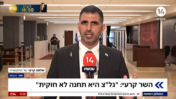
Even though a second round of elections was scheduled to be held in Romania on December 8th and suspicions were raised that Georgescu's victory was due to Russian interference, Amichai Chikli, Minister of Diaspora and the Fight against Anti-Semitism and the person who appears to be responsible in the government for the relations with the global far-right, quickly "charged in" and spoke with Georgescu.
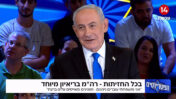
According to reports from the conversation, Georgescu stated that he would invite Prime Minister Netanyahu to visit Bucharest on the "second day of his term," despite the arrest warrant issued for Netanyahu by the ICC and added that he would fight anti-Semitism and work to move the Romanian embassy to Jerusalem. Following the conversation, Romania's ambassador to Israel, Radu Loanid, told 'Haaretz' that Minister Chikli's interference in the elections "endangers the close friendship between Romania and Israel."
Embarrassingly for Israel, the Constitutional Court in Romania invalidated the results of the first round of the presidential election due to fears of Russian involvement.
Every time Prime Minister Netanyahu or someone on his behalf forms an alliance with a far-right party or leader around the world, some in Israel automatically respond that "like meets like," or that Prime Minister Netanyahu is selling the values and image of the State of Israel in exchange for a "lentil stew" that the Israelis will pay dearly for in the future.
But Prime Minister Netanyahu did not invent anything. Since the establishment of the State of Israel, it has not shied away from relations with dictators, from the far-right to communists, even if they had an anti-Semitic background. The ideology of the dictator is not important, only the willingness of those regimes to maintain relations with the State of Israel. It is especially desirable that the relations be expressed in support for Israel in international forums.
One example of many was the relationship with the dictator of the Dominican Republic, General Rafael Trujillo, which is documented in documents and telegrams in the State Archives in Jerusalem and has been opened to the public in the past two years.
At a government meeting held on March 14, 1965, about four years after members of the underground assassinated General Trujillo, Foreign Minister Abba Eban said of his visit to the country, "This entire country is gripped by a nightmare of the memory of tyranny. There was a tyranny that lasted for 30 years or more under Trujillo, which in its last years has reached a hell of oppression. His victims are estimated at 15,000 people who were killed."
In response to questions from government members, Minister Eban admitted that Israel had close relations with the Trujillo regime and explained that "We have a conscience problem regarding that tyrant" because it is "a country that boasts of having a 100 percent record of support in Israel: in 1947 [the Partition Plan], in 1949 [Israeli membership in the UN], and even in the Sinai operation [1956]."
Minister Eban explained that even earlier, in 1938, General Trujillo "came to the Evian Conference... He immediately offered 100,000 visas to Jews for the Dominican Republic... Thousands of Jews were saved from this hell thanks to these visas."
A review prepared by the Foreign Ministry in June 1955 stated that "relations between Israel and the Dominican Republic are particularly close [...] Israel enjoys the support of the Republic in UN discussions on questions close to our hearts."
At a cabinet meeting on March 9, 1958, Prime Minister and Defense Minister David Ben-Gurion admitted that Israel had sent a plane with weapons to General Trujillo. Development Minister Mordechai Bentov (MPAM) criticized the move, saying that the regime was "known as one of the most rotten, dictatorial, and tyrannical regimes in Central America." Health Minister Israel Barzilai (MPAM) asked, "Perhaps you can tell us what you see as restrictions on arms sales?", and Ben-Gurion replied only, "If the Foreign Ministry sees that it could get us into trouble with some other country."
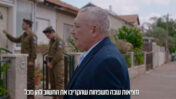
On July 25, 1960, Mordechai Schneerson visited the capital, Santo Domingo, then called Ciudad Trujillo, to meet with General Trujillo and present him with his credentials as Israel's representative to the Dominican Republic. In a telegram he sent to the Foreign Ministry, he described how "on every street corner, at every intersection, there are armed police and soldiers, looking suspiciously at every passing car. As evening falls, few leave their homes, for fear of being harmed by the police who roam the streets at all hours of the day and night in dozens of cars equipped with weapons and wireless devices."
Schneerson added that "the signs of the totalitarian regime are evident at every step and the atmosphere of a concentration camp under siege slaps you in the face everywhere. The name Trujillo is plastered on every corner and every factory, the capital, the airport, government buildings, streets and bridges are called that [...] There is no organized opposition, the secret police have invaded every institution and every home, and everyone suspects their neighbor of being a servant of the government [...]."
"Thousands were oppressed and tortured [...] A few weeks ago, hundreds of prisoners who were held in dungeons due to their opposition to the regime were released - ostensibly a humane step, but every now and then we hear about someone who was released who drowned at sea and about someone who died in a car accident."
The meeting between the dictator and the Israeli representative lasted about ten minutes, during which General Trujillo told Schneerson that, "they have always stood by our side and will continue to do so in the future."
In light of the severity of the human rights situation, international sanctions were imposed on Trujillo's regime. Although General Trujillo helped Jewish refugees escape from Europe, in a telegram sent on May 16, 1961, the deputy head of the Israeli delegation to the UN in New York, Aryeh Eshel, reported on his regime's anti-Semitic statements.
The only permitted newspaper in the country that served as the general's mouthpiece published an article titled "The Jews Forgot the Protection Given to Them by Trujillo," and it stated that "the Jews are ungrateful, not grateful for anything." Eshel wrote that according to reports he had received, the Trujillo regime suffered from a "superstitious belief in the great power of world Jewry" and therefore believed that the Jews could and should have helped it deal with the sanctions.
Two weeks later, on May 30, members of the underground fired on General Trujillo's car as he was driving, killing him. Nine days after the assassination of General Trujillo, Schneerson summed up his regime in a telegram, "Thirty years of a tyrannical, cruel, and intrusive regime, the likes of which are difficult to find even in the varied history of South American dictatorships, have succeeded in suppressing and destroying every bud of political opposition [...] Those who spoke out against the dictator were completely cut off - some by killing and murder, and some in exile or as victims of staged accidents."
To sever the thread that connects Israel's conduct in Bucharest in 2024 and its conduct some 70 years earlier in Santo Domingo, a more in-depth soul-searching and public debate among the Israeli public is required than support or opposition to Netanyahu.