











On August 30, 2026, while much of the Israeli public was busy preparing for the start of the school year, National Security Minister Itamar Ben-Gvir distributed yet another election video to the media. In the video, he is seen visiting the cell of Palestinian women prisoners at Damun Prison. The prisoners complained about the harsh conditions; Ben-Gvir took credit for them, saying that he had “come to see firsthand how our policy is being implemented” and that “the days of summer camp in Israel’s prisons are over. I am responsible for that — and I am proud that we managed to reduce terrorists’ conditions to the bare minimum.” He added that he had also visited the isolation cells and “was impressed by the stringent conditions there.”
The election video is the product of a process that unfolded on three levels: an election promise to reduce prison conditions to the “bare minimum”; the exploitation of the post-October 7 state of emergency to suspend significant parts of the legal protections governing those conditions; and the transformation of Israel Prison Service personnel, symbols, and footage into elements of a partisan political campaign.
The result: the Israel Prison Service did not merely implement the minister's policy. The minister also used it to demonstrate that policy, produce images promoting it, and mobilize political support for it.
From an Election Promise to Prison Policy
The election video from Damun Prison brings full circle a promise made by Otzma Yehudit and Ben-Gvir during the 2022 election campaign: to put an end to the Palestinian prisoners’ “summer camp.” After Netanyahu’s bloc won the election, Clause 129 of the coalition agreement between Likud and Otzma Yehudit stated that the two parties “believe that the conditions of security prisoners should be changed” and would act on the matter within 90 days.
A week after the government was sworn in and Ben-Gvir assumed responsibility for the Israel Prison Service (IPS), he tweeted on January 6, 2023, that he had visited Nafha Prison “following the construction of new cells, to make sure that anyone who murdered Jews does not receive better conditions than those currently in place. I will continue to address the prison conditions of security prisoners, with the aim of ending the policy that has prevailed until now.” The tweet included a photo of him with IPS Commissioner Katy Perry, whose position had been weakened since the escape of six Palestinian prisoners from Gilboa Prison in September 2021.
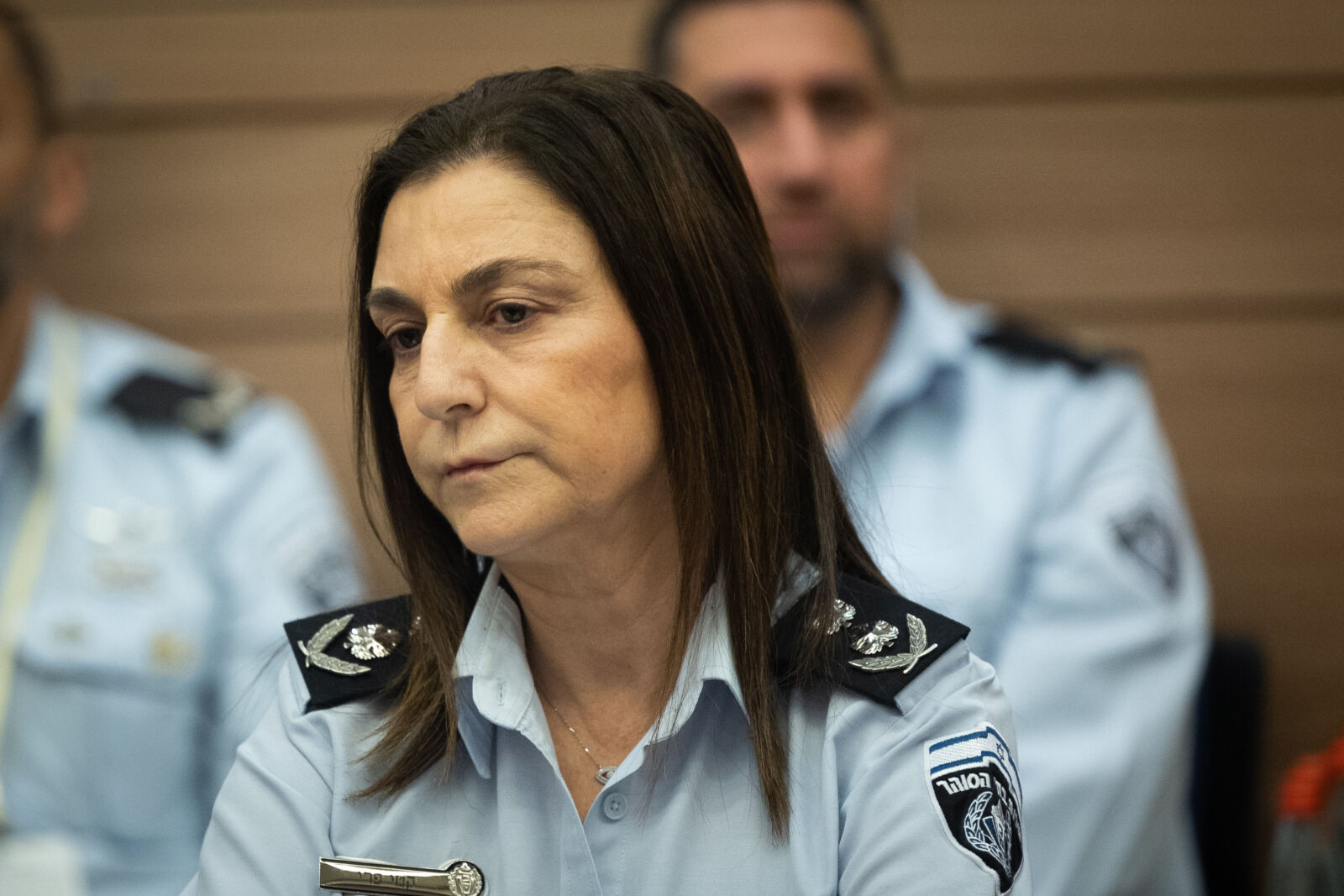
- Major-General Katy Perry, head of the Israel Prison Service at the National Security Committee meeting at the Knesset, the Israeli Parliament in Jerusalem, on February 22, 2023. Photo by Yonatan Sindel/Flash90
At the beginning of his term, however, Ben-Gvir’s ability to fulfill his promises was not unlimited. Unlike the relatively sparse legal and regulatory framework governing the IDF’s conduct, particularly its treatment of detainees held in military custody, the IPS is subject to an extensive system of laws, regulations, orders, and procedures. These are intended to ensure a proper balance between security needs and the rights of people held in its facilities, even if they have not always been implemented in practice.
On February 5, 2023, Otzma Yehudit released a video titled “Ben-Gvir Is Changing the Terrorists’ Summer Camp in Prison.” But until the outbreak of the war on October 7, 2023, the extensive legal framework restricted his ability to fully implement his plans. A large gap remained between the bombastic rhetoric and the actual conditions of Palestinian prisoners, which were being tightened only gradually.
For example, Ben-Gvir faced public and political ridicule after announcing on X on February 1, 2023, that he would shut down the prisons’ pita bakeries—a decision that earned him the nickname “the Pita Minister.” His attempt to reduce family visits for prisoners also ran into difficulties. During those months, the campaign rhetoric outpaced his ability to fundamentally alter prison conditions.
October 7: When the Slogan Gained Institutional Power
October 7 was the turning point. Following the Hamas massacre, as in many other areas of Israeli life, restraints within the IPS were loosened. Taking advantage of the state of emergency, Ben-Gvir made a series of decisions imposing extreme restrictions on the conditions in which Palestinian prisoners were held and suspending substantial parts of the legal framework governing their rights. The slogan about ending the “summer camp” thus went from an election message to an operational policy.
In a letter dated August 14, 2025, David Bavli, an adviser to the national security minister, described the decisions as “reducing the prison conditions of terrorists to the bare minimum” in order to “establish governance in the prisons.” In practice, the decisions led to starvation, the spread of disease, mass torture, irreversible bodily harm, and an unusually high number of deaths in Israeli prisons.
The policy was further enabled by a public, media, political, and rabbinical atmosphere that legitimized revenge and collective punishment against the Palestinian population as a whole, and Palestinian prisoners in particular. Other segments of society, including parts of Israel’s so-called liberal camp, also began supporting revenge against prisoners, or simply decided that after the October 7 massacre, Palestinians — and prisoners especially — no longer mattered to them. They therefore consciously ignored the harrowing reports by human rights organizations and the international media, which compiled testimonies from released detainees.
Even the facts that most Palestinian detainees held in IPS facilities had not been put on trial or charged with any offense; that most had no connection to Hamas’s Nukhba forces; and that their actions at the time of arrest — and sometimes even their identities — were unknown to the Israeli public, and in many cases even to those who detained them, did not change this attitude.
Some Israelis even viewed the inhumane treatment of Palestinian prisoners as a “justified response” to Hamas’s crimes against the Israeli hostages in Gaza. International law, however, does not permit Israel and its authorities to commit crimes in response to crimes committed by Hamas.
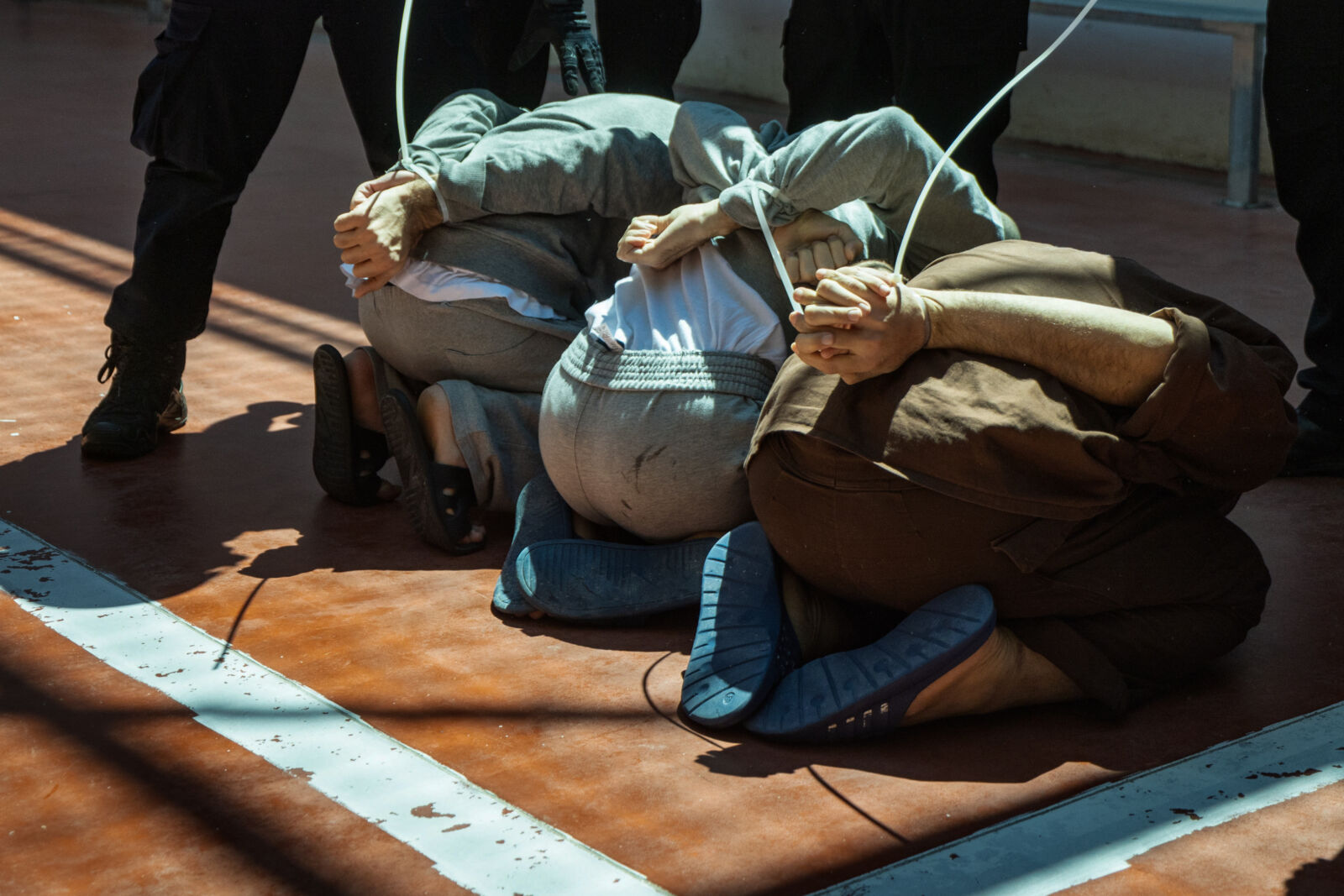
- Members of the Keter unit, an Israeli prison service response unit seen during an operation where Nukhba terrorists (a Hamas unit) being held, at the Ofer Prison near Jerusalem, August 28, 2024. Photo by Chaim Goldberg/Flash90
The price did not remain behind prison walls. After their release, some hostages testified that Ben-Gvir’s statements about worsening conditions for Palestinian prisoners had led to severe abuse of them in Hamas’s tunnels. Even after the last Israeli hostage was released from Gaza, Israeli public attitudes did not change, nor did the public suddenly begin to concern itself with what was taking place inside IPS facilities.
When the Checks Gave Way
Support for the policy did not come from the public alone. The atmosphere of legitimacy appears to have affected the justices of the High Court of Justice as well, already under threat and weakened by the government’s “judicial overhaul.” The justices allowed Ben-Gvir to turn the treatment of Palestinian prisoners into a kind of legal extraterritorial zone: again and again, they rejected petitions filed by prisoners’ families and human rights organizations, or dragged out proceedings for many months and sometimes years.
This stands in particularly stark contrast to a principle articulated by former Supreme Court President Aharon Barak in one of his rulings: “Prison walls do not separate a detainee from human dignity.” From the beginning of the war, however, the justices began rejecting or delaying even basic habeas corpus petitions, allowing the IPS to conceal the identities of thousands of newly detained Palestinians held in its facilities after October 7.
At one hearing, Justice Daphne Barak-Erez said: “Not to know that they are in Israel? […] Even during the most difficult periods, there was never a situation like this. A habeas corpus order requires the disclosure of information, and that was always dealt with. Suddenly, zero information is being provided.” In practice, however, she and the other justices enabled precisely that situation to continue. As early as November 4, 2023, Prof. Barak Medina published an article titled “Is the High Court Closed Because of the War?”
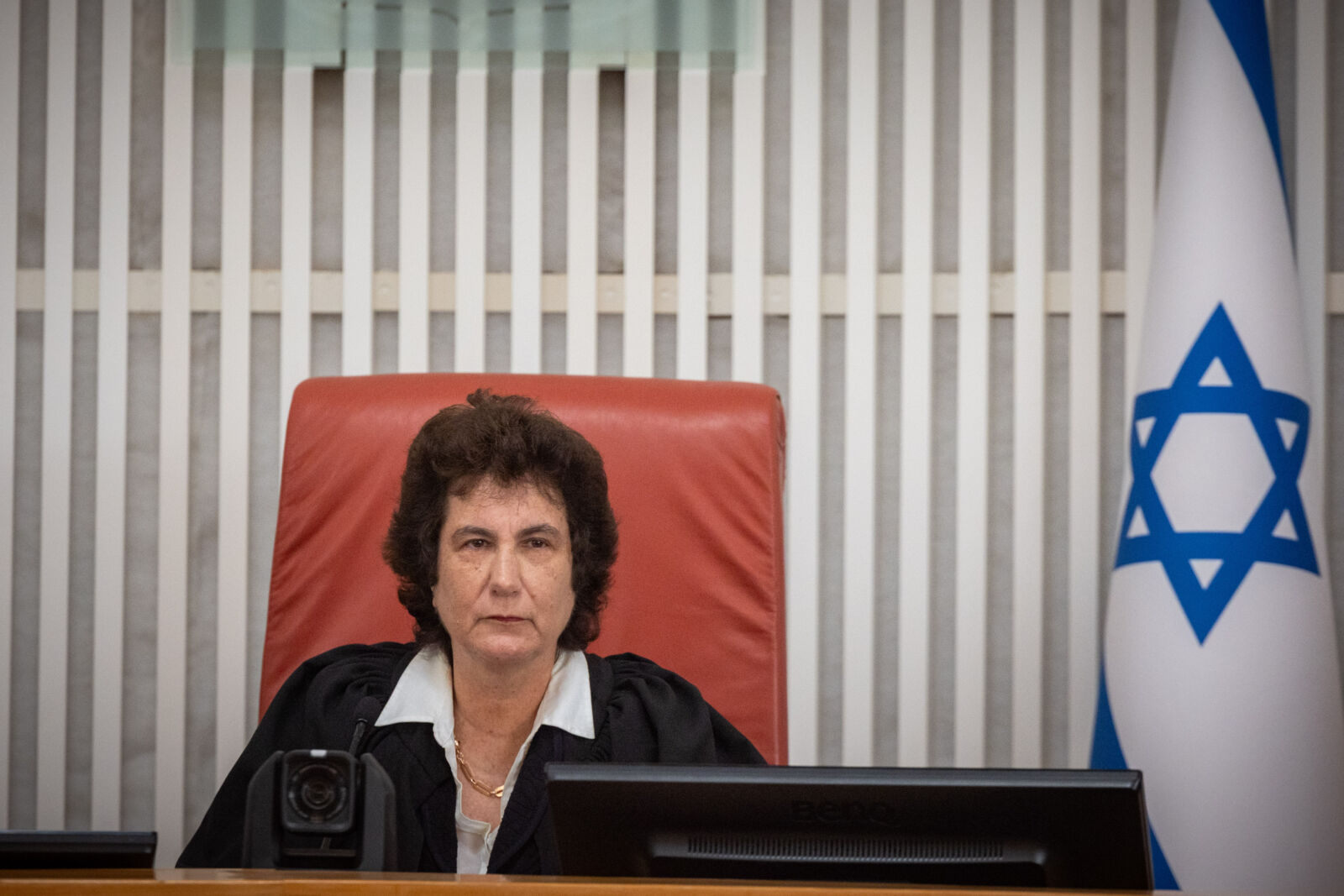
- The Supreme Court expressed concern about the National Security Ministry’s conduct, but in practice allowed it to continue. Justice Daphne Barak-Erez (Photo: Yonatan Sindel/Flash90)
The severe evidence presented to the High Court justices — including cases of malnutrition and medical emergencies, and evidence that around a quarter of prisoners had contracted scabies — did not lead them to change course. They allowed the suspension of visits by representatives of the International Committee of the Red Cross and upheld the starvation policy.
Absurdly, despite their own inaction, the justices repeatedly expressed concern — both during hearings and in their rulings — about the damage being caused to Israel’s public diplomacy. At an August 18, 2025 hearing, for example, Supreme Court President Yitzhak Amit said: “Right now what is being said all over the world is that Israeli prisons are Guantánamo [...] the reports allege that there is starvation, that dozens of prisoners are dying. You are putting us, the court, in the front.”
The legal advisory system also provided Ben-Gvir with backing. The attorney general approved all of his decisions regarding Palestinian prisoners and defended them before the High Court, even as she focused on curbing his takeover of the police.
The legal adviser to the National Security Ministry, attorney Ariel Sisal, who is professionally subordinate to the attorney general, and the IPS legal adviser, Commander Eran Nahon — who was considered a Ben-Gvir loyalist and was appointed police legal adviser on June 8, 2026 — were involved in shaping the decisions and policies in real time. As Sisal wrote to me on June 2, 2026: “The changes made to the incarceration conditions of security prisoners since the beginning of the war have been accompanied by legal counsel from the Israel Prison Service’s legal department.”
From Appointments to Campaigning
A supportive public atmosphere and legal backing are not enough on their own to transform a public authority into a political mechanism. That also requires control over the chain of command and over the way the agency presents its work to the public.
On December 28, 2023, Ben-Gvir announced that he had decided to appoint his security secretary and personal loyalist, Kobi Yaakobi, as IPS commissioner, replacing Perry. In addition, a response to a Freedom of Information request that I received on September 2, 2026, revealed that Ben-Gvir personally conducted 74 interviews with IPS officers between 2023 and 2025.
The publicly known evidence about Ben-Gvir’s use of appointments relates primarily to the police, rather than the IPS. In its ruling on petitions against Amendment No. 37 to the Police Ordinance, several High Court justices addressed the danger of political considerations infiltrating police work through the minister’s appointment powers, and the need to regulate the issue.
In her responses to that petition and to petitions seeking Ben-Gvir’s removal from office, the attorney general repeatedly warned that, in her view, Ben-Gvir had improperly used his appointment powers to interfere in police work; that “political considerations infiltrated the police through the appointment mechanism”; and that the message being sent to officers was that they were expected to “fulfill the minister’s expectations, both with regard to demonstrations and in other contexts, including investigations involving government officials or their associates.” In the “principles document” she initially proposed as a condition for his remaining in office, she included significant restrictions on Ben-Gvir’s authority over appointments.
That material does not directly concern the IPS, but it is important for understanding the minister’s modus operandi within the bodies under his authority. Ben-Gvir himself has never hidden his awareness of the power appointments give him. Responding to the release of an earlier Freedom of Information request I submitted for the Zulat Institute, which revealed that he had personally interviewed 137 police officers in 2023 and 2024, he told Walla: “I am proud that during my two years in office we appointed hundreds of officers, following thorough staff work, and proud that they are implementing my policy.”
Yaakobi’s appointment, the 74 interviews with IPS officers, and the conduct described below form part of the same picture: Ben-Gvir views appointments as a tool for ensuring that officers implement his policies. And in the IPS, one can already see how those policies are being translated not only into harsher prison conditions, but also into political propaganda.
In July 2024, Ben-Gvir posted on X a video bearing the logo of the IPS Intelligence Division, in which prisoner Abu Said Yusuf speaks about the worsening of prison conditions. The accompanying text read: “Fatah terrorist tells the camera about the change in conditions for terrorists in prison and warns his friends: Don’t enter Ben-Gvir’s hell. The summer camp is over.”
On January 15, 2026, the IPS distributed an Otzma Yehudit video in which prison guards cheered the minister and shouted, “Haida Ben-Gvir!”
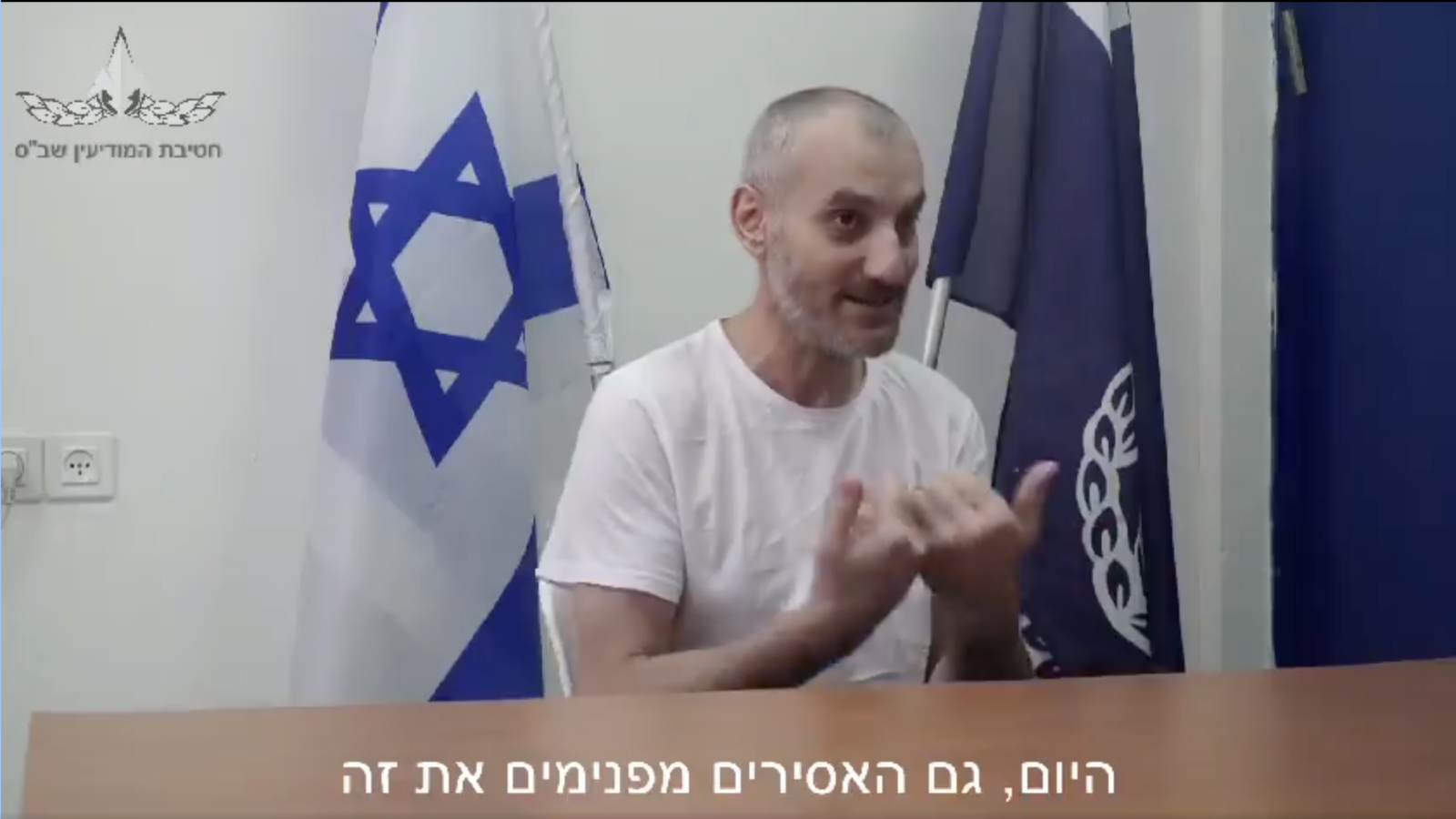
- The IPS Intelligence Division in Ben-Gvir’s service. Caption: Today, the prisoners have internalized it (Screenshot from a video posted on X)
These are not merely posts on the minister’s personal account. The videos use IPS symbols, prison guards, prisoners, and detention facilities as visual evidence of the policy’s success and the loyalty of those implementing it.
On February 14, 2026, Ben-Gvir posted a video with the caption: “I came together with bereaved families to closely monitor preparations for Ramadan and make sure that the minimum-conditions policy I am leading together with the IPS commissioner is being fully implemented, with no leniency for terrorists. I came to strengthen them and left strengthened myself.” The video shows Ben-Gvir visiting a detention facility alongside IPS Commissioner Kobi Yaakobi as guards remove Palestinian prisoners from their cells and force them to lie on the floor.
The pattern continued during subsequent visits. On April 23, 2026, Ben-Gvir tweeted that he had arrived with Yaakobi for a surprise inspection at a detention facility in central Israel, disguised as a prison guard, so he could see firsthand what was happening on the ground.
On May 20, 2026, a video was released from a visit by Ben-Gvir and Yaakobi to a detention facility where participants in a Gaza-bound flotilla were being held in restraints. Ben-Gvir told them: “Welcome to Israel. We are the masters here. The summer camp is over.”
The video sparked a wave of diplomatic condemnations of Israel and led to government investigations in countries around the world. Even Netanyahu was forced to issue an apology, saying that “the manner in which Minister Ben-Gvir treated the flotilla activists is inconsistent with Israel’s values and norms.” The IPS spokesperson’s office, by contrast, told the media that “all actions were carried out in accordance with procedures and professional considerations.”
On August 15, 2026, a video was published showing Ben-Gvir and Yaakobi visiting Marwan Barghouti’s cell. Ben-Gvir told Barghouti: “You will not defeat us. Anyone who messes with the people of Israel, anyone who murders children and women — we will wipe them out. You need to know that.” That video, too, prompted condemnation abroad.
The accumulation of these actions — intervention in appointments, a loyal commissioner, legal backing, use of IPS symbols, and the appearance of prison guards and prisoners in party videos — is changing the institutional character of the service. Its role today is not merely to implement policy, but also to demonstrate its loyalty to the minister and market Ben-Gvir’s achievements.
On January 7, 2023, former Supreme Court President Aharon Barak warned that Justice Minister Yariv Levin’s “judicial reform” was equivalent to “a revolution with tanks.”
History has repeatedly shown that a constitutional coup can also take place when institutional gatekeepers and a large part of the public are indifferent to the political takeover of a public authority, convinced that it will have no personal effect on them because those most severely harmed belong to another population group.
Today, it is Palestinian prisoners. In the future, the “summer camp” may also end for the same judges, legal advisers, and Jewish opposition voters who remained silent.
They, too, may one day find themselves held under “minimum conditions” in prisons run by the “Otzma Yehudit Prison Service.”
This article was originally published in Hebrew on Shakuf on September 8, 2026