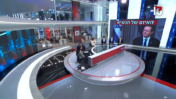


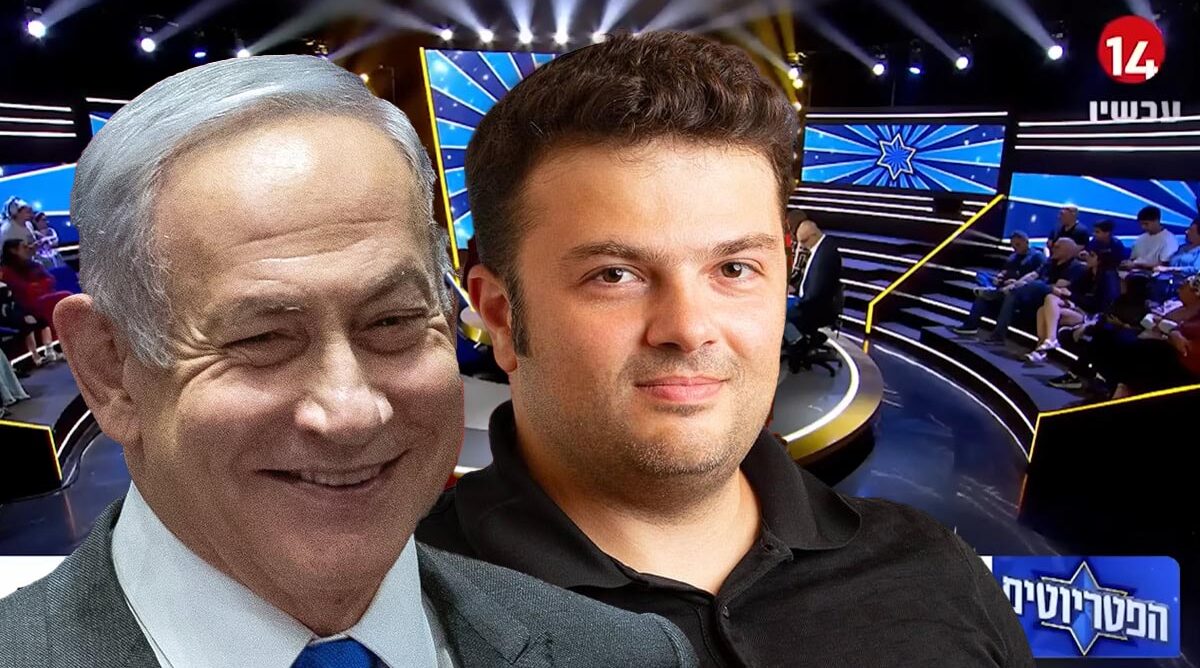


"It is no secret that some of the reserved slot candidates, led by Yaakov Bardugo, grew up here at Channel 14. I know them personally, and well. We worked together. I saw them every day, fighting for their positions on camera, without blinking and without apology," said Yaara Zered, a Channel 14 broadcaster earlier this month, while "reporting" on the Likud party list filed for the October Knesset elections.
Indeed, most of the figures parachuted onto the Likud party list by its chairman, Benjamin Netanyahu, the revered and undisputed star of Channel 14, come from the channel itself. Five of the seven reserved slots went to broadcasters, panelists, or regular guests. As Zered noted, most of them owe their public standing to exposure on the channel. Ironically, Zered herself was also offered a reserved spot on the Likud list (this is hardly classified information: the channel was quick to boast about it).
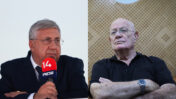
Bardugo, in 11th place on the list, is a close political advisor to Netanyahu and one of the channel's dominant broadcasters; he hosts a program, frequently appears on “The News Broadcast,” and is considered the "senior political commentator." Channel 13 political correspondent Michael Shemesh reported that during the discussions about reserved slots, Netanyahu was also in contact with associates of Channel 14 owner Yitzhak Mirilashvili, the son of oligarch Mikhael (Mico) Mirilashvili.
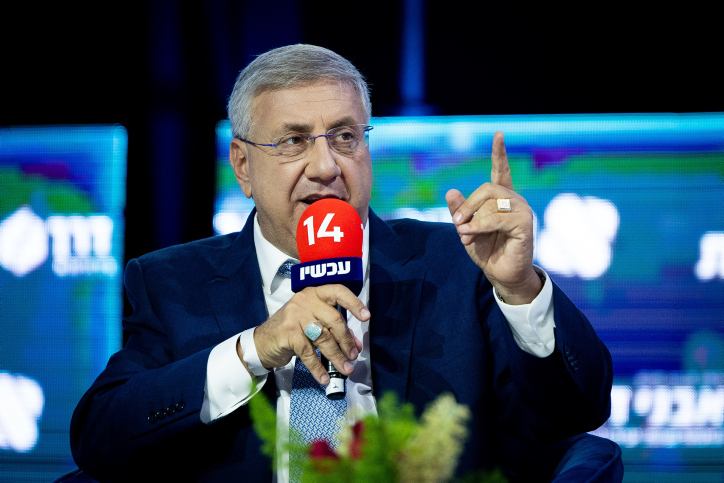
Yaakov Bardugo at a Conference of Channel 14 in Jerusalem, 2022 (Photo by Yonatan SIndel/Flash90)
In addition to Bardugo, Netanyahu reserved for Likud several panelists and regular guests from Channel 14 broadcasts. Amir Avivi frequently stars on the channel's flagship program, “The Patriots,” and joins panels on the “News Broadcast” (Avivi later announced he would forgo the reserved slot and serve as an "external minister"). Attorney David Peter, who also represented the Netanyahu government in petitions for the High Court of Justice, sits on the panel with Bardugo and Yehuda Schlesinger on “Seven” and the “News Broadcast.” Itzik Bunzel appears primarily on the “Five” and “Seven” editions, while Eli Goldschmidt is a guest of Shimon Riklin on “Riklin & Co.”
In addition, as previously mentioned, Netanyahu sought to reserve a spot for Zered, a presenter on the channel. Another regular guest on the channel, Erez Tadmor, who often sits on the panels of the programs "Riklin & Co." and "Seven,” ran in the primaries and has also been placed on the Likud list.
The reserved slot candidates of Channel 14 had no reason to quail before the cameras of the channel, which routinely broadcasts government propaganda and echoes the Likud’s talking points; but their transition from the studio to the party might well cause Mirilashvili to blink, as it further exposes the channel to legal challenges around violations of election laws.
The lawmakers tried to forestall a situation where parties bypass legal restrictions on election campaigns by operating through seemingly separate entities. An "election activist" must register with the State Comptroller and is subject to transparency requirements and financial restrictions. A refusal to register can bring about an immediate stop to their operations. An entity defined as "linked to a faction" is subject to more stringent financial restrictions, and its financial activities are effectively treated as those of the party itself, with all that entails.
Last month, an academic study was published by Dr. Ayala Panievsky, the author of these lines, and Shuki Tausig, editor of “The Seventh Eye,” which examined, among other things, the presence of government propaganda on Channel 14 by comparing its content to public statements made by Netanyahu. The methodological analysis revealed that nearly half of the channel's broadcasts included propaganda from the Netanyahu government.
In August, “The Seventh Eye” also published a comprehensive analysis of thousands of statements made on Channel 14 about the Yashar party chair and former IDF Chief of Staff Gadi Eisenkot, Netanyahu’s main political rival. We found that the channel devoted significantly more airtime to Eisenkot than other news channels did, that the vast majority of this coverage was negative, and that most of the negative coverage precisely echoed Likud’s campaign messaging about him.
Last July, “The Seventh Eye” published an article describing how Channel 14 operated an initiative to promote candidates in the Likud primaries and gather data on potential voters. Earlier, in 2024, “The Seventh Eye” published a series of public reports containing hundreds of examples of, among other things, government propaganda and the elevation of Prime Minister Netanyahu, who is facing criminal charges.
The migration of broadcasters, panelists, and guests from Channel 14 into the ranks of the Likud party further illustrates the symbiosis between the channel and the party, and the fact that this is not merely a news channel or even an ordinary television channel but a propaganda platform in every sense of the word.
"Does anyone need further proof that Channel 14 is a Likud propaganda pipeline that should operate under the restrictions of the Political Parties Financing Law?" wrote MK Vladimir Beliak after the Likud party list was published. "We have a party here that gets an illegal advantage, which undoubtedly undermines the integrity of the elections. It is fitting that the Chair of the Central Elections Committee and the State Comptroller’s Office address this matter urgently."
Channel 14 did not respond.
This article was published in Hebrew on September 9, 2026
Translation: Harriet Brown