








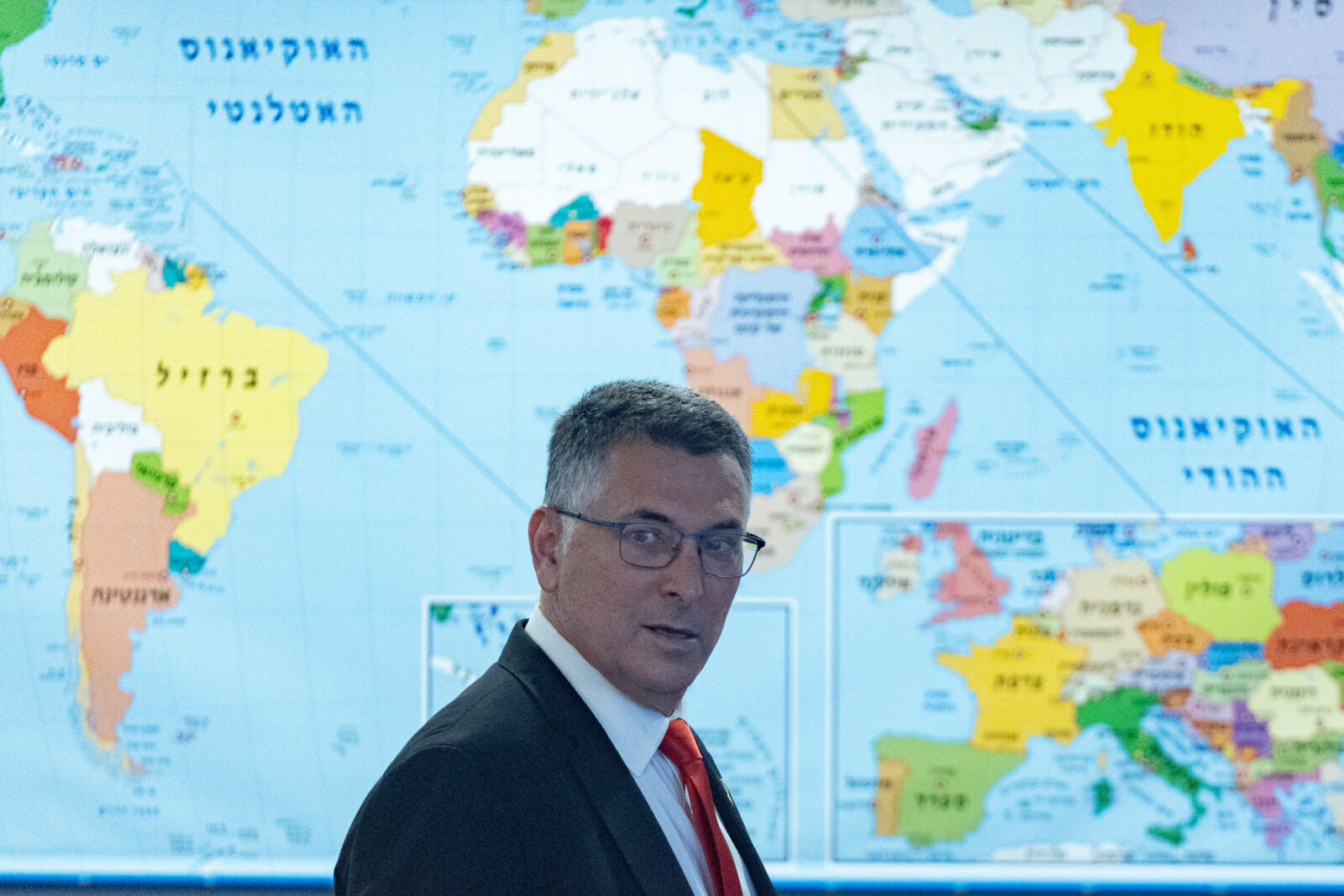


Foreign Minister Gideon Sa'ar's tweet wars come at a cost – and the Israeli public is paying it.
In Netanyahu's corrupt and dysfunctional government, ministers are preoccupied with serving themselves rather than the public. By the time voters go to the polls on October 27, ministers will have left a scorched-earth landscape in their ministries and areas of responsibility. Even as they boycott most Israeli news outlets, they have not given up trying to force their way onto the news agenda and into the public consciousness – through provocative, extreme posts on social media.
Sa'ar is no exception. Since taking office as foreign minister in November 2024, as part of the political-survival deal he struck with Netanyahu, he has devoted considerable time to insulting foreign ministers and governments of other countries. He freely makes unfounded accusations of antisemitism and support for terrorism, while boasting that Israel is doing just fine and needs neither relations with such countries nor their support.
With Sa'ar, the strategy often seems set on social media, driven by political needs and at the expense of Israel's diplomatic relations. But his tweets do not remain mere rhetoric: they are sometimes followed by policy decisions that cost the public millions, while their diplomatic benefit remains doubtful.
Punishing Ireland, Rewarding Moldova
On December 15, 2024, Sa'ar announced in a tweet that he had decided to close Israel's embassy in Dublin. According to Sa'ar, the Irish government's actions and rhetoric toward Israel were antisemitic, and "Ireland has crossed every red line in its attitude toward Israel."
Ireland is a member of the European Union and the OECD, one of Europe's strongest economies, and is of political and economic importance to Israel. Closing the embassy was not intended to sever diplomatic relations, but in a time of crisis it nevertheless reduced Israel's ability to engage with the country's government, media, and public.
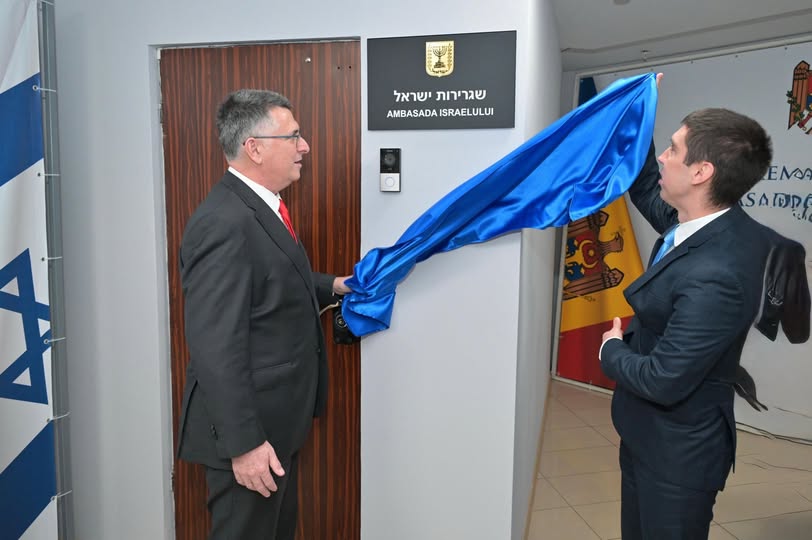
The inauguration of the Israeli embassy in Moldova (credit: Shlomi Amsalem, GPO)
On the same day, Sa'ar also tweeted about opening an embassy in Moldova. "Relations between Israel and Moldova are friendly," he wrote, and "the time has come for Israel to have an embassy in Moldova."
For the 33 years since the two countries established diplomatic relations, Israel saw no need to maintain a permanent embassy in Moldova. Circumstances may have changed, and a diplomatic justification may now exist. But rather than offer the public a strategic assessment explaining that change, the two decisions were presented primarily as punishment and reward: close a mission in an influential country that sharply criticizes Israel, and open one in a friendlier country whose weight in international diplomacy is negligible.
The price was not only diplomatic. These priorities also carried a substantial financial cost: about $407,000 to close the embassy in Dublin and about $330,000 to open the embassy in Chișinău.
"Returning to Africa" – With One Embassy
The same pattern recurred in Zambia. In January 2025, Sa'ar – once again on X – announced that he had spoken with Zambia's foreign minister and informed him of his decision to reopen Israel's embassy in the country. "Zambia is a friend of Israel," he wrote, describing the move as part of closer relations with African countries. In August 2025, the embassy in Lusaka was reopened, 52 years after it had closed.
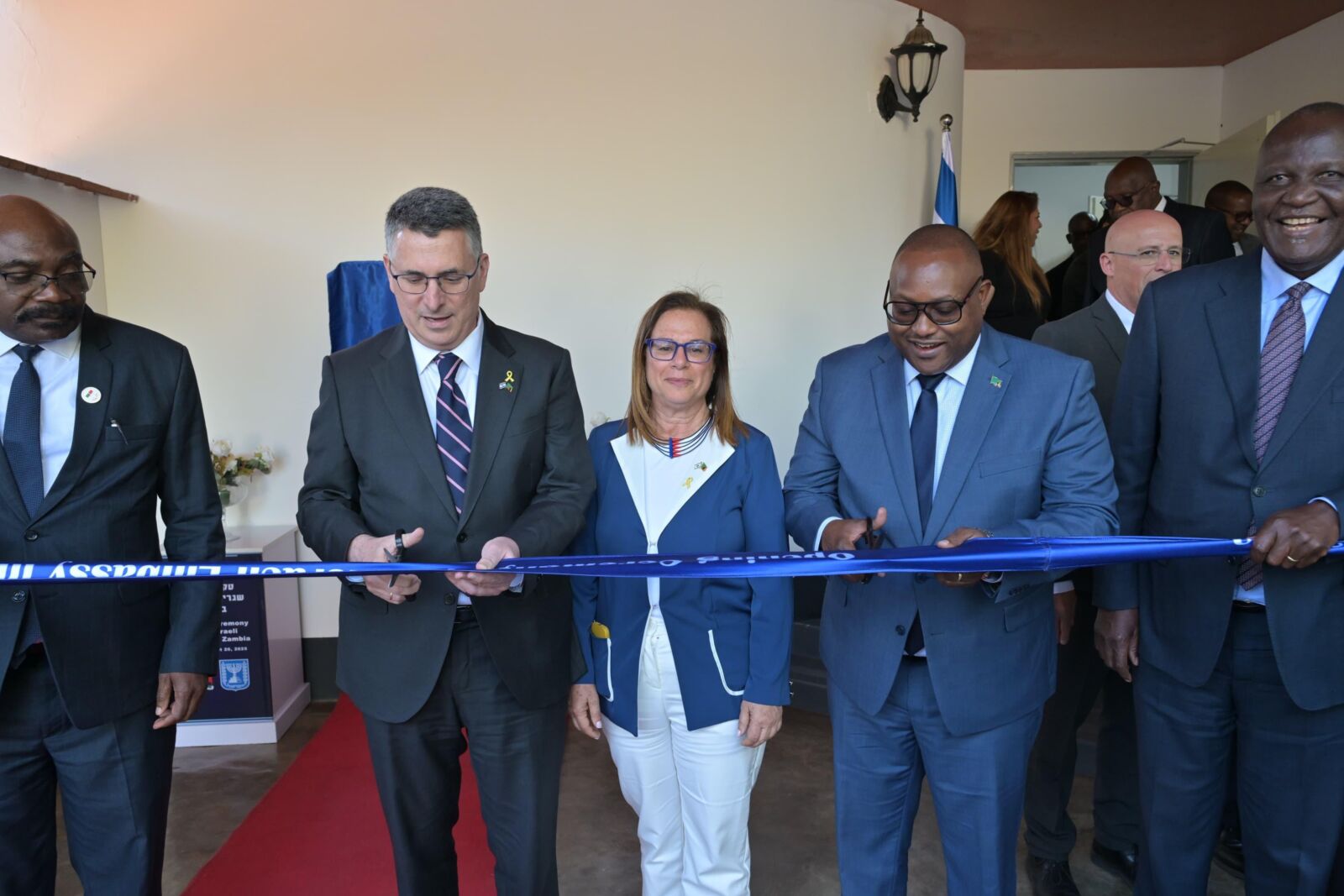
Saar inaugurating the Israeli embassy in Zambia (credit: Shlomi Amsalem, GPO)
Sa'ar declared on X that "Israel is returning to Africa." Yet while he celebrated that "return," many countries on the continent were in fact moving further away from Israel and joining the sharp international condemnations of it. The embassy in Zambia may contribute to ties in agriculture, health, and trade, but reopening a single mission in a country with which relations had already been renewed in 1991 is not a "return to Africa," and certainly does not alter the continent's diplomatic trajectory. The embassy cost about $360,000.
Since the ceremonial event in Lusaka, Israel has not opened another embassy in an internationally recognized African country. Sa'ar's next major African move was recognizing Somaliland, after years of secret ties between the two sides. Israel thereby became the only UN member state to recognize Somaliland's independence. Israel appointed a nonresident ambassador and promised to open an embassy in Hargeisa, but the embassy has not yet opened. Somaliland, for its part, has already opened an embassy in Jerusalem.
Sa'ar may have gained another ceremony and another celebratory tweet, but not broad support in Africa. The African Union, which regards Somaliland as part of Somalia, strongly condemned Israel's recognition. Nine African countries joined a broader joint declaration by 21 Arab, Muslim, and African states and entities against the move.
The signatories included Egypt and Jordan, Israel's peace partners, and Saudi Arabia, which Netanyahu's government has sought for years to bring into the normalization process. Sa'ar wanted to present a new friend; instead, he alienated the body representing the continent's states and several of Israel's most important partners in the region. In practice, this was the "return to Africa": one reopened embassy, recognition of an entity that no other UN member state recognizes, and a new front of condemnation.
Micronesia 2.0
In December 2025, Sa'ar also tweeted about his decision to open an embassy in Fiji. He explained that Fiji was "one of Israel's most consistent supporters, including at the UN," and that opening the mission would strengthen cooperation in development, the economy, and security.
The embassy in Suva opened in June 2026, more than three decades after Israel closed its previous mission in the country. Here, too, the desire to strengthen ties with a government that supports Israel internationally is understandable. But the public was not told why this requires a permanent embassy rather than a nonresident ambassador, or what benefit is expected in relation to the cost.
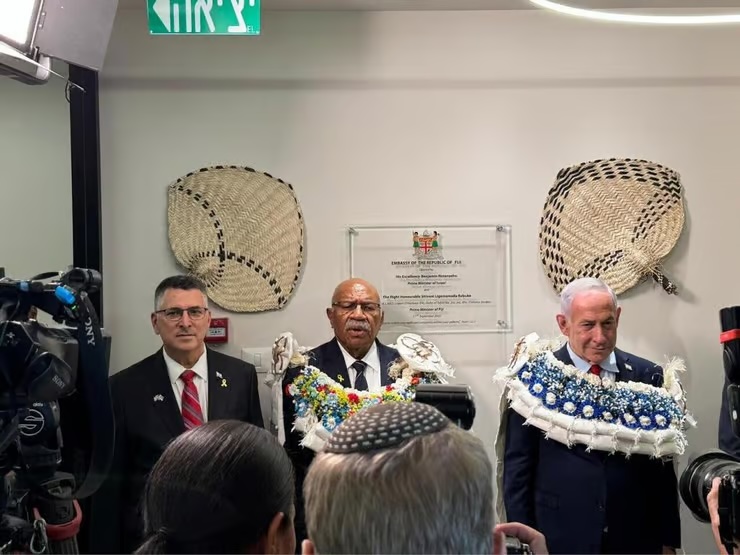
The inauguration of the embassy of Fiji in Jerusalem (credit: Rafi Ben-Hakun, GPO)
And the cost is substantial: more than $825,000 to establish the embassy, an annual lease of $258,852, and another $330,000 allocated by Israel for training and civilian projects in Fiji.
We Will Foot the Bill Later
Embassies are not props in a social media campaign. Opening and closing diplomatic missions involve staff transfers, leases, security, equipment, and long-term contractual commitments. Beyond the financial cost, these decisions affect the trust built between countries over years and Israel's capacity to operate in the forums that matter most to it.
The next government may yet revisit these priorities, close some of the newly opened embassies, and work to reopen the embassy in Dublin. If that happens, the public will pay a second time – this time to undo Sa'ar's moves.
Ahead of the October 27 election, it is worth remembering: tweets quickly disappear into the depths of the feed, but the diplomatic damage, contracts, and operating expenses remain long after the tweets are gone.
As always, the bill is presented to the public.
This article was originally published in Hebrew by Shakuf on Jul 29, 2026.