






In 2025, the unprecedented low rate of representation of Arab society in mainstream Israeli media deepened further, according to representation index data.
The representation rate of Arab society reached only 1%, even though approximately 18% of the country's citizens are Arabs. The index examines all news and current affairs programs on the television channels Kan 11, Keshet 12 and Reshet 13, as well as on the radio networks Kan B and Galei Tzahal (Channel 14 was measured but was not included in the official index publication because it is not a full-fledged media channel but a political propaganda tool).
Throughout 2025, approximately 125,000 speakers participated in the news and current affairs programs of the five media channels included in the index. Of these, 1,247 were Arabs, approximately 1%. This figure is significantly lower than the average data for all years of the index and even lower than the average representation rate before the index was launched.
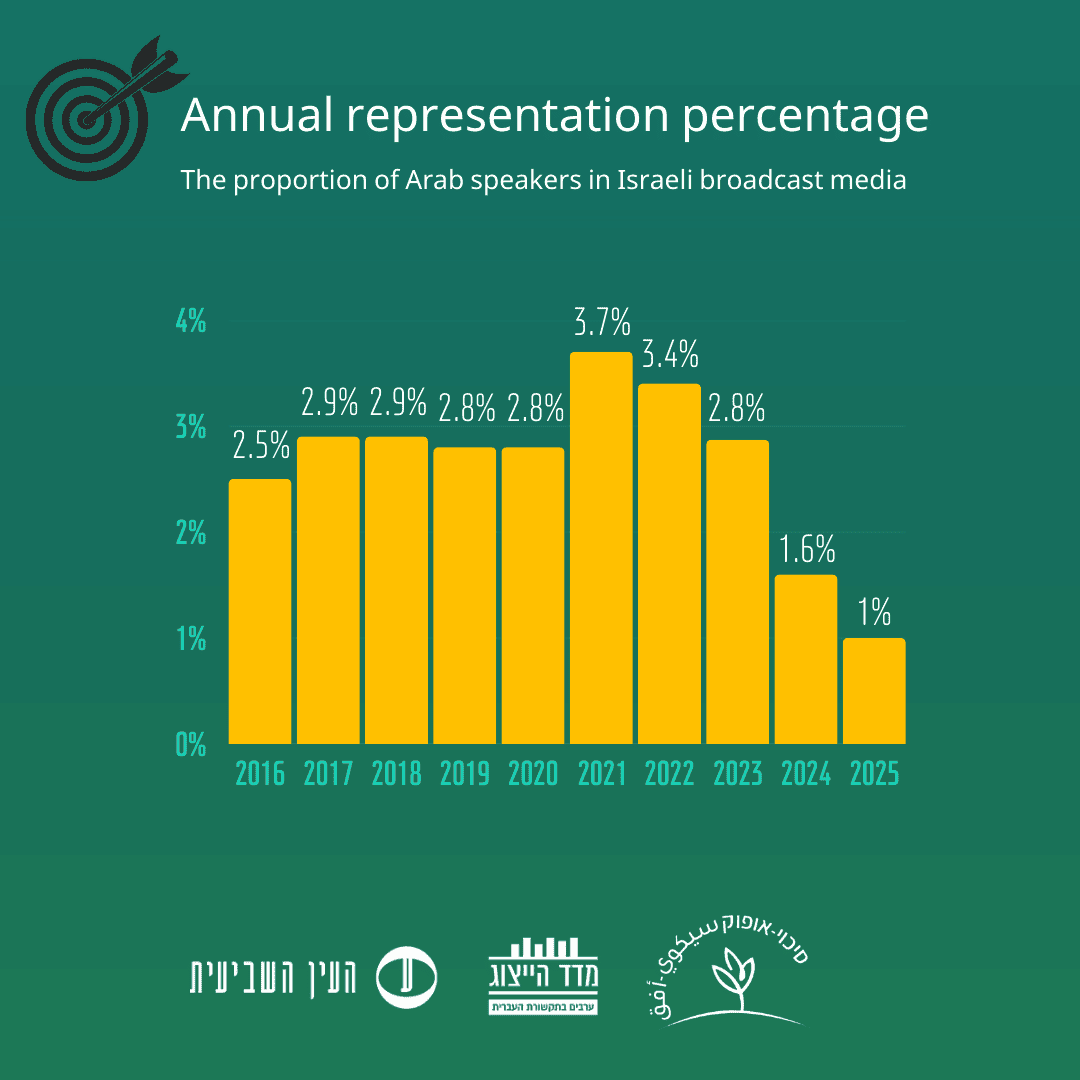
In the first two months of 2016, before the representation index was launched, the rate of Arab speakers stood at approximately 2.2%. Previous studies that examined the frequency of appearances of Arab citizens in the Israeli media also indicated a representation rate of approximately 2%.
After the launch of the index, a measured increase in the rate of representation of Arab society began. By the end of the first year of publication of the representation index, the representation rate had already climbed to 2.5%, in 2017 it stood at 2.9%, in 2018 the representation rate was maintained, while in 2019 and 2020 there was a slight decrease to a representation rate of 2.8%. In 2021, the representation rate jumped to 3.7%.
According to researchers at Yifat Media Research, the rise was due, among other things, to the replacement of the government with one that included an Arab party (Ra'am) and as a result of the inter-racial riots during Operation Guardian of the Walls.
In 2022, the representation rate dropped to about 3.4%, while in 2023 the downward trend continued and the representation rate was only 2.8%.
In 2024, against the backdrop of the deepening war in Gaza, the decline in the representation rate increased even further, reaching only 1.6%.
However, in 2025, representation dropped to the lowest rate ever recorded. While Israel was engaged in the most difficult war it had known in recent generations, and also after the ceasefire was signed, the mainstream media almost completely erased the voices of about a fifth of Israeli citizens to the point of symbolic extinction.
Due to editorial decisions, Israelis hardly ever encounter voices from the Arab community in mainstream media, and when despite this a member of the Arab community is heard, it is often an exceptional and extreme voice from within Arab society that does not really represent most of the community. So not only is the level of representation disproportionate, the identity of the speakers also does not adequately represent the Arab community in Israel.
As in 2024, in 2025 the most prominent speaker from Arab society is Yousef Haddad, an activist and advocate whose positions do not represent the stances of the overwhelming majority of Israeli Arab citizens, judging by voting patterns in the Arab community.
"The fact that only 1% of speakers in the mainstream Hebrew media were Arabs is an unprecedented low, but unfortunately not surprising - it is a continuation of the downward trend in representation (which is small anyway) that we have seen in the last two years, since the war in Gaza began," says Hadeel Azzam Jalajel, associate director of the Public Affairs Department at Sikkuy-Aufoq.
"The index's findings are published in the shadow of a particularly bloody reality in Arab communities, and it is impossible to see without being shocked by the appalling under-reporting in the Hebrew media in the last year of the issue of rampant crime in the Arab community — a year in which a peak number of 252 victims of organized crime were recorded; the most burning issue in Arab society did not appear on the list of the 20 most prominent issues covered in the Hebrew media."
According to Azzam Jalajel, "This neglect and omission is not only a moral injustice toward the victims and their families, but also a serious journalistic failure and a direct violation of the right of all citizens to understand the depth of the crisis and demand responsibility and change. Precisely in an era of a government that incites against Arab citizens and normalizes violence, the media's duty is to be the public's protective wall - not an accomplice to exclusion."
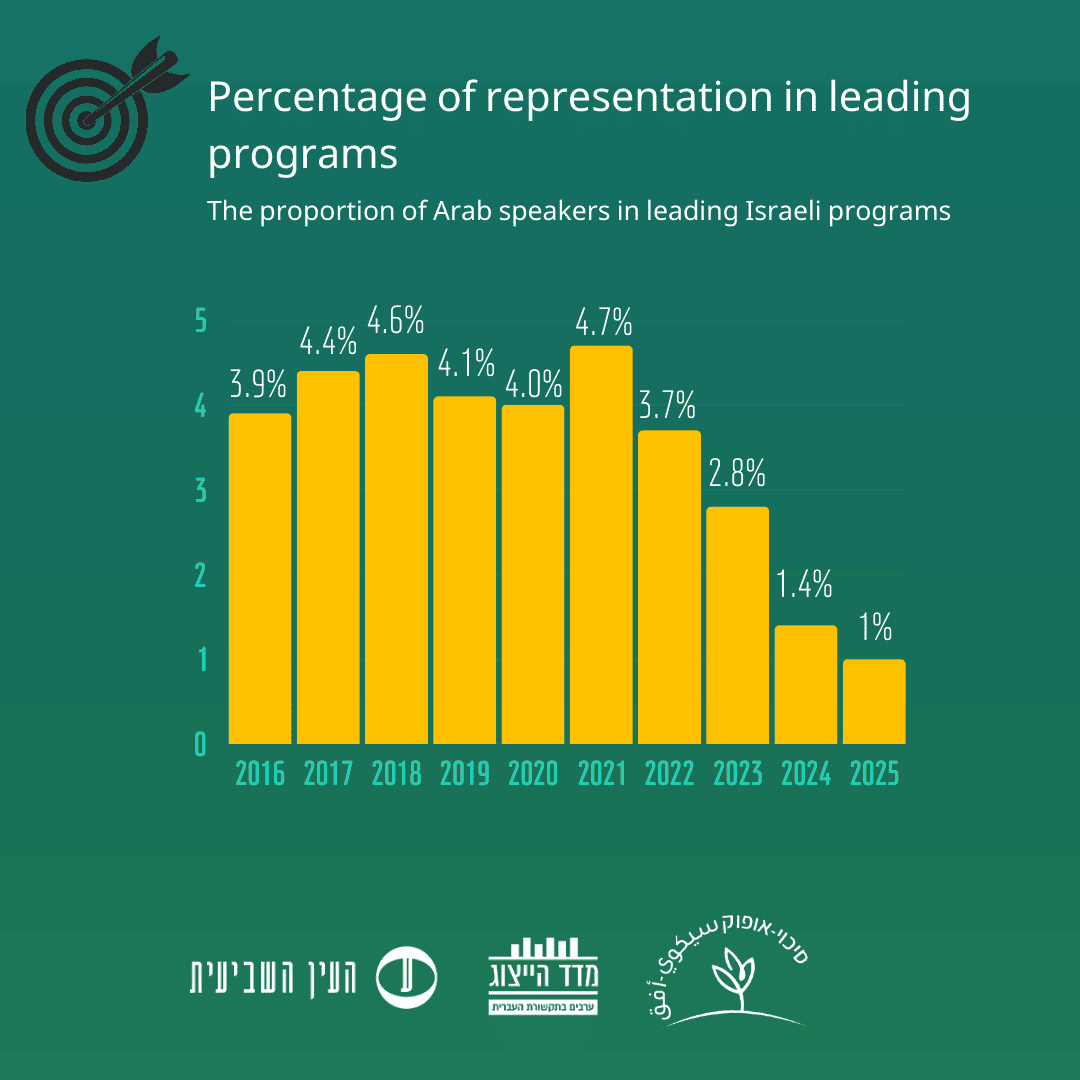
The downward trend in representation is even more pronounced when examining the representation rate of Arab society in leading mainstream programs. As in previous years, this year the index paid special attention to about 20 leading media programs. However, since the beginning of 2022 and unlike previous years, the index's findings have not been published regularly throughout the year, and the successes and failures of the programs being monitored have not been highlighted.
It appears that the change in the frequency of publication of the representation index canceled out the positive effects on newsrooms to invite Arab speakers, as the average representation rate in the programs being monitored was lower than it had been since the beginning of the measurements in 2016, and stood at only 1%, even less than the low point set in 2024 (1.4%) and continuing the downward trend that has characterized recent years.
If in 2023 there were 15 major programs that exceeded the 2% representation threshold and in 2024 only six programs, then in 2025 only two major programs managed to meet the task.
In this context, it is interesting to note that not only has the representation rate in the main programs plummeted, but also the gap between the average representation rate of all news and current affairs programs and the representation rate in the leading programs. In the first years of the index, the gap between the leading programs and the general average was over 1 percent. Since the beginning of 2022, the gap has narrowed, and since 2023 it has been zero or negative.
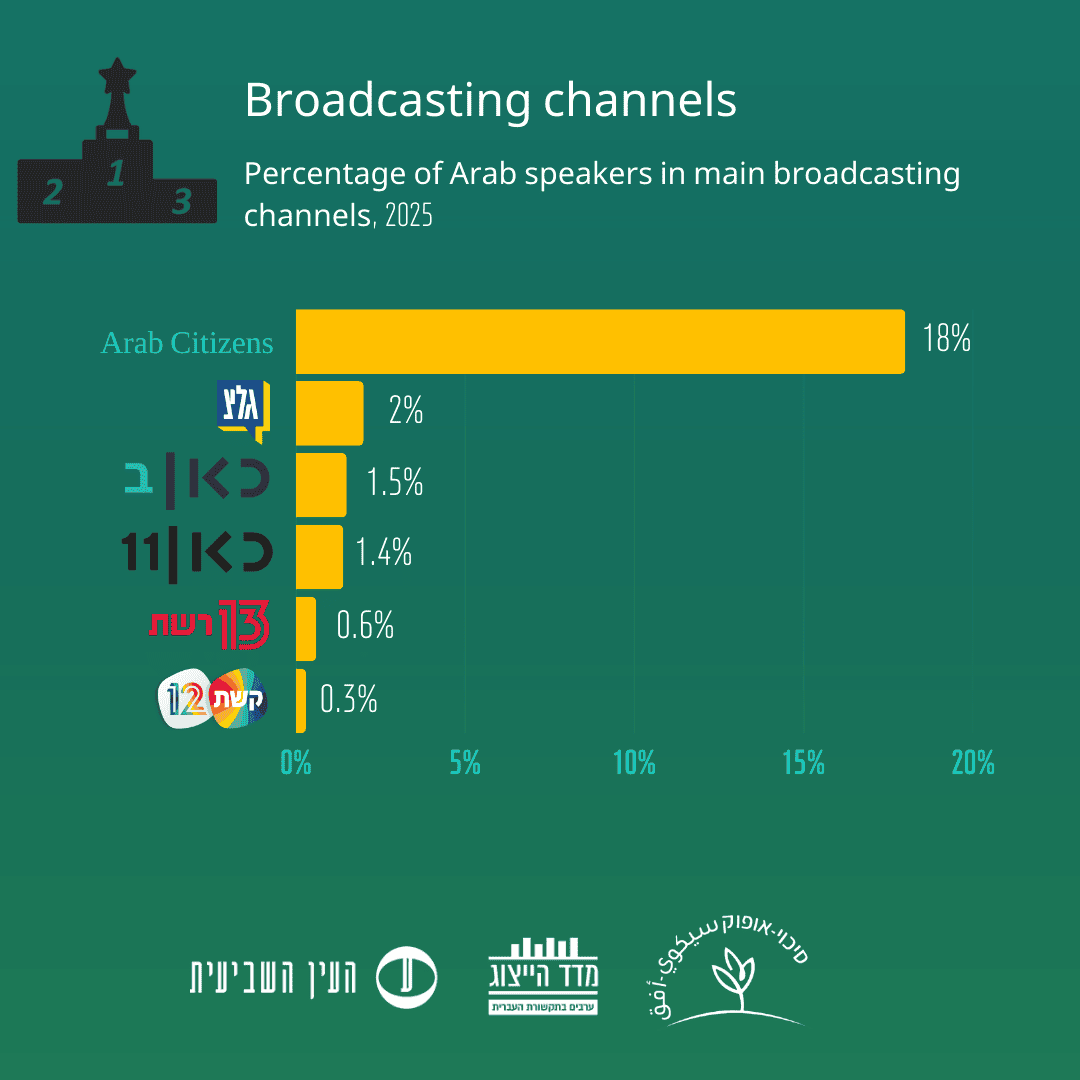 In the breakdown of the 2025 data by broadcaster, the stark exclusion in the representation rate on Keshet 12, the leading media outlet in Israel, stands out. Responsibility for this lies with the CEO of News 12, Avi Weiss, and the CEO of Keshet 12, Avi Nir. Viewers of Keshet 12 are rarely exposed to speakers from the Arab community.
There’s also a notable decline in representation of the Arab community at the Israeli Public Broadcasting Corporation, continuing the trend of last year. For the first time since 2018, the public broadcasting corporation KAN, including both of its branches, lost the top spots in the broadcast rankings. News division manager Lior Landenberg, along with CEO Golan Yochpaz, are responsible for this dismal figure.
In first place among the channels, with an incredibly low representation rate of only 2%, is the military radio station Galei-Tzahal, which the government recently decided to shutter. It is also the only broadcasting organization in which there was an increase, though minuscule, in the representation rate over the past year.
In 2022, Galatz's representation rate was 3.1% and since then it has dropped to 2.9% in 2023 and 1.9% in 2024. The rise of a tenth of a percentage point to 2% was enough to put the station into first place. Galatz's commander, who is responsible for the station's broadcasts and the slight rise in the representation rate, is Tal Lev-Ram.

Broadcasting Corporation CEO Golan Yochpaz (Photo: David Shimshon, Broadcasting Corporation Spokesperson)
After Galatz come the two public broadcasting corporation channels— Kan B with 1.5% and Kan 11 with only 1.4%. Only two years ago, before the war, broadcasting corporation's current affairs channels achieved representation rates three times higher.
Kan B ended 2021 with 4.9%, 2022 with 5.3%, and 2023 with 4.4%. In 2024, it dropped to 2.1% and this year, as mentioned, it settled for a rate of only 1.5%. Kan 11 ended 2021 with 4.6%, 2022 with 4.2%, and 2023 with a representation rate of 4.7%. In 2024, it dropped to 2.5% and this year, as mentioned, the rate deteriorated to only 1.4%.
This is, therefore, nothing less than a collapse in the representation rate at the Israeli Broadcasting Corporation, towards an almost total exclusion of about a fifth of the country's population.
However, the situation at the two commercial channels, Reshet 13 and Keshet 12, is even worse. The decline of Reshet 13, whose news division is run by Tali Ben-Ovadia, continues the downward trend of recent years. From 2.9% in 2022, to 2.4% in 2023, to only 1.2% in 2024 and now to only 0.6%. For years, Reshet 13 has been considered the liberal benchmark of commercial broadcasting in Israel, but when it comes to sharing voices from the Israeli-Arab community in the station's broadcasts, it seems there is no such expression. The channel's CEO is Emiliano Calemzuk.
The representation rate on Keshet 12, the most popular television channel in Israel by a significant margin even in 2025, has reached an unprecedented low. If in 2022 the channel still enjoyed a representation rate of 2.7%, then in 2023 the representation rate dropped to 1.3%, in 2024 it dropped to only 1%, while last year it was only 0.3%.
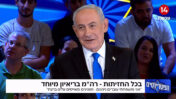
This is the lowest representation rate for Keshet 12 since the index began in 2016, and in fact the lowest figure for any broadcast channel since the surveys started. Since 2023, it should be noted that, after long years of hegemony, Keshet began broadcasting against a new, right-wing populist competitor, in the form of Channel 14, which serves as Prime Minister Netanyahu's propaganda arm and pursues a permanent policy of exclusion, discrimination, and racism.
It is precisely in this climate that the channel's senior executives, led by News 12 CEO Avi Weiss and Keshet 12 CEO Avi Nir, prefer to align with these unacceptable trends and not present to viewers the reality in Israel, where about a fifth of the citizens are Arabs.
* * *
The Representation Index is a joint venture of The Seventh Eye and the Sikkuy-Aufoq Association, which since 2016 has been continuously measuring, through the Yifat Media Research Company, the percentage of representation of the Arab population in news and current affairs programs on mainstream channels in Israel (Channel 14 was also measured but was not included in the official publication of the index because it is not a news channel but a political propaganda tool).
The index examines all news and current affairs programs on the television channels Kan 11, Keshet 12, and Reshet 13, as well as on the radio networks Kan B and Galei Tzahal. These mainstream media outlets in the State of Israel are supposed to reflect the entire Israeli population in their broadcasts, whether by law or by virtue of journalistic professionalism. Despite this, they prefer to focus disproportionately on Jewish citizens and present their viewers with a country from which Arab citizens are almost completely absent.
This preference creates a distorted picture of reality for viewers and listeners. A side effect of this is the deepening of the conscious separation between Jewish and non-Jewish citizens of Israel. The Representation Index was created to encourage decision-makers in the media, journalists, editors and presenters of news and current affairs programs, to step outside their comfort zone and change the trend.
The Representation Index is a joint project of "The Seventh Eye" and the Sikkuy-Aufoq Association, carried out through the Yifat Media Research Company
This article was published in Hebrew on February 5, 2026
Translation: Harriet Brown