






On February 22, the Jerusalem Magistrate's Court overturned its earlier decision to convict Yitzhak Sofer, a Border Police team commander, of assaulting a Palestinian journalist. Sofer punched the journalist, hit him in the head with the barrel of a gun, knocked him to the floor, kicked him in the head nine times, and then stepped on his stomach, but his conviction was overturned to prevent him from "significant harm, disproportionate to the severity of his actions."
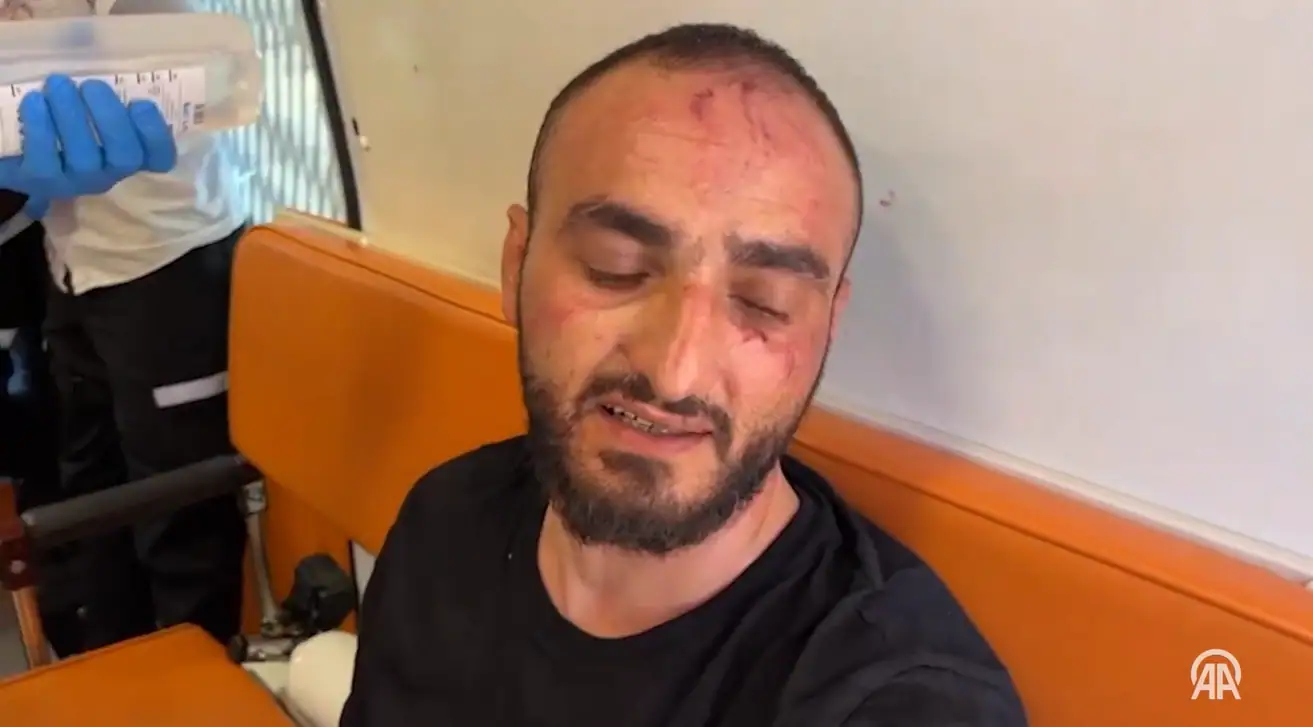
In December 2023, Border Police officers were filmed violently attacking photojournalist Mustafa al-Haruf in East Jerusalem. The footage shows al-Haruf, a reporter for the Turkish Anadolu news agency, being pushed and beaten by Border Police officers, knocked to the ground, and then kicked again and again while lying on the ground
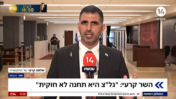
Two of the police officers were suspended as a result of the incident, but National Security Minister Itamar Ben-Gvir, a former member of the racist Kahane Hai movement, stated that he was "providing backup" for the officer suspected of attacking the journalist, whom Ben-Gvir, himself a convicted felon for supporting terrorism, described as a "Hamas supporter."
According to the indictment filed against Sofer, the force operating in East Jerusalem was instructed to block the Wadi Joz highway to prevent the exposure of special and covert Israeli police forces operating there. When they encountered the journalist al-Haruf there along with his colleague Faiz Abu Ramila, police officer Ilan Basrayev ordered the two to move away, and when they did not comply with the order, they were "legally removed from the road," as al-Haruf shouted that he was a journalist.
But then Sofer arrived “and began to strike M.H. [Mustafa al-Haruf] hard in the head with his fists and also kicked him in the leg,” according to the indictment.
As the officers turned to leave, al-Haruf called to Sofer, “Shame on you, you piece of shit.” Upon hearing this, Sofer turned to the journalist, cocked his gun and pointed it directly at him, then hit al-Haruf hard in the head with the barrel of the gun.
Al-Haruf then shouted at Sofer, "You criminal, you maniac son of a bitch." In response, the defendant returned to the journalist, swung the weapon once more and pointed it at him. Al-Haruf turned around, raised his hands, and shouted, "Come on, put it in my head, you think I'm scared." In response, Sofer ordered the policeman Basrayev to arrest the journalist by taking him to the ground. Basrayev did so by placing his knee on the journalist's back, and at this time Sofer walked toward al-Haruf, "kicking him in the head nine times and stomping on his stomach."
Al-Haruf was handcuffed, but when medical teams arrived on the scene, Sofer ordered him released. Al-Haruf was taken to a hospital where he was treated for a cut on his head that required stitches, and for extensive bleeding in his eyes and face.
Sofer was charged with assault causing injury and with threats, for using his weapon against the journalist. Last September, he was acquitted of the threats but convicted of assault causing injury.
"There is no dispute that the complainant [al-Haruf, OP] not only did not leave the intersection as required and when ordered to do so by the security forces, but he also ‘exacerbated’ and remained at the intersection in defiance of what was required of him, cursing and even 'threatening' because he is not afraid of being shot and from his perspective he could be a 'martyr'," wrote Judge Amir Shaked in the ruling, "[...] But the question must be asked - whether this allows the defendant to kick the complainant in the head about nine times while he was pinned to the ground by additional police officers around him and on top of him (literally)."
Judge Shaked noted that in this case, there was not a single soldier who was present at the event and testified that he felt his life was in danger while al-Haruf was pinned to the ground. Sofer, Shaked added, also did not find it appropriate to file a complaint against al-Haruf for "assault." Therefore, the judge decided to reject the officer's version that he was "forced" or "required" to kick the photographer in the head while he was pinned to the ground.
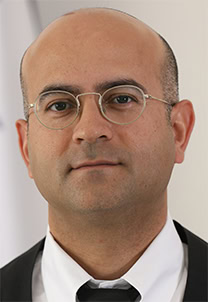
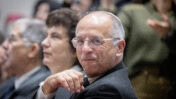
Judge Amir Shaked (Photo: Judiciary Spokesperson's Office)
However, after reviewing the probation service report and hearing the arguments for the sentence, Judge Shaked decided to change his mind and overturn Sofer's conviction.
According to the judge's ruling, the probation service report found that Sofer was coping with post-traumatic stress disorder symptoms as a result of events that occurred during his military service. The report also stated that Sofer had taken responsibility for committing the offense and expressed sincere regret for the way he acted. The report recommended that his conviction be overturned so that he could continue serving in the Border Guard and recover.
The state's representative, attorney Daniel Shahaf, argued in the sentencing arguments hearing that overturning Sofer's conviction "would send the wrong message regarding the conduct of police officers toward the public." Attorney Shahaf also noted that the attack on the journalist had received global attention.
According to the state, the probation service's report examined Sofer "through a narrow and limited lens" while avoiding confronting him with the fact that "he does not take real responsibility for his actions; he does not express remorse or empathy for the complainant, and it is clear that his words to the probation service were spoken for show."
The state therefore demanded a sentence of six months in prison, which could be fulfilled with community service.
Among the character witnesses Sofer brought was Israel Police spokesman Aryeh Doron. "I think, sir," the spokesman told the judge, "that your decision could affect many, many Border Police [...] whether to protect the lives of citizens in the State of Israel."
Doron called Sofer "a boy" several times, recounted his life story, and said: "It is forbidden, sir, for this man to leave here and the disciplinary department will follow the procedures of the Israel Police [...] With such a conviction, he might find himself outside the Israel Police. Imagine for yourself what message this sends."

Police spokesman Aryeh Doron (Photo: Yonatan Sindel)
Later, spokesman Doron added: "My Polish father would say 'Der Yiddishër Hertz' a little, and come and say friends, it’s true, he was out of order, a police officer shouldn't behave like that, but also my son, when I walked with him when he was born and I tried to pick him up when he was walking for the first time, then he would fall and I would pick him up like a father and tell him, 'Come, let's do it again.'"
On Sofer’s behalf, attorneys Moshe Alon and Diana Shumsky sought to overturn the conviction, in order to prevent a situation in which Sofer would be discharged from police service and would be unable to fulfill his ambition to become a lawyer.
Sofer himself was also given permission to speak before his sentencing, and he told the judge: "Because this whole incident is being handled in court, I feel like I've already received the harshest punishment, the uncertainty. The fact that at work you are looked at strangely. The commanders try to protect you, but they don't really, they have no contact (with) discipline. When people tell me that I might find my way out, and work, work is therapy. When I wake up in the morning and I know that I'm going to work, I know that I'm okay, I know that I'm taking care of myself, I know that despite everything I've been through, I have a warm, good, and loving place."
Continuing his remarks to the court, Sofer asked "that everything be clean and a clean slate."
Judge Shaked was convinced. "In the case at hand," he wrote in the verdict, "I believe that the circumstances of the case make it possible to avoid a conviction."
"This is a young defendant with no criminal record who chose to dedicate his life to the security of the State of Israel, who only recently married his heart’s choice, who also chose to dedicate her life to the security of the State of Israel, and this cannot be ignored when the court comes to examine whether the defendant's legal conviction will be upheld," the judge wrote.
The judge noted that Sofer leapt to rescue lives on October 7, but paid for it with his mental health. The judge also wrote that since the incident, Sofer's employment with the Border Police has not been suspended, but he was transferred to office work. If the conviction is upheld, added the judge from the defense arguments, he will not be able to continue his work, where he receives, among other things, the mental health care he needs.
"In light of this, I believe that upholding the conviction would cause the defendant significant harm, disproportionate to the seriousness of his actions," Judge Shaked ruled. "This is a young defendant with no criminal record who accepted responsibility for his actions, while the evidence cleared him from the charge of threats attributed to him. As evident by the statements of his commanders and the character witnesses who appeared before me, his behavior for which he was convicted does not characterize him or his many years of service.
"I was impressed that leaving the conviction intact would severely harm the defendant, who is a post-traumatic stress disorder sufferer recognized by the National Insurance Institute as having significant disability, particularly in light of his fighting on October 7, 2023, in a manner that is not commensurate with the seriousness of the acts he committed. I do not believe that there is a public interest in leaving the conviction intact. For in his case, we are talking about a defendant who chose the path of return to the good, in which there is hope. It does require time, hard work, and professional guidance as detailed in the probation service report adopted by the defendant, which is capable of leading the defendant to a place where the decision not to convict will constitute a turning point for both his physical and mental rehabilitation."
After overturning the conviction, Judge Shaked sentenced Sofer to 300 hours of community service.
This article was published in Hebrew on February 23, 2026
Translation: Harriet Brown