







The hope of foreign correspondents working in Israel that they might soon be allowed to enter Gaza, and finally provide their hundreds of millions of viewers around the world with reports and stories from the area after two years of war and restricted access, evaporated yesterday morning (October 23) in a brief hearing held at the Supreme Court.
The justices granted the state 30 days to formulate an updated position, in light of the "change in circumstances" brought about by the ceasefire initiative led by the United States. Given past experience — the justices had allowed the state to delay its response to the petition for nearly a year — it is reasonable to assume that in another 30 days no new position will be filed, and thus the opening of Gaza to free journalistic coverage is not expected in the coming weeks, despite the end of the fighting.
This morning’s hearing concerned a petition filed more than a year ago by the Foreign Press Association (FPA), which represents international journalists working in Israel. After seven extensions granted to the state, it finally submitted in June its initial position, arguing that journalists should not be allowed free entry into Gaza for security reasons.
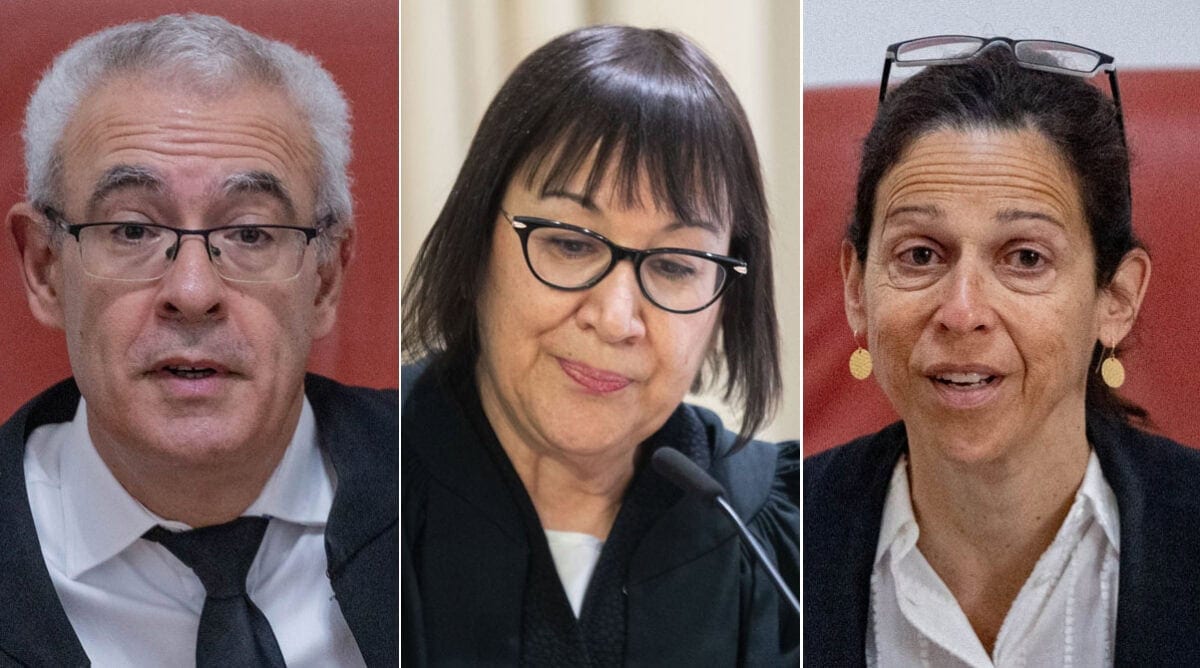
Two leading international organizations dedicated to press freedom, the Committee to Protect Journalists (CPJ) and later Reporters Without Borders (RSF), recently sought to join the petition as amici curiae (friends of the court), hoping that their international standing as press freedom advocates might influence the justices’ decision. However, the panel. composed of Justices Ofer Grosskopf, Gila Kanfi-Steinitz, and Ruth Ronen, did not discuss either the FPA’s arguments or the state’s response.
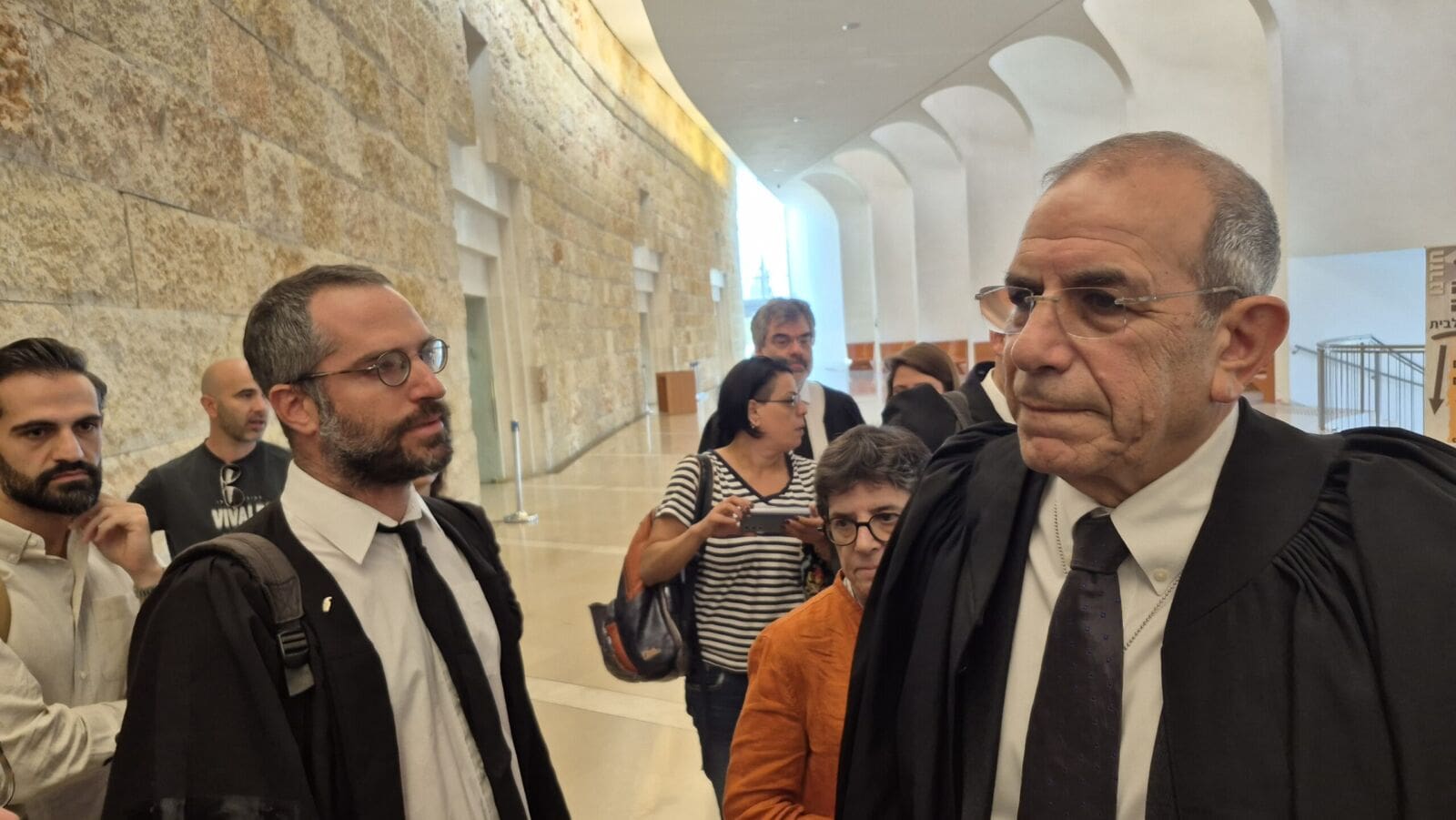
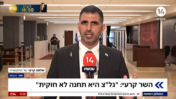
Attorney Gilead Sher (right), representing the Foreign Press Association, and Attorney Yonatan Nadav (left), representing the state, leaving the Supreme Court hearing on the petition to allow foreign journalists to enter Gaza, October 23, 2025.
(Photo: Oren Persico)
At the very outset of the hearing, Justice Grosskopf remarked that the court "wonders what is happening in light of recent developments."
The state’s attorney, Yonatan Nadav, argued that the response filed last summer reflected "the situation when fighting was still taking place across extensive areas of the Strip," but that following the recent changes, "the relevant authorities were asked to reassess the current position, and we have been informed that the matter is now under review."
"At present, it is impossible to deliberate on this petition in light of the changes in the security situation," said Justice Kanfi-Steinitz. "We will not discuss what you submitted when the reality was different."
Attorney Nadav requested 30 days to submit an updated position to the court.
Justice Ruth Ronen asked whether, as part of the reassessment, the state was also examining the issue of the border crossings that allow entry and exit from the Strip, a matter the state had cited as one of the logistical obstacles to allowing journalists in.
Attorney Nadav declined to commit. "Everything concerning this issue is still very fresh and sensitive," he said. "It’s not as if we’ve been in a stable situation for five years."
Justice Grosskopf then turned to Attorney Gilead Sher, representing the FPA. "There’s no avoiding the need to formulate a new position in light of the changed circumstances," he told him.
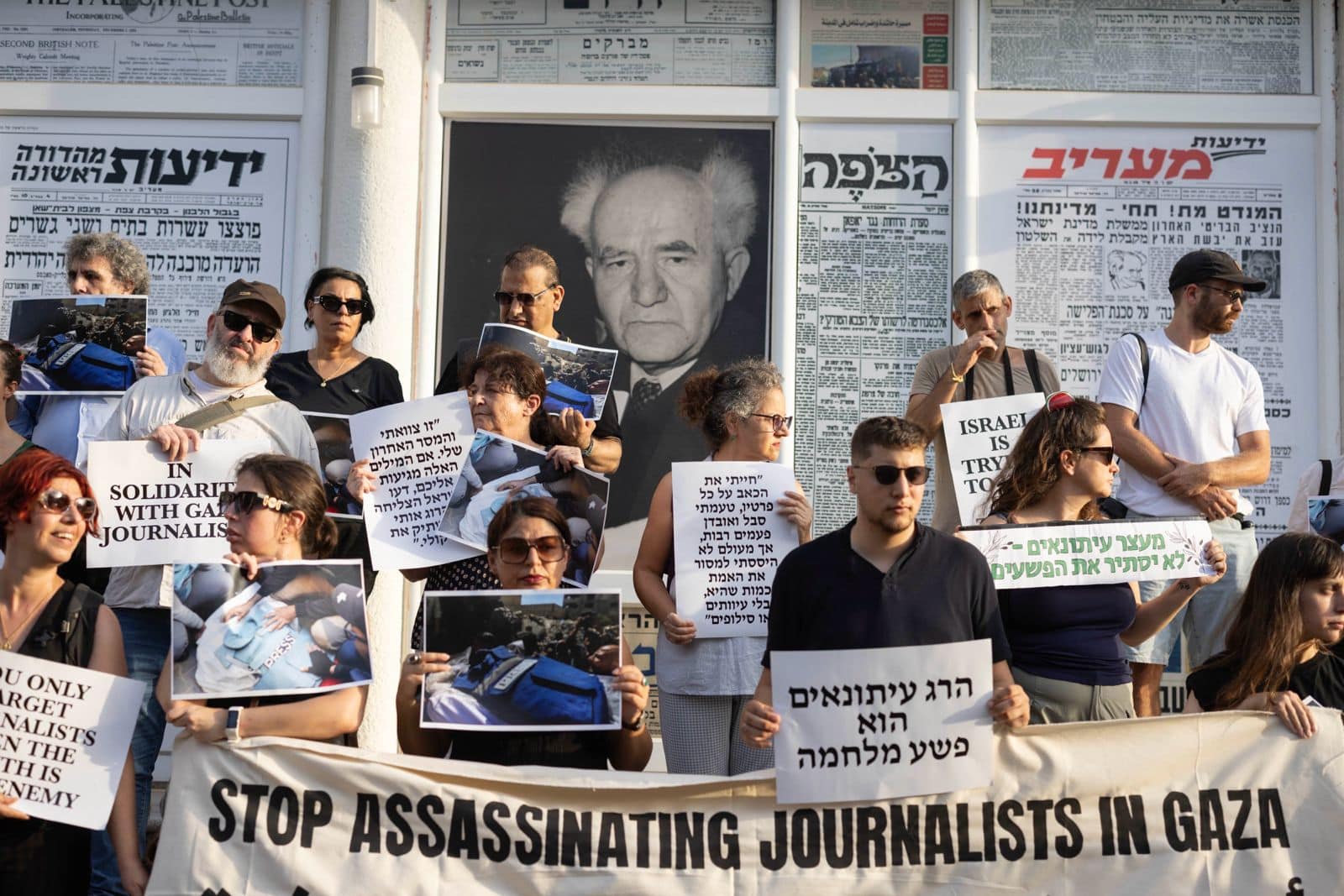
Journalists’ protest against the war in Gaza and the killing of journalists by the IDF, Tel Aviv, August 13, 2025 (Photo: Oren Ziv)
Attorney Sher noted that throughout the year and two months that have passed since the petition was filed, there had been ceasefires and hostage-exchange deals, as well as the entry of humanitarian aid workers and the withdrawal of many troops, not to mention a significant decline in the intensity of the fighting.
"We never heard that the state hurried to formulate a position regarding any of those periods," he said. "Now the war is over, and now all the supposed justifications for this very, very serious infringement of the foundations of freedom of expression and the public’s right to know have ended."
Attorney Sher asked to specify the number of foreign journalists who had entered Gaza under IDF escort during the past year, in order to contextualize the current restrictions. But Justice Kanfi-Steinitz interrupted him, questioning whether there was any point in arguing about violations of free expression now that the situation had changed.
"You’re making arguments about matters that are not in dispute," she told him. "The question is what security reality we are in, full-scale war or ceasefire. What we have before us is a position from the security authorities that was based on the security situation as it existed in June, and today the situation is entirely different."
"Let’s be practical," suggested Justice Grosskopf.
"Then not thirty days," replied Attorney Sher. "These journalists need to report on what’s happening."
Justice Grosskopf was not persuaded. After Sher reminded the court that the state had already requested, and received, seven extensions for submitting its initial position, even after the Supreme Court had ruled that no further extensions would be granted, Justice Grosskopf sought to reassure him, saying, "Extensions will be granted sparingly."
"That’s also been said before," Sher replied.
After the hearing concluded, the Foreign Press Association issued a statement claiming it is "disappointment" with the decision to grant the state another delay.
"The state today once again relied on stalling tactics to prevent the entry of journalists. For two years, the Israeli government has sought one delay after the next, with the clear aim of barring journalists from carrying out their journalistic duties and hindering the public’s right to information. The government’s position remains unacceptable. We renew our call for immediate access to Gaza."
This article was published in Hebrew on October 23, 2025