





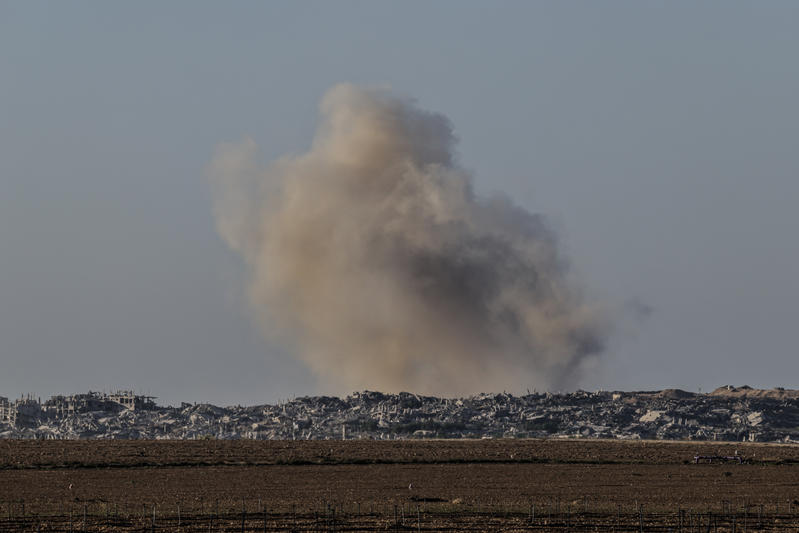


This week marks one year since the FPA filed an urgent petition challenging the government’s ban on journalists entering the Gaza Strip, imposed at the outbreak of the war in October 2023.
Despite the dramatic changes in Gaza over the past year, despite the dozens of Palestinian journalists killed by Israeli fire, and despite repeated requests for an expedited hearing, the Supreme Court has granted the state one postponement after another. The hearing itself has already been rescheduled twice and, as of now, is slated only for next month.
A few weeks after Hamas’s surprise assault on Israel on October 7, 2023, and the subsequent Israeli military incursion into Gaza, the FPA, which represents foreign correspondents in Israel, petitioned the Supreme Court to allow international reporters free and independent access to the Strip.
The state opposed the request on security grounds, and the petition was dismissed. Justices Daphne Barak-Erez, Khaled Kabub, and Ruth Ronen accepted the government’s argument that allowing foreign journalists in would endanger them as well as Israeli soldiers.
Still, the justices left the door open to revisiting the decision if circumstances changed. “Given the extreme security conditions at this time, and the real risks involved in granting independent entry permits to journalists,” they wrote, “we find the policy balanced and reasonable.”
One year ago, on September 10, 2024, the FPA filed a second petition, arguing that conditions had indeed shifted. With the Israeli military having gained control over much of Gaza, attorneys Gilead Sher and Ran Greenwald argued, the risks to both reporters and soldiers had significantly diminished, at least in some areas.
Preventing foreign journalists from entering Gaza, they added, raises the concern that “the respondents’ decisions and policies are driven by extraneous considerations, such as the desire to shield from international media scrutiny what is actually happening inside the Strip.”
Despite the urgency, the state requested, and was granted, no fewer than seven extensions before finally filing its response on June 20. The lengthy delay did nothing to alter its position.
“Even at this time, marked by combat across various parts of Gaza, journalists (foreign or local) must not be permitted entry into the Strip without military escort. This is for clear security reasons, particularly given the risks and implications for ongoing operations and for the forces deployed there (as well as for the journalists themselves),” wrote state attorneys Yonatan Nadav and Michal Danieli-Tscherny.
When the state’s response finally arrived, a hearing scheduled for April was postponed to make way for other cases, including one concerning the appointment of Itamar Ben-Gvir, a convicted supporter of terrorism, as Minister of National Security.
Another hearing was set for June, but it too was canceled after Prime Minister Benjamin Netanyahu, himself on trial for corruption and wanted for investigation at The Hague over alleged war crimes, ordered an attack on Iran. The case was rescheduled for October 2025.
The FPA filed an urgent request to advance the hearing, citing “fundamental changes in circumstances and realities on the ground in Gaza that demand immediate judicial review, lest the petition become meaningless by the time the Court convenes.”
At the time, famine was spreading in Gaza. Against this backdrop, the FPA argued, “the importance and urgency of hearing the petition as soon as possible has become critical, in order to establish even a temporary and limited arrangement that could provide relief to the petitioner and its members.”
To date, the Court has not even issued a ruling rejecting that request. The hearing remains scheduled for October 23.
On the anniversary of its urgent petition, the FPA released a statement: “Regrettably, there still is no resolution. Despite the urgency, the court has repeatedly agreed to the government's request for delays and postponed one hearing after another.”
The group continued: "Meanwhile, our colleagues in Gaza, including members of this association, have had their lives shattered. Palestinian journalists have been directly targeted. Places where they habitually gathered have been bombed. At least 200 of them have been killed by Israeli fire, more than in any other conflict in modern history.
"Despite all of these dangers, they continue to inform the world while facing not only violence, but also hunger and repeated displacement.
"Israeli leaders and the military have also gone to extreme lengths to discredit the work of our Palestinian colleagues, and to a great extent, the work of the foreign press as a whole. This campaign of delegitimization has created and amplified hazardous working conditions for journalists, leading to the normalization of incitement, harassment and attacks on foreign press both from Israeli civilians and members of Israel’s security forces.
"Journalism is not a crime. Israel must stop killing journalists in Gaza and give the foreign press free and independent access to the territory. This continued and institutionalized delay in the process is a mark of shame on Israel and its allies, who have too often chosen not to speak up in defense of basic press freedoms."
The panel now scheduled to hear the case on October 23 includes Justices Ofer Grosskopf, Gila Kanfi-Steinitz, and Ruth Ronen.
The article was published in Hebrew on September 15, 2025