

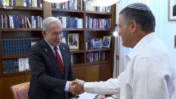



From the ICC prosecutor’s application for arrest warrants against Netanyahu and Gallant, through the pro-Palestinian protests on U.S. campuses to the voting patterns in the Eurovision final, Israeli public discourse goes into a tailspin when faced with what it sees as the sudden hatred directed at us around the world.
To bridge the gap between how we see ourselves and how Israel is perceived elsewhere, the Israeli public reaches for explanations ranging from “the world has forgotten what happened on October 7” to “we are hated because we are Jews.” Suddenly, everyone has become antisemitic—apparently for no reason at all.
But to understand reality and form an informed position, we have to know it. Most of the Israeli public has a black hole in its worldview.
The reason is simple: it does not see this reality in the Israeli media. Antisemitism does exist around the world, and many people elsewhere have indeed forgotten October 7, which is seared into the Israeli psyche. But there is also a humanitarian catastrophe just across the border—one that is largely absent from the Israeli media’s day-to-day coverage.
Apart from Haaretz and the independent Hebrew-language news site Local Call (Sikha Mekomit), Israel’s mainstream media almost entirely ignores the fate of Gaza’s civilians. The lack of information about the war’s toll in Gaza—the numbers of people killed, wounded, and displaced; the proportion of women and children among them; the harrowing personal stories; and the acute humanitarian crisis in the Strip—explains the seemingly inexplicable gap between how the world sees the war and how we see it.
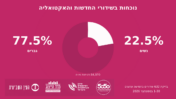
For consumers of Israeli media, reality effectively stopped with Hamas’s brutal massacre and the dozens of people held hostage in Gaza. But in the reality seen by the rest of the world, there are now tens of thousands of dead and wounded Palestinians, most of them women and children.
“In most Israeli media outlets, there is no trace of even basic information about the fate of Gazan women, children, and elderly people dying from the consequences of the war. The absence is so complete that Haggai Segal, a former editor-in-chief and now a columnist, can dismiss the very idea that ‘there is a humanitarian catastrophe and ongoing hardship’ as ‘antisemitic poison,’” Oren Persico wrote in these pages in March.
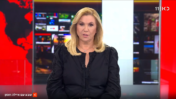
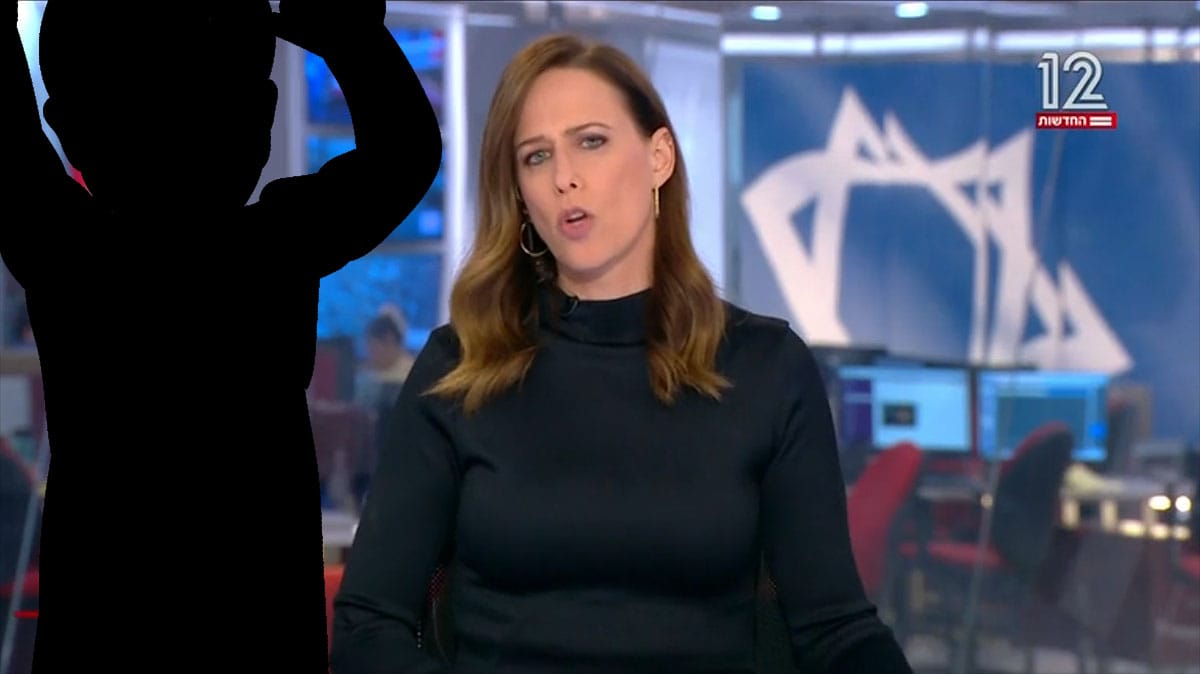
Although a handful of articles and reports about civilian life in Gaza can be found online and in print, the picture on television news—the primary source of news for most Israelis—is utterly disgraceful. N12 News, the dominant outlet for most Israeli viewers, avoids reporting on conditions in the Gaza Strip.
A search of N12’s website yields only a single-digit number of articles about what has been happening in Gaza since the outbreak of the war. Most focus on Gazans’ anger at Hamas and the disaster it has inflicted on them, with headlines such as: “N12 News Camera in Gaza: What Do Young People in the Gaza Strip Think of Hamas?” What do they think of Israel? N12 ignores Israel’s role in the conditions confronting Gaza’s residents—or the conditions themselves.
On far-right Channel 14’s website, a counter still tallies the number of terrorists killed. At the time of writing, it stood at 34,971. Most of them are civilians, even according to the IDF’s own estimates. Just like Hamas, Channel 14 does not distinguish between babies and fighters. N12 News does not indulge in Channel 14’s bloodlust, but it too counts only the number of Hamas operatives killed. The civilians go unmentioned.
The government has a cynical interest in keeping its citizens ignorant of the true conditions in Gaza, and many Israelis do not want to hear about the suffering of enemy civilians. But the Israeli media is derelict in its duty to provide a full and accurate account, even when doing so is uncomfortable for the government and unwelcome among the public.
A particularly ironic illustration of how deeply this warped understanding of the media’s role has taken hold can be found in a public statement issued by the Press Council. Rather than speaking out against the lack of coverage in Israel’s mainstream news outlets, it chose to congratulate Yonit Levi, the anchor of N12 News’s flagship newscast, on receiving an award for “Objective Reporting in the Middle East.”
Seven grueling months of war have passed since October 7. It is a war that we, here in Israel, are part of. The Israeli media’s deliberate decision not to cover the consequences and outcomes of the fighting carried out in our name—unless they can be framed as a “successful operation” or, God forbid, as casualties among our troops—harms us first and foremost—the Israeli public. We have a right to know what is being done in our name. It is the Israeli media’s duty to tell us.