





October 7 caught Israel unprepared. The IDF was taken by surprise. The government was in a state of shock. Against that backdrop, those who responded stood out: members of local civilian emergency squads, special forces and others. Some paid with their lives. The Israeli press also responded quickly.
In television studios, journalists broadcast in real time the chilling voices of people in the besieged southern communities; reporters and photographers went into the field under fire.
One of them was Bar Peleg, Haaretz’s social-affairs correspondent. This is his story.
6:30 a.m.
“I woke up early in the morning to my dog barking loudly,” says Peleg, 33, a married father of two from Tel Aviv. “I tried to calm him down, looked at my phone and saw Red Alert warnings. Seven minutes later, I was already messaging the newsroom: ‘Guys, I’m available.’”
6:37 a.m.
“I’m a social-affairs correspondent, and there were another three or four reporters ahead of me to be sent into the field, but I often work as a general-assignment reporter. At that point, I started preparing for a full day’s work: arranging for family to help with the kids and beginning to pack. No one at the newsroom was answering yet.”
7:27 a.m.
“I received the first video of militants in a Toyota driving through the middle of Sderot. I sent it to the editor on duty and to our police reporter, Josh Breiner, who was already on his way to Ashkelon. I asked whether it looked real to them; they told me to send it to the newsroom’s general group. I did, with a thousand disclaimers that we should wait for further verification and be careful. But we soon started seeing more footage and realized something was happening. I pulled my uniform down from the attic and packed one bag for a day of reporting and another for reserve duty.”
חוליית מחבלים חמושים מסתובבים ברחובות שדרות pic.twitter.com/JP0Duylt7J
— Desaley agery (@agery_desaley) October 7, 2023
What did you understand at that point?
“We didn’t know what was happening in the Gaza border area, only in Sderot. But terrorists in Sderot is an event, and missiles being fired all over Israel is an event. So at that point I had to be ready for two things: a day reporting from the field, possibly followed by a night in the south, and then reserve duty. I went down to buy water for the road, and the newsroom still hadn’t told me to leave. I was on edge; I wanted to get going. In the end, I arranged with the head of the news desk to head for the Shephelah, the lowlands southeast of Tel Aviv.”
8:30 a.m.
“I set out for the Shephelah and reached the Rehovot area. The plan was to position myself there and wait for missile strikes there; I was also supposed to meet the photographer there. We were meant to be a team because our southern Israel photographer, who lives near the border with Gaza, in Holit, was trapped at home. On the way, the head of the news desk called and redirected me to the entrance to Netivot, which is closer to the border. He said Kan 11 was there and that I should try to get there. I drove there alone. From experience, when I’m in the field, the best thing is to call photographers from different newsrooms – they know best. I set up to meet several photographers and continued toward Ashkelon.”
What did you see on the way?
“I was driving south from the lowlands toward Ashkelon, and the whole way there were columns of smoke from impacts. Smoke everywhere. I have one image from the roads that day burned into my mind: Netanyahu giving his first statement, me driving, a Yasur military helicopter above my head, columns of smoke on both sides of the road, everyone heading north and only me heading south. An empty highway, and only me going south. I reached Ashkelon and, at the gas station at the entrance to the city, found the whole group: nine or ten photographers, and me, the only reporter.”
9:00 a.m.
“I got a message from a social worker about colleagues of hers who had gone to help at a party. She told me they were reporting gunfire at the party; there had been impacts, and everyone had fled. I wrote to the newsroom, and they told me it was being handled.”
10:00 a.m.
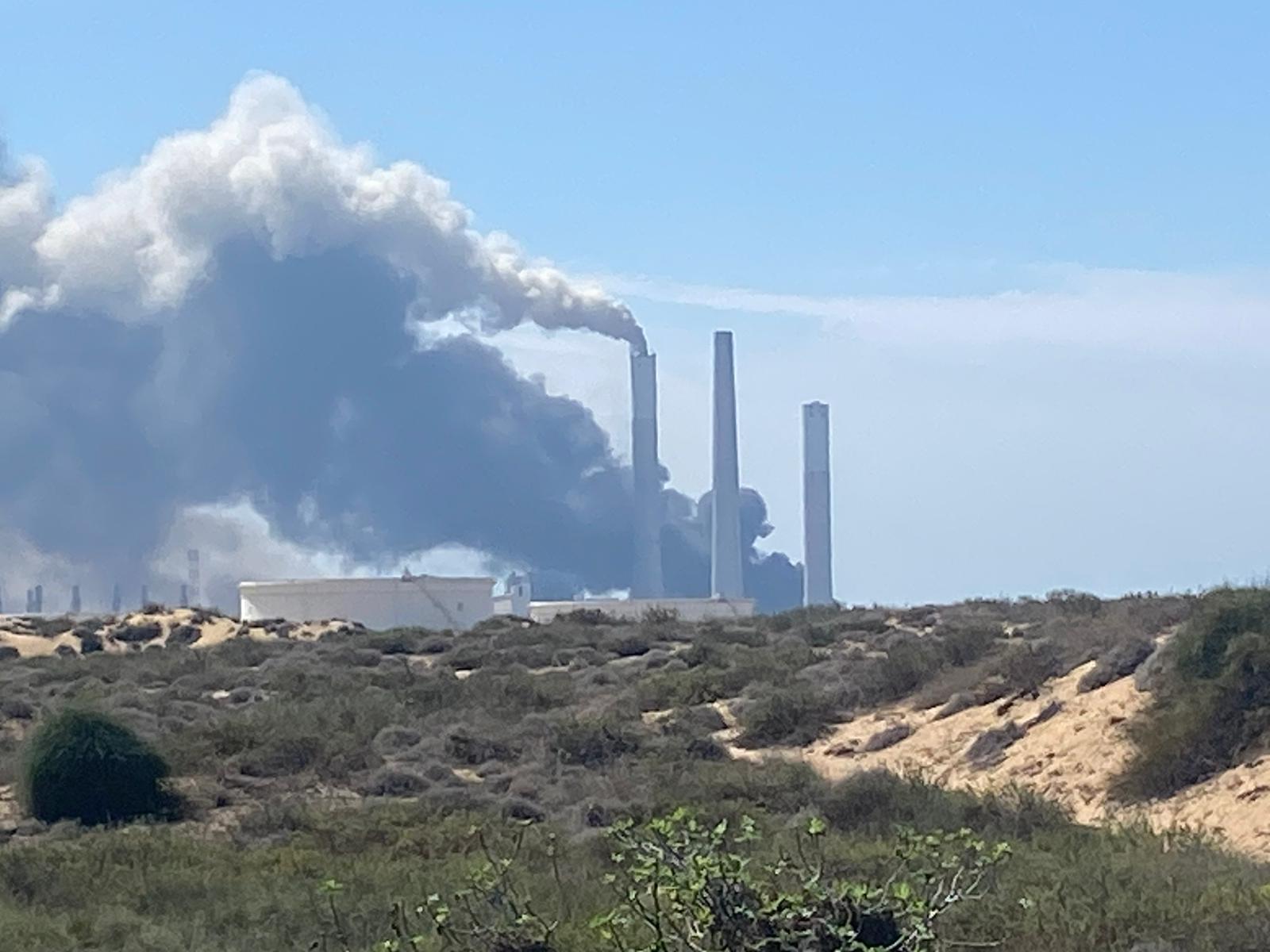
“At the first siren, we fled the gas station and decided to drive to Netivot. We were driving through Ashkelon when we spotted an impact near the Ashkelon power plant. I saw black smoke – the blackest I had ever seen in my life. The main chimney spewed huge plumes of steam; obviously, something was wrong. We kept going and tried to leave Ashkelon, but ran into a roadblock. People – mainly police officers – yelled at us, ‘Get out of here! You can’t come any closer; it’s a security zone.’”
-
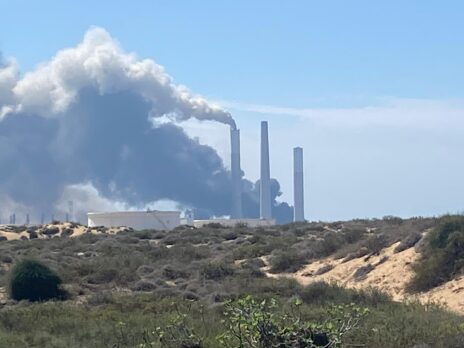
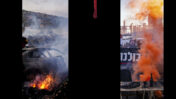
The Ashkelon power plant on the day of the massacre in the Gaza border area, October 7, 2023 (Photo: Bar Peleg, Haaretz)
What did you understand at that point?
“I still didn’t understand what was happening. I had no idea. I was cut off from WhatsApp because I was driving and couldn’t see what was happening in our newsroom group, the staff chat reporters used for updates. We mostly knew about impacts, mostly rocket fire. We still didn’t know about the massacre.”
10:00 a.m.–noon
“For two hours, we drove along every route between Ashkelon and Sderot, trying to get through police roadblocks. At one exit from Ashkelon, we spotted a vehicle unloading special forces. They started firing toward the open ground; in the end, there was nothing there. But we began to understand the scale of what was happening. If there was active gunfire and units like that on the ground, then something serious was happening. It didn’t stop us. We kept heading toward the Gaza border area, managed to get through by some route and reached a military staging checkpoint.”
What did you see there?
“Huge emergency vehicles, not the kind you see every day, security forces and media crews. Not far from there, we saw the body of a terrorist.”
How did you know he was a terrorist?
“That’s what we were told, and we saw that he was in his underwear. Someone had stripped him. They strip them to make sure they are not carrying explosives.
“We decided to continue to Sderot. We met a local who told us to follow him and said he would take us there. He led a convoy of reporters’ and photographers’ cars. We entered Sderot after forty minutes on the road – in fact, it was ten minutes before the first Golani Brigade company entered the city.”
-
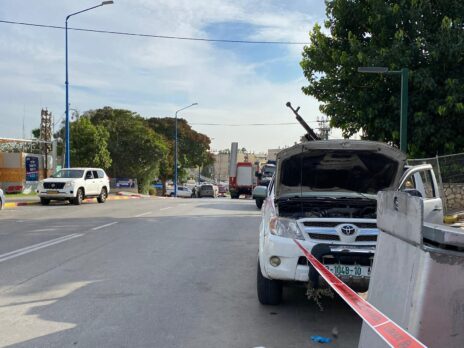
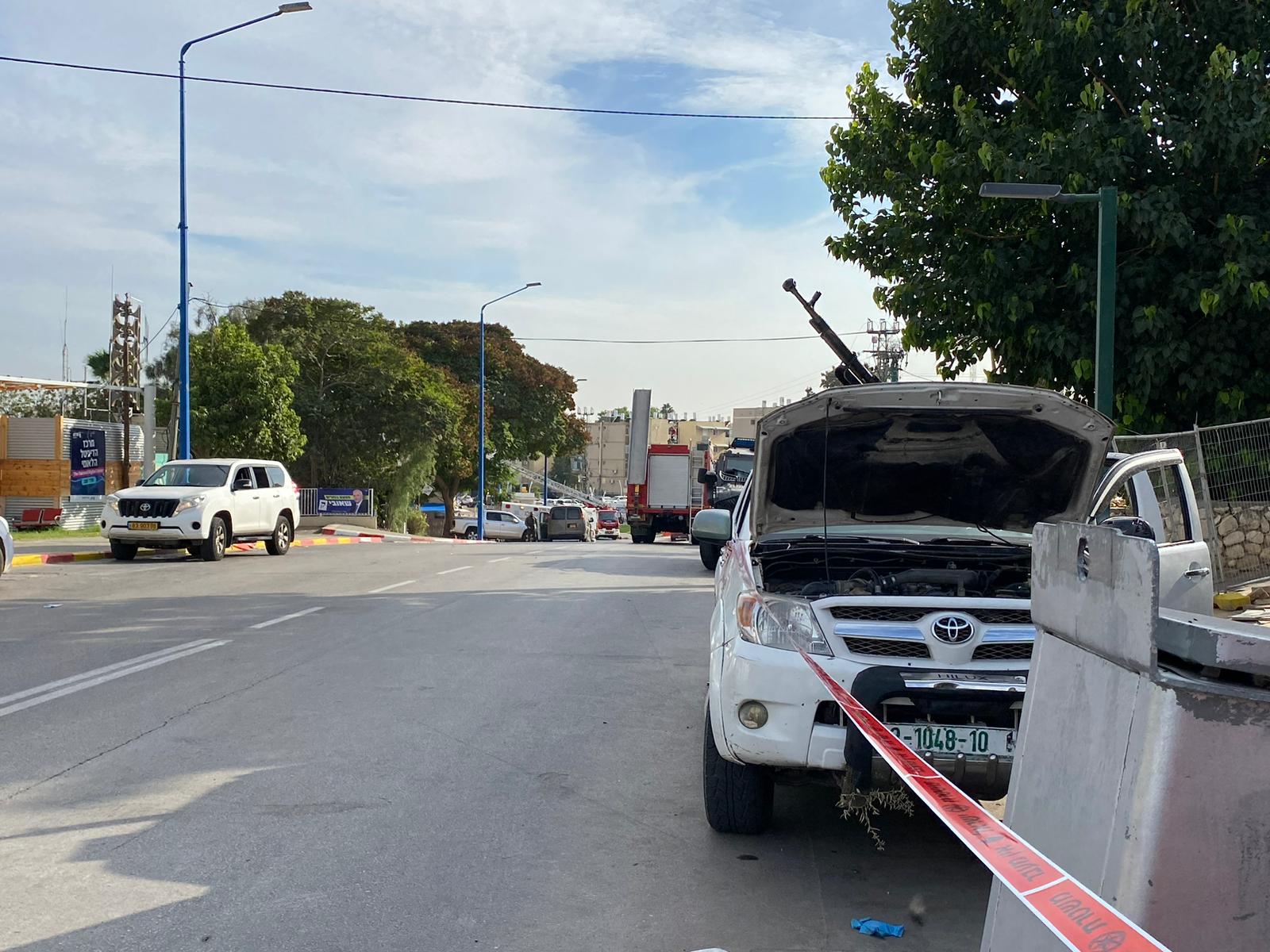
A vehicle used by Hamas militants, with a machine gun mounted on it, Sderot, October 7, 2023 (Photo: Bar Peleg, Haaretz)
How do you know?
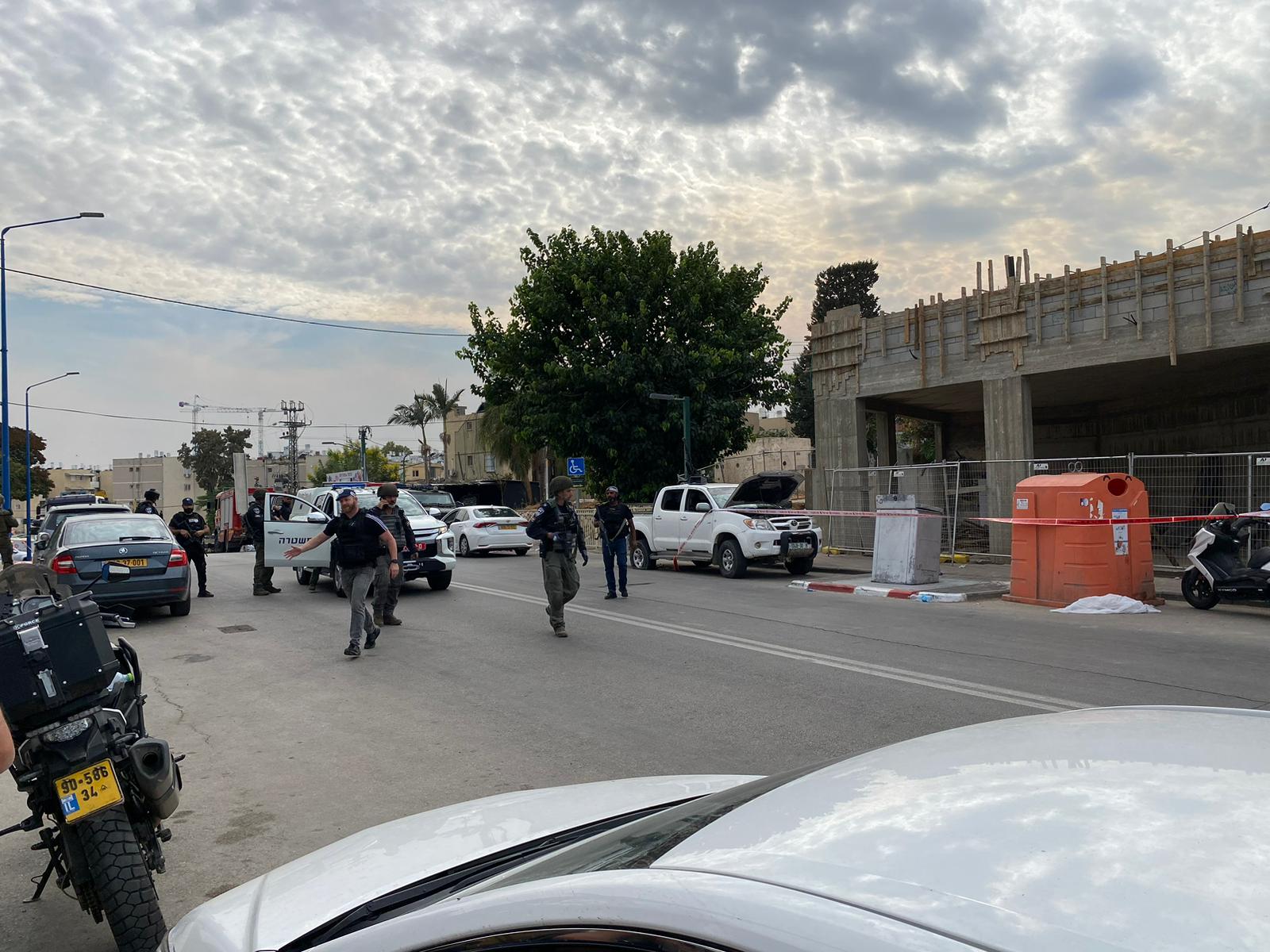
“Because we filmed them entering. Throughout that time, we heard explosions and gunfire, and only later did we understand that it was coming from the police station. We kept driving, and suddenly saw a motorcyclist sprawled on the ground, dead, beside a large red motorcycle. He was wearing a riding suit; a sport bike and a helmet lay beside him. You could see he was dead. But he wasn’t covered, and you couldn’t understand what was happening.
“Until recently, I was a central-district reporter, which meant covering quite a few murder scenes and criminal incidents. When you get to a scene, you usually see nothing. Usually, you arrive after the body has been taken away. You see blood. At terrorist attacks, you see more – at the last attack on Dizengoff Street (March 9, 2023), for example, I saw injured people bleeding. But you don’t see bodies. They are usually covered. It was the first time I had seen a bleeding body right in front of me.”
-
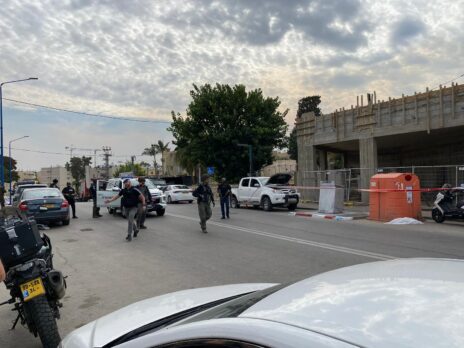
Security forces in Sderot during Hamas’s attack on southern Israel, October 7, 2023 (Photo: Bar Peleg, Haaretz)
1:00 p.m.
“We kept driving. We saw a car with its entire front end destroyed. There were three bodies inside, riddled with bullets. I think they were foreign workers. Beside the car were Kalashnikov magazines, militants’ ammunition and shell casings – lots of shell casings. I looked up and saw the shuttle van.”
Which van?
“There was a van, a shuttle carrying elderly people to the Dead Sea early that morning. The van had stopped at a bus stop; the terrorists apparently passed by and killed everyone. Why had it stopped? It wasn’t clear. But one wheel was down to the rim, probably from a flat. I saw eight bodies there. There were already many flies. They had been murdered at six in the morning, and it was already 1 p.m.; only some of the bodies had been covered.
“Then a man arrived – apparently from the security forces, perhaps a Shin Bet officer – who was handling the bodies and began shouting at us: ‘Anyone who wants to lose their Government Press Office card should keep taking pictures.’ That was the tone. We could see he was distraught. We didn’t argue with him. We told him, ‘Let’s calm down,’ ‘Everyone is doing their job,’ and ‘We won’t publish anything until we know we can.’”
“Photographer Ziv Koren was standing there with us. I saw him clutching his head, and I told myself, ‘This is a major event.’ He had just come back from documenting the fighting in Ukraine, and he was in shock. So we were all in shock.”
What did you think was happening?
“I didn’t know, but we were seeing a lot of bodies. This all took place over ten minutes. We parked the cars and continued on foot.”
3:06 p.m.
“I posted a tweet saying that I was entering Sderot and that the images were difficult, but that I would not publish them because they were unimaginable. The tweet got enormous attention. I received WhatsApp messages from people, including Sderot residents trapped in their homes and needing help. I didn’t know what to tell them. I wasn’t a local reporter; I didn’t know the station commander whom I could text. And that was still before I knew there was a battle under way at the police station.
“We decided to continue. We got in the cars and moved through the city, seeing police vehicles with bullet holes and dead officers in front of us.”
Didn’t you understand that militants were still there, that you were in danger?
“I didn’t think they were still there. I thought the battle was over. Beyond that, when I’m working, I disconnect from the emotion and the fear – or at least I try to. Because I know what’s at stake and understand that, at that moment, there were not many journalists inside Sderot to tell this story.”
What do you report to the newsroom in a situation like that?
“At that point, I still hadn’t managed to send the newsroom a report. I asked them to help me make sense of what I was seeing – who these people were and what was happening. Suddenly there were ten or fifteen bodies at once, with faces and everything. Then we understood that something was happening at the police station and said we would drive there.”
Did that make sense?
“No – but I would do it again, ten times out of ten. We drove to the police station, reached the point where soldiers stopped us, parked our cars and waited. We spent about two hours outside the station.”
-
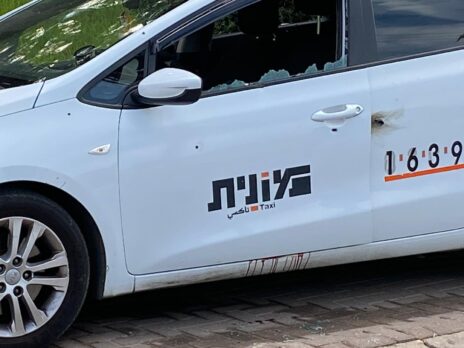
The massacre in Sderot, 7.10.23 (Photo: Bar Peleg, "Haaretz")
Didn’t you understand that militants were still there, that you were in danger?
“I didn’t think they were still there. I thought the battle was over. Beyond that, when I’m working, I disconnect from the emotion and the fear – or at least I try to. Because I know what’s at stake and understand that, at that moment, there were not many journalists inside Sderot to tell this story.”
What do you report to the newsroom in a situation like that?
“At that point, I still hadn’t managed to send the newsroom a report. I asked them to help me make sense of what I was seeing – who these people were and what was happening. Suddenly there were ten or fifteen bodies at once, with faces and everything. Then we understood that something was happening at the police station and said we would drive there.”
Did that make sense?
“No – but I would do it again, ten times out of ten. We drove to the police station, reached the point where soldiers stopped us, parked our cars and waited. We spent about two hours outside the station.”
-
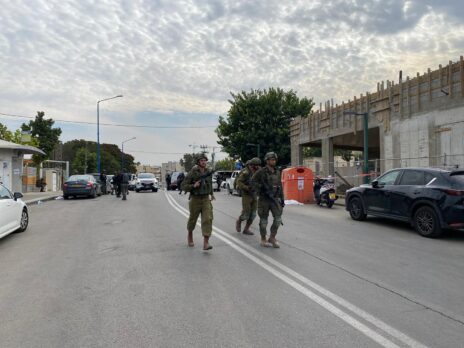
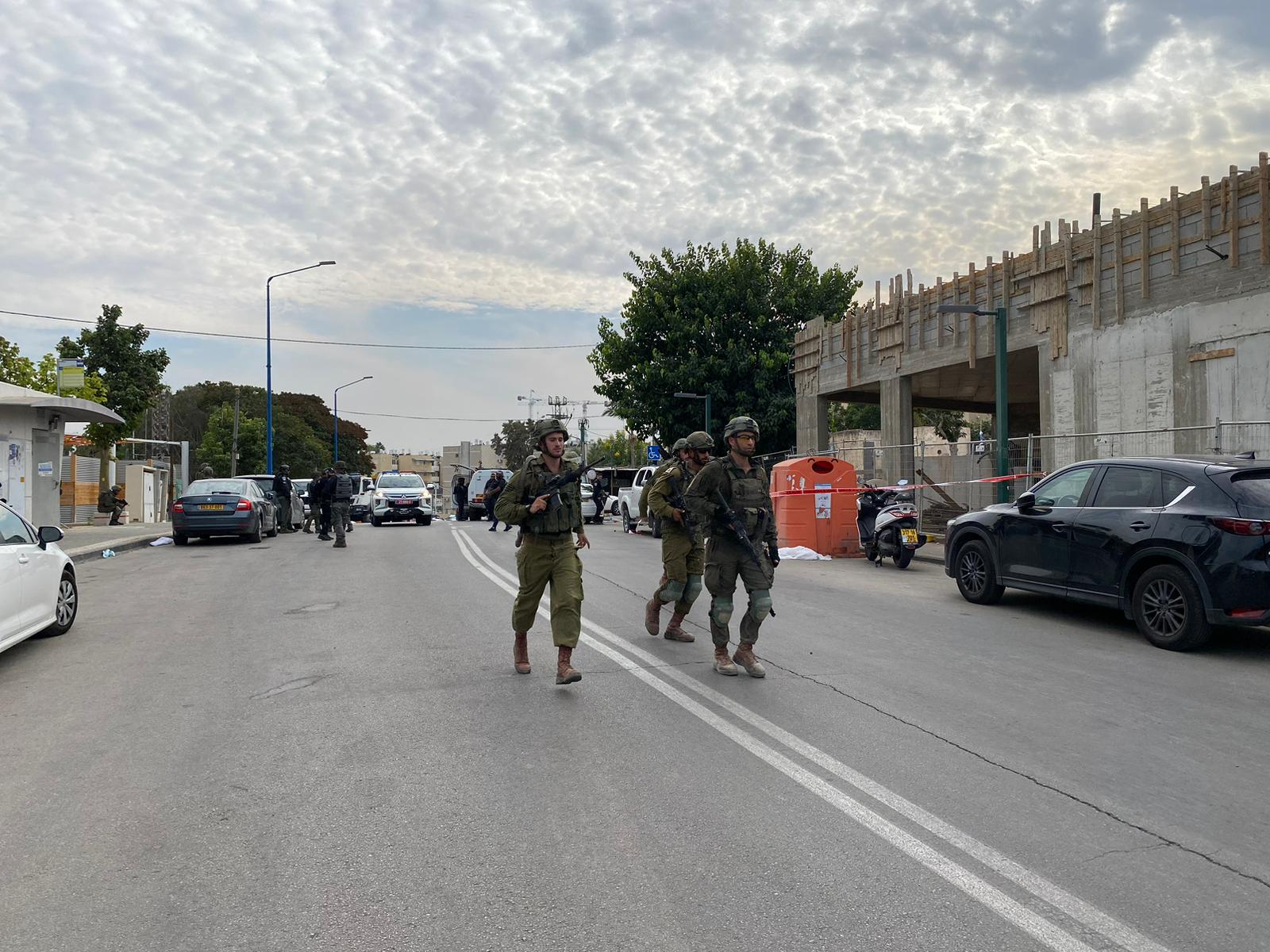
Security forces in Sderot during Hamas’s attack on southern Israel, October 7, 2023 (Photo: Bar Peleg, Haaretz)
What did you see?
“It was like a battlefield with mass casualties: an explosion every so often, then a burst of automatic fire. You heard the bursts and had no idea who was firing. In the meantime, I spoke to Sderot residents. My goal was to speak to them and, at the same time, report to the newsroom that there was heavy exchange of fire at the police station. Not far from there, we saw the militants’ Toyota from the videos that had been circulating that morning. We went over to photograph it, and a police officer shouted at us to move away because there was still a round in the chamber and the machine gun had not been cleared.
“Meanwhile, I was talking to residents in Sderot. Someone who had read my tweet called in distress to say he could hear militants on the roof and he’s in the kitchen with a knife. I had no idea how many militants were in the city at that point.
“At that stage, we began to understand that this was a huge event. The story of the music festival and the nearby Re’im kibbutz began to sink in – two very serious sites we had to get to. We understood that the real story was what was happening in the Gaza border communities, and we couldn’t get there yet. We said: Let’s move toward Re’im, and if we can, we’ll reach the Gaza border area.”
Did you have a weapon?
“No. I was still operating under the old assumption that the IDF was big and strong, that we had beaten the bad guys and everything was fine because, look, I was there. All the stories about people barricading themselves in Netivot and so on came only later.
“I remember from Operation Guardian of the Walls: when so many events happen at once, you can’t process the flood of information. You don’t understand what you are reading. At that stage, we were afraid only of rockets. I had a ballistic vest and a helmet; that was all. Like an idiot, I was walking around with a press lanyard, as though I would show it to a Hamas militant and everything would be all right.”
What happened next?
“We wanted to drive to Re’im. We heard from another photographer – I don’t know who – that outside the army base in Re’im, it looked like a mass grave, and that militants’ jeeps were outside the base. We wanted to photograph the militants’ vehicles. We understood that people injured at the music festival had reached the Re’im kibbutz; we didn’t understand that the base had been breached.
“I wanted to get to the music festival. I was Haaretz’s nightlife reporter between 2016 and 2018, and I’m very connected to the music scene. I felt I could cover an event like that – a terrorist attack at a party – and I said I would get there.
“Meanwhile, the photographers wanted to get a shot, while I wanted to talk to people. I decided to go with them anyway, because we were a group and it made us feel safer. We left Sderot on Highway 34 and headed toward Re’im. Then we saw a great many cars along the side of the road. From a distance, they looked abandoned, and you didn’t understand what they were. Someone in the convoy decided to stop and turn around.
“As we got closer, we saw dozens of cars riddled with bullets, some with bloodstains. When we got very close, we saw bodies. Among them, I noticed a young couple who could easily have been friends of mine. I assumed they had returned from the party because there was a joint in the front of the car. I saw them, shot, behind the car, one on top of the other, pressed close together as though they were holding hands. The woman was tattooed and looked like a thousand of my friends, and the man looked like a thousand of my friends. Suddenly, I saw people like me.
“I think we were there for between half an hour and an hour. Fifteen or twenty cars. We moved among them and photographed. We had to photograph it sensitively; I was constantly trying to take something I could post on Twitter without identifying marks, personal details or license plates.”
-
Highway 34, 7.10.23 (Photo: Bar Peleg, Haaretz)
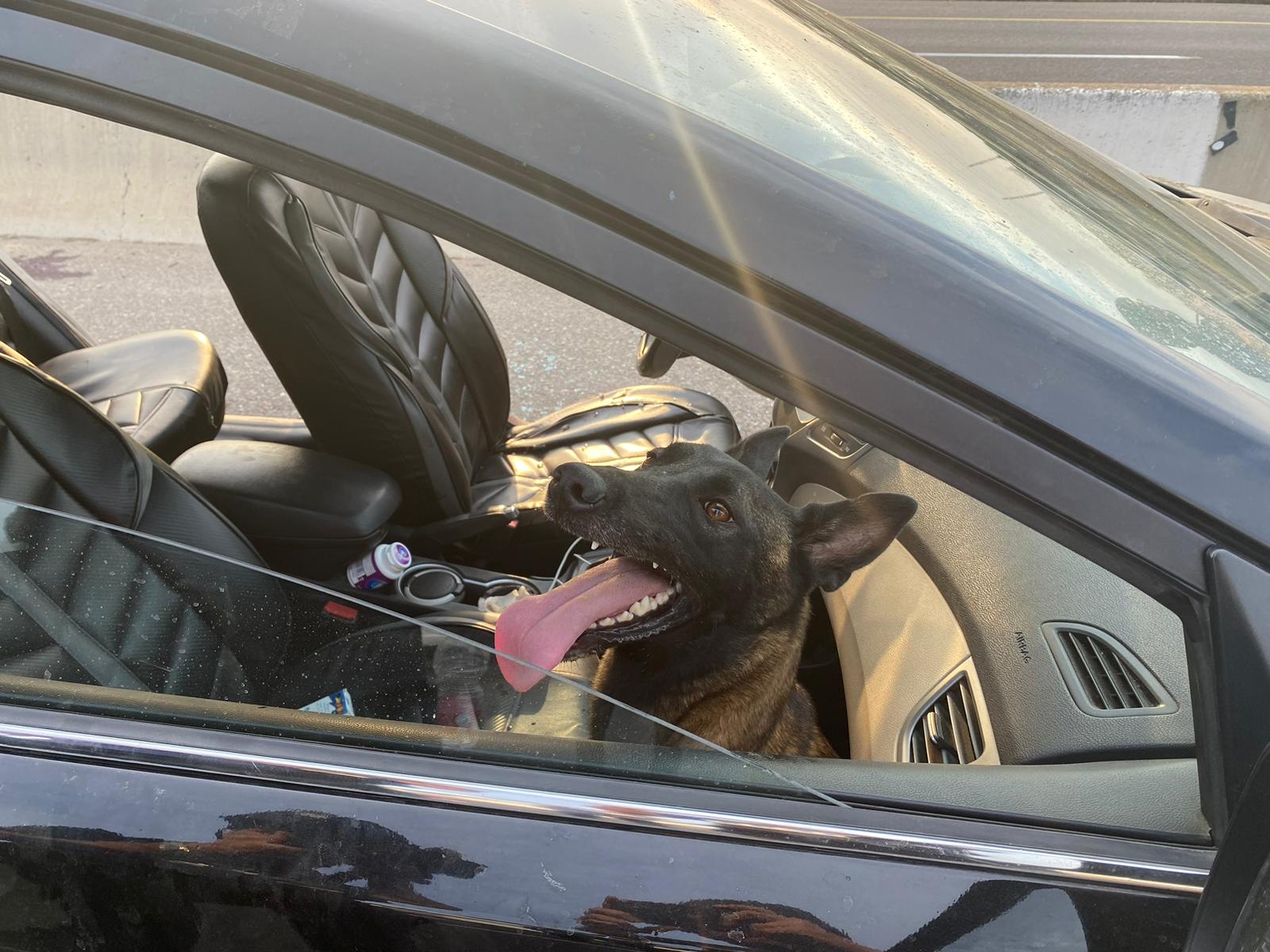
“Then we came across a beautiful dog with a collar, one that looked like it belonged to the IDF’s Oketz canine unit. It was wandering around alone, came over to us, and I petted it. Then it climbed into the young couple’s car, sat down and wouldn’t move. We all filmed it.
“We continued on and found another four or five bodies; one of them was a militant. Beside him were camouflage fatigues, magazines and ammunition. By that point, I had already counted thirty or forty bodies, and it was still nothing compared with the real story.”
What did you send to the newsroom?
“I wrote them a paragraph about fifteen to twenty cars riddled with bullets, with bodies beside them on Highway 34 between Mishmar HaNegev and Moshav Yakhini. That was the precise location. I added that one body was suspected to be that of a militant, and repeatedly stressed in my report that no one was collecting the bodies.
“At the scene of an attack, bodies are collected immediately. Here, no one was collecting them. That wasn't normal for emergency services. We understood that all the emergency services had stopped functioning: there was no evacuation of bodies, no ZAKA volunteer rescue teams (emergency response and disaster victim identification organization), no Magen David Adom ambulances.”
Around 4:30 p.m.
“My car was parked about fifty meters from the other photographers, and I wanted to drive to Re’im. At that point, I decided to start driving. I moved forward a few meters and heard a burst of gunfire. I realized that the others still weren’t in their cars and were stuck. I could have kept driving, but I stopped the car and threw myself to the ground. I’m not sure it was the smartest decision, but I didn’t want to be alone.
“I was on the ground under the car, and the others were under their cars. They were a cluster of photographers, and I was alone, fifty meters from them. I was ahead of them, to the north. When I say people were shooting, that is my hindsight analysis; I don’t know whether, at that point, they were shooting at us.
“On the other side of the road, beyond the concrete median barrier, we saw two police vehicles and signaled for them to stop. They didn’t. We started looking at one another. The shooting kept going - constant gunfire - and I was breathing heavily.
“I had a helmet and a ballistic vest, but it didn’t cover my neck. I had lent the vest’s rear armor plate to someone, so my back was exposed too.”
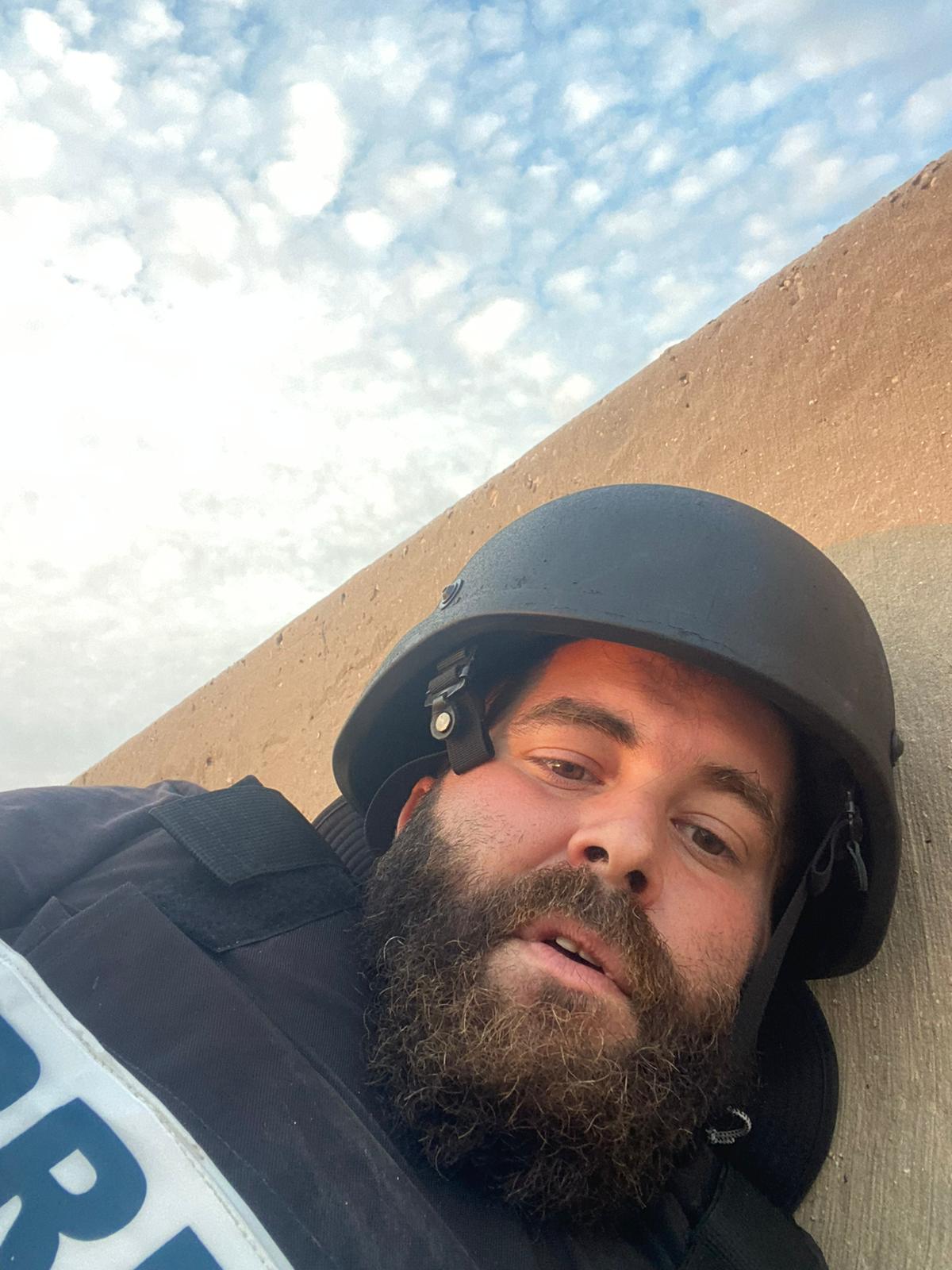
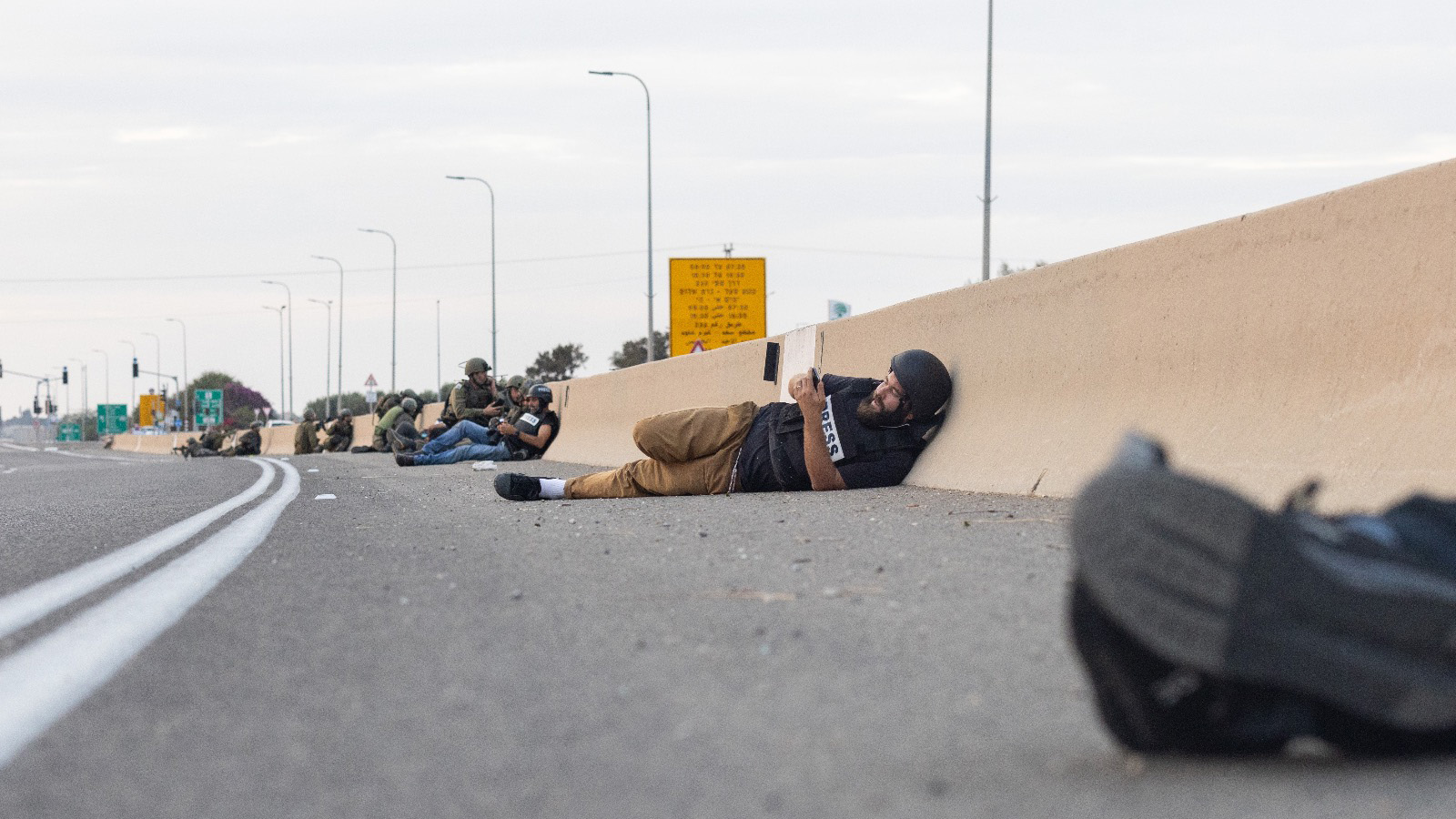
Bar Peleg during the encounter with militants on Highway 34, October 7, 2023 (Selfie)
“After five minutes – probably the longest five minutes of my life – we spotted two Humvees. We signaled for them to stop, and I saw infantrymen by their gear. They were reservists; they saw us and stopped. At first, they thought we and the other bullet-riddled cars were all part of the same incident. They were sure they'd stumbled into a crazy scene. They unloaded gear from the jeeps. In the chaos, with no army and no police, their arrival was a godsend: two Humvees full of fighters. Serious guys.
“They jumped out, in the opposite lane, took up positions behind the concrete barrier and began shouting. I explained what was happening: that we had stumbled into this, that there was gunfire. They asked whether we had been hit; I said that so far, we had’t been hit. The soldiers began climbing over the barrier, moved in front of our cars, and returned fire toward the source of the shooting. They were worried about friendly fire. Then one of them shouted, ‘I see an armed man in a blue shirt.’ We understood that the initial fire had been fully automatic, and the IDF never fires fully automatic.
“The forces were on the other side of my car, and they started returning fire from my direction toward the area where the militants were. I shouted to the other soldiers that I wanted to get over to them, and to the photographers, ‘Come behind the concrete barrier.’ The photographers didn’t go. The soldiers said, ‘If you can make a dash, do it.’ As he finished saying that, I heard gunfire hit my car. I heard the bullets getting closer, heard a tire go flat, felt stones strike my helmet and hand, saw fragments hitting the ground beside me, and started taking small ricochets. That was the moment I decided to run. I crawled along the ground; my hands filled with blood from crawling, and then I crawled and jumped over the concrete barrier. Suddenly, behind the barrier, I received an emergency call-up for reserve duty.”
What happened while the shooting was going on? What did you do?
“The whole time, I was speaking with Amnon [the head of Haaretz’s news desk]. We were exchanging messages like crazy. He said it came back to him in nightmares. I told him I was terrified, that people were shooting at me. He asked me to send my location. I was speaking with Amnon and Josh Breiner the whole time. The moment the bullets hit the car, I sent my wife a message saying that I loved her and the children more than anything in the world. I needed it in writing. I didn’t think I was going to die, but that I might take a bullet or shrapnel.
“After all the photographers and I managed to get over the concrete barrier, I went over to them. Yotam [Ronen, a photographer for Walla] started checking me, feeling my arms and legs to see whether I was injured. We waited there for twenty long minutes while the shooting continued.”
-
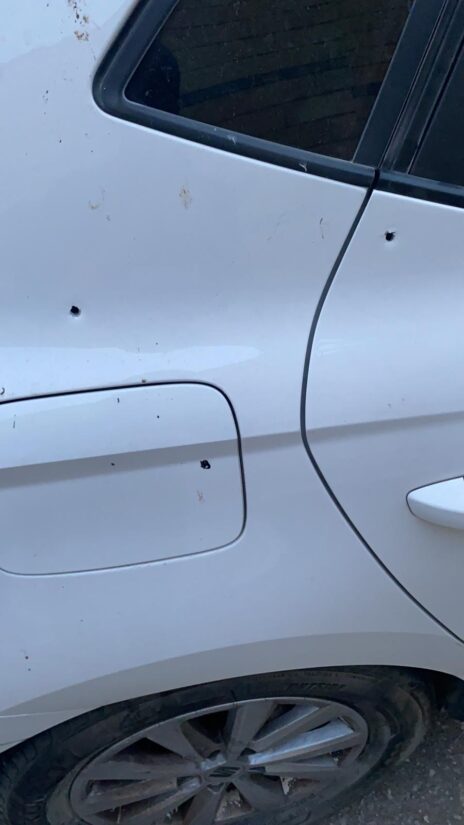
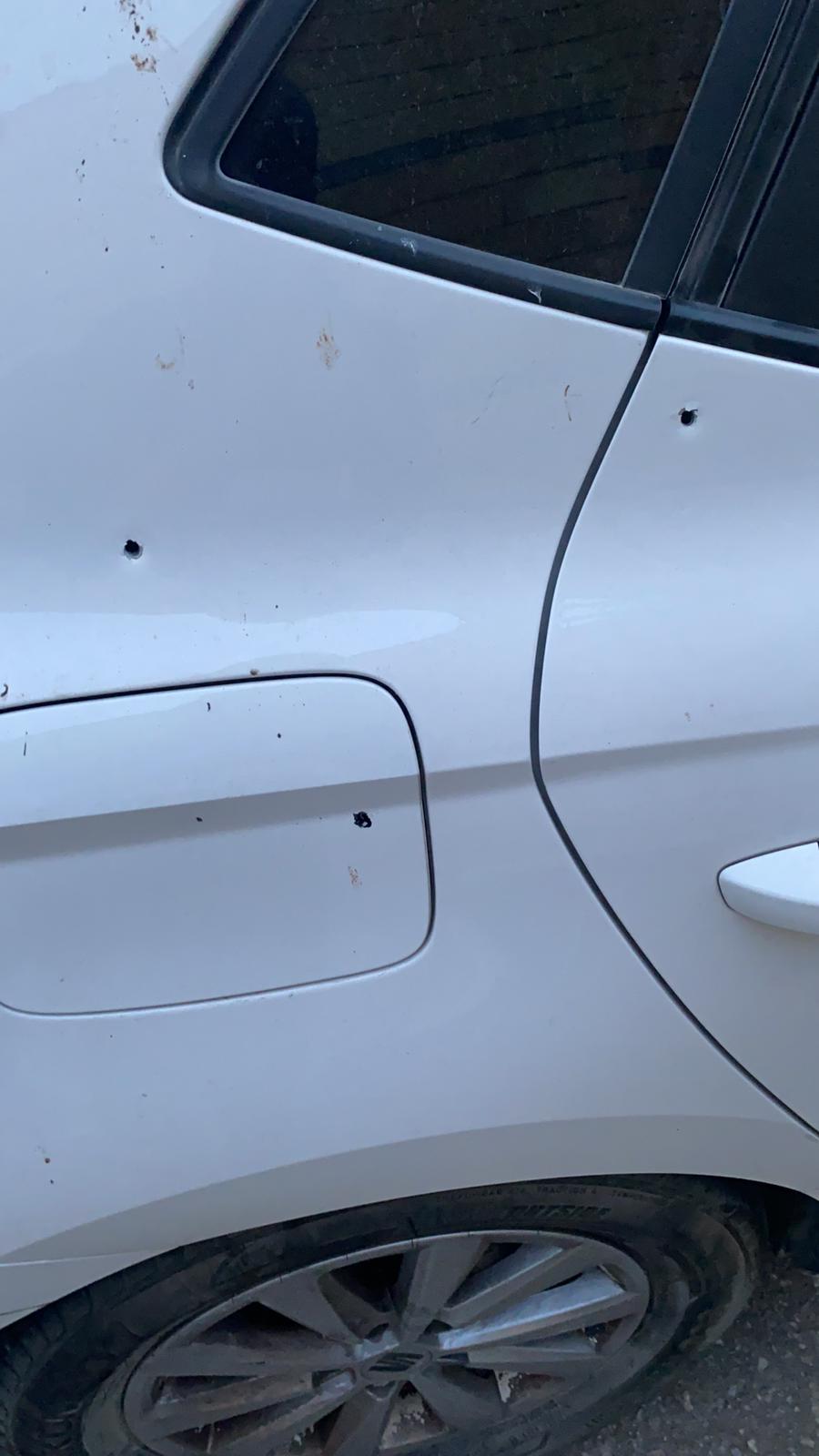
Bullet holes in the car of Haaretz reporter Bar Peleg, October 7, 2023 (Photo: Bar Peleg, Haaretz)
“At some point, the shooting stopped. All the forces shouted, ‘Cease fire!’ and began searching the area. A police officer who came over to me asked whether I had a way to escape, then added, ‘Come on, this is your chance.’
“When I got back to the car, I saw three bullets in the side of it, one of them in the fuel cap. I have no idea how that bullet did not go deeper. It could have blown up the fuel tank; it was a centimeter away from happening. It was the kind of miracle people talk about when a bullet is stopped by a pair of tefillin.
“We got away from there. I was driving a car that could barely move. We reached Sapir Junction, where we had to change the tires. We met three Chinese workers in shock.”
Did you call home to tell them what had happened?
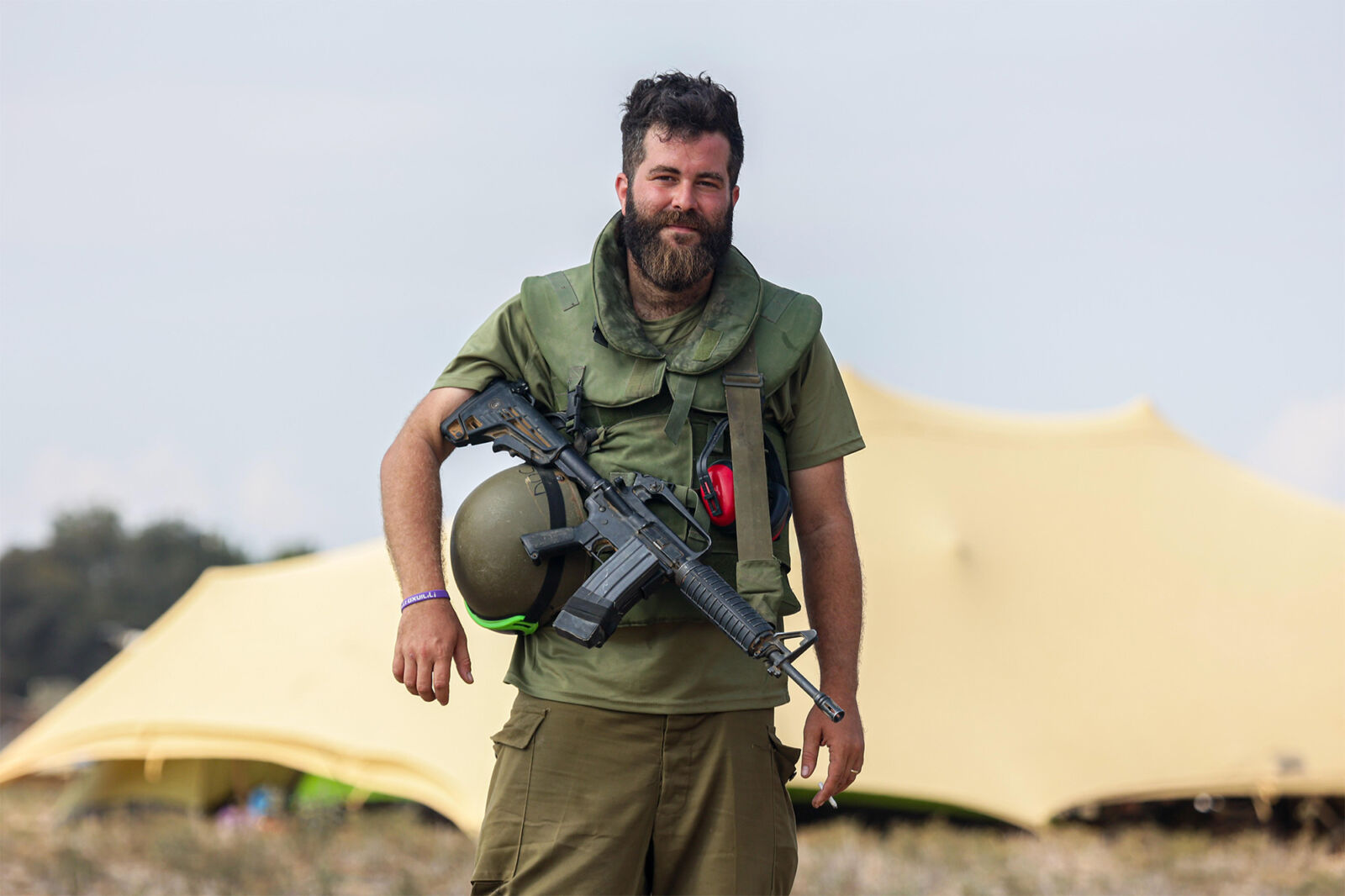
“I called to tell my wife that people had shot at me, that I was all right and would speak to her again soon. I reported to the newsroom, to Amnon, that I was changing a tire and would drive back to the center of the country. I left the area. I was still a journalist, and I reported that I was leaving the sector. It took us an hour to collect ourselves. When I got home, I took off the vest, hugged the children and got a call from the newsroom. They said they couldn’t put the paper to bed without a piece about what I had experienced. I wrote it at ten that night. I didn’t even have time to read it over or see what the paper looked like, because at midnight I left for reserve duty, and I’ve been there ever since.”
-
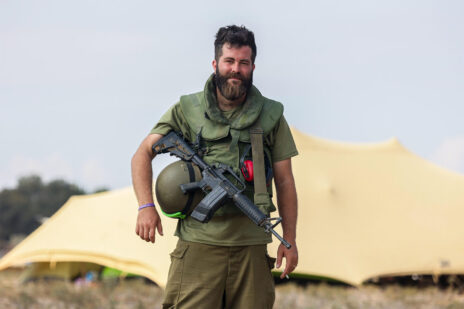
Bar Peleg after being called up for reserve duty (Photo: Itay Ron)
In retrospect, would you go again?
“My only problem will be with my answer being published is with my wife. My professional instinct? Ten times out of ten. I didn’t go because I get a thrill from risking my life. I went because I understood that something was happening and we had no eyes on the ground. If Haaretz had no eyes on the ground, our readers had no idea what was happening. It felt like a mission. I realized this was a 1973-scale event, and we were caught with our pants down. I understood that, historically, I had to be there. There was no way I would not be there at the height of the event, not at the margins. So I would go again. But if my wife asks, then no. Maybe next time I’ll look more carefully to the right and left and won’t stay in one place for too long. One thing is certain: for the first time in I don’t know how many years, I’m going to take a vacation after all this is over.”
This article was originally published in Hebrew on October 29, 2023