


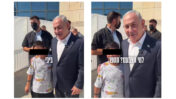








In April 2026, a disturbing video circulated on social media showing a Jewish man wearing a kippah and tzitzit running toward a nun on Mount Zion in Jerusalem, knocking her to the pavement and kicking her. The footage went viral and reached millions of viewers around the world–a reminder to anyone who had forgotten that 2.3 billion people identify as Christians. That same month, Israeli soldiers in southern Lebanon posted images of a statue of Jesus that had been smashed and desecrated. A few weeks later, minors were arrested for spitting on the gate of a cathedral in Jerusalem’s Armenian Quarter and throwing stones.
The violence has not spared Muslims and Arabs. Muatasem Kaak, a kindhearted Jerusalem bus driver who has spent his life helping Jews and Arabs alike, was brutally attacked by ten Jewish assailants driven by hatred, who broke his teeth and injured his face. Most recently, a mosque in the Palestinian town of Idhna was desecrated, bringing to ten the number of mosques torched or desecrated in the West Bank since mid-June. We must ask ourselves: How would Jews around the world react if ten synagogues were set on fire in France? And how do the world’s 1.9 billion Muslims respond to images like these?
The answer lies, to a large extent, in the example set by those in power. Since early 2023, Israel has been governed by a coalition led by parties that espouse Jewish supremacy and support racist legislation and rhetoric. When Finance Minister Bezalel Smotrich declares that the village of Huwara should be wiped out, when Heritage Minister Amichai Eliyahu refuses to rule out dropping an atomic bomb on Gaza, and when National Security Minister Itamar Ben-Gvir makes a point of making provocative, highly publicized visits to the Temple Mount–the third-holiest site in Islam–the message filters down. Violating the status quo is an affront to Muslims worldwide, including the hundreds of millions who live in Indonesia.
Meanwhile, Jewish terrorist cells strike across the West Bank every day, torching homes and cars and attacking innocent people. The deliberately provocative outpost in Qusra is just one example of what has been happening here in recent years.
Then there are the harrowing images from Gaza. A position paper by Open University of Israel professors Yagil Levy and Uri Schwartz indicates that many of the tens of thousands killed in the Gaza Strip were noncombatants. Images of suffering and disease in Gaza, sometimes censored in Israel but circulated around the world, dramatically fuel hatred of Jews and the State of Israel–a country led by figures who openly yearn to see the Gaza Strip erased.
Let there be no mistake: antisemitism is not new. Antisemites forced us into ghettos and burned our people in crematoria long before Israel was founded. Antisemitism is not solely a product of Jewish terrorism in the West Bank or racism in Jerusalem. Yet this history does not absolve us of the need for an unsparing reckoning with the direct link between Israel’s Jewish-supremacist government and the dramatic surge in antisemitism worldwide.
Israel cannot confront antisemitism abroad as long as it allows racism and xenophobia to guide it at home. Only an alternative leadership–one that governs with compassion and decency and, above all, unequivocally repudiates Jewish-supremacist ideology–can enable Israel to face those who hate us with its head held high.
Dr. Gadi Gvaryahu chairs the Tag Meir Forum.
This article was published in Hebrew on August 14, 2026