









Will Iran's leadership soon arrive at the conclusion that it has no alternative but to drink from the poisoned chalice? This phrase finds its origins in the death sentence imposed by the Athenians upon the philosopher Socrates, who was accused of corrupting the youth. According to the account of his disciple Plato in the "Dialogues," Socrates accepted his fate with remarkable equanimity, willingly consuming the poison.
In contemporary discourse, this expression is often attributed to Ruhollah Khomeini, the founder of the Islamic Republic and its first Supreme Leader, particularly in relation to his reluctant agreement to cease hostilities with Iraq.
During the Iran-Iraq War, Khomeini steadfastly opposed a ceasefire, asserting that the conflict must persist until a definitive victory was achieved. Yet, after years marked by staggering losses, severe economic duress, and relentless assaults from Iraq - including the use of chemical weapons - Khomeini ultimately capitulated to the entreaties of Revolutionary Guards commanders, announcing his consent to a United Nations-sponsored ceasefire. For him, this decision was akin to imbibing poison.
This phrase has resurfaced in the current context, with the hope that, in light of the formidable combined American Israeli offensive - an overwhelming military force that has inflicted severe damage upon Iran’s military, nuclear, and ballistic capabilities - the leaders of the Islamic Republic might finally acquiesce to a cessation of hostilities.
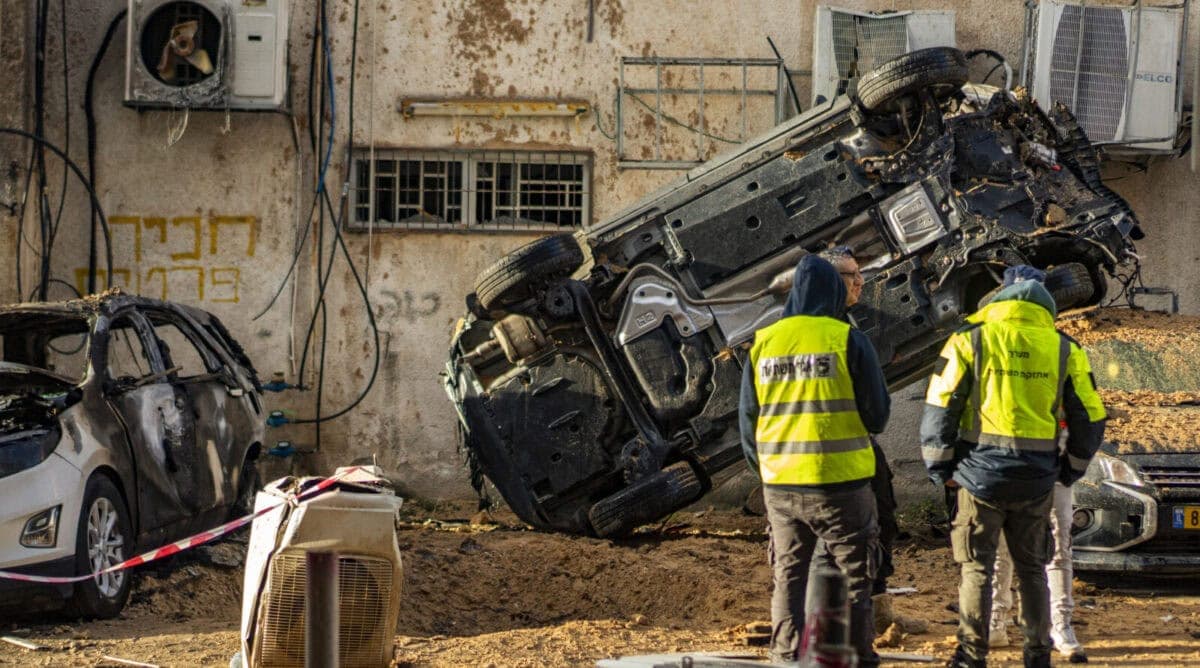
At present, however, there are no indications of such a shift, neither in their incendiary rhetoric nor in their military maneuvers. Iran continues to launch missiles toward Israel and the Gulf States, having targeted thirteen nations thus far. The most recent attempt was against Georgia, aimed at sabotaging a gas pipeline originating from Azerbaijan to the Ceyhan port in Turkey, which subsequently ship oil tankers to Israel. Additionally, Iran has threatened to strike Ukraine, alleging its complicity in aiding Israel.
Where Is the Weak Spot
American commentators are unequivocal in their assessment that Trump and his advisers significantly underestimated Iran's resolve. They didn't listen to CIA assessments that despite the opening blows, sixteen days ago and the killing of Ali Khamenei, Iran would not cave in, and would certainly refrain from closing the Straits and disrupt the world's oil flow. But the war has turned into oil conflict between Iran and the United States, which adversely affects the global community, threatens to escalate further.
The United States bombarded Kharg Island this past weekend. The assault targeted military installations, and President Donald Trump made it clear that, at this juncture, he refrained from striking the oil facilities on the island. This served as a clear signal that should Iran fail to permit unfettered passage for all vessels in the Hormuz Strait; he would not hesitate to target the oil facilities. Nonetheless, for the time being, he retains this option as a last resort, hoping to avoid its use.
In retaliation for the American strike on Kharg, Iran commenced launching missiles at ports within the Emirates, claiming that the United States had fired missiles from its bases there that struck the island.
Kharg, situated approximately 25 kilometers from Iran's southern coast, is a small yet strategically vital island. It serves as Iran's principal oil export terminal, boasting extensive storage facilities and docks for oil tankers, accounting for nearly 90% of its oil exports and generating approximately $50 billion annually. During the Iran-Iraq War, the island was a primary target for Iraqi aerial bombardment, aimed at destabilizing the Iranian economy.
Nevertheless, despite the escalation in military confrontation, there remains a possibility for both parties to engage in negotiations, whether directly or indirectly. The presidents of Turkey and Egypt, along with the Sultan of Oman, continue to convey messages between Washington and Tehran, facilitating dialogue with both sides.
Where is Khamenei
The question of who truly governs the Iran lingers. The absence of the new Supreme Leader, Mojtaba Khamenei, from the public eye serves as fertile ground for speculation regarding his health.
The Mossad, on its dedicated Persian-language site established during the June '25 war, has ridiculed the Iranian leadership in an attempt at psychological warfare.
A post on the Mossad's Persian site, suggested Mojtaba is not alive and that Iran had appointed a corpse as its Supreme Leader. However, it appears that even within the Mossad, there is uncertainty regarding Mojtaba Khamenei's condition - whether he is alive and what his health status might be. Iranian media outlets reported days ago that he had sustained injuries, President Trump wrote over the weekend that he "heard" that Mojtaba is not alive.
Regardless, it is evident that the Revolutionary Guards are the dominant force within the top collective leadership. However, contrary to popular belief, IRGC is not homogeneous; it encompasses a spectrum of views, including extremists, conservatives, and even more moderate voices.
Where is the Uranium
The ballistic missile program is repeatedly hit hard, and the paramount objective now is the dismantling of the nuclear program. This will only occur if Iran refrains from acquiring the 480 kilograms of uranium enriched to 60% purity.
According to American intelligence and the International Atomic Energy Agency (IAEA), this uranium is buried deep within the Isfahan nuclear complex, following the aerial assaults by the air forces of the U.S and Israel in June 2025. However, there is no certainty that it is indeed located there. It is conceivable that Iran has taken measures to transfer portions of it to uranium enrichment sites in Natanz and Fordow, or perhaps even to another secret location.
In both Israel and the United States, proposals have emerged to conduct audacious commando operations to seize the enriched uranium, yet these ideas have been swiftly dismissed. Accessing the material would necessitate heavy engineering equipment, a substantial military force to secure the complex, and an aerial fire ring, to prevent Iranian military forces from approaching. The feasibility of such an operation is exceedingly low, fraught with significant risks for the operatives involved.
As both the United States and Israel awaken from the illusion of "regime change," the only viable avenue for concluding the war appears to lie in a negotiated settlement. Achieving this will require creative thinking and a willingness to compromise from both parties.
Herein lies my modest proposal for attaining this critical objective: The United States and Iran should agree that their joint teams will access the enriched uranium, extricate it from the rubble, and transfer it to custody in a mutually accepted third country. Even in the nuclear agreement between the great powers and Iran, signed in 2015 and from which President Trump withdrew in 2018, the enriched uranium (at that time only up to 5% and a small amount to 20%) was diluted, with the majority removed from Iran and transferred to storage in Russia.
For this to materialize, an agreement is essential. To achieve it, the Supreme Leader, if he is indeed alive, or the collective leadership must recognize that they have no alternative but to drink from the poisoned chalice.
Under the current circumstances, I acknowledge that my proposal may appear naive, even if it is rooted in logic, and it is possible that it could inadvertently lead to the long-sought regime change. Like the aftershocks of an earthquake, it may well be the cessation of hostilities that compels the Iranian populace to take to the streets, as they come to grasp the profound damages inflicted upon their nation and, most notably, upon their regime.
This article was published in Hebrew on March 12, 2026