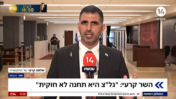

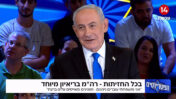




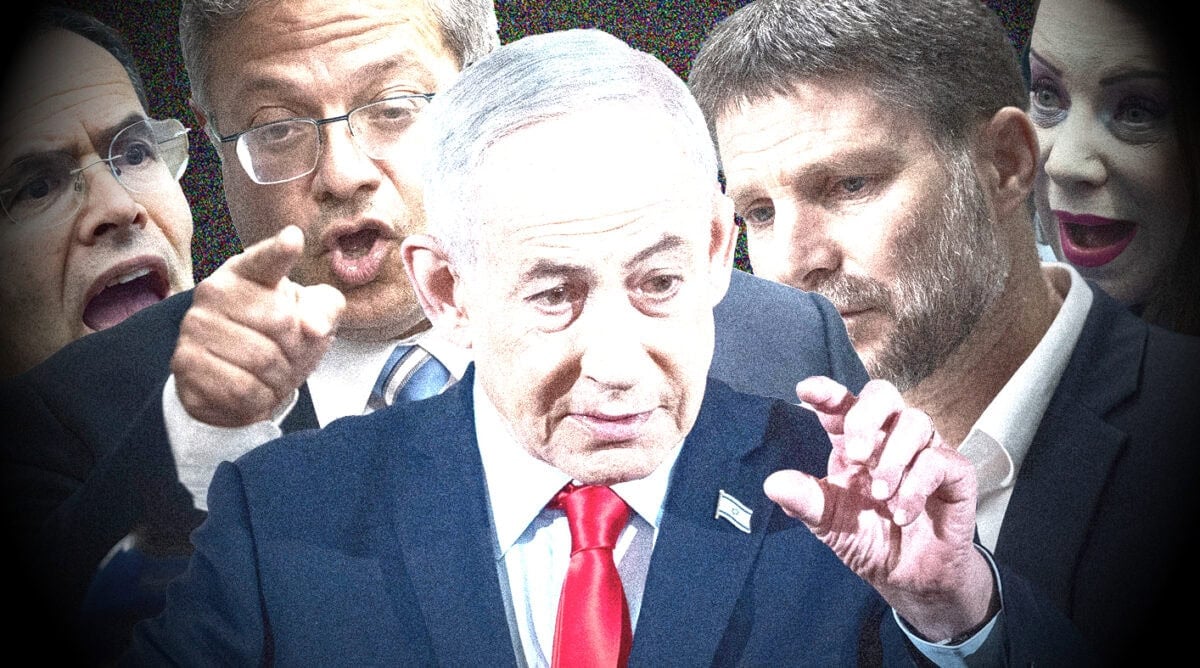


Media coverage data from Ifat Media Information company, commissioned by the "Microphone for Everyone" forum, reveals a significant political bias in Israeli mainstream media in favor of the Netanyahu coalition.
The bias in favor of the current coalition is present in general exposure figures, which are many times greater than the real proportion between the coalition and the opposition or the coalition's own popularity figures; is present also in coverage at the top of the chart, from which opposition representatives are almost completely absent; and is prominent in the main news broadcasts: the most important elements of current affairs broadcasts.
These data, along with further confirmation of the alarming exclusion of women and Arabs from political representation in the mainstream media, stand in complete contradiction to repeated claims by Netanyahu himself, who alleges that mainstream media is hostile to him.
The data also aligns with the various reviews published in "The Seventh Eye" on the manner in which the mainstream media consistently serves the narrative and interests of the accused Prime Minister Benjamin Netanyahu.
Approximately 70% coverage for the coalition
The data, which was collected by the media research department of Ifat and was also published in "Walla," includes all appearances of Knesset members and ministers in mainstream media outlets in the period between November 1, 2025 and February 16, 2026. The media outlets examined are Kan 11, Keshet 12, Reshet 13, Kan Reshet B and Galei Zahal. The coverage data on Channel 14 will be published separately, because it is a propaganda channel and not a news channel.
The investigation included appearances of those mentioned in interviews and quotes, and not just mentions of the names of those being discussed. The investigation did not include an indication of the sentiment and framing of the various shows. A total of 137 politicians were included: Knesset members, ministers, and party leaders who are not MKs (Yair Golan, Naftali Bennett, Gadi Eisenkot, Sami Abu Shehadeh, and Yoaz Hendel).
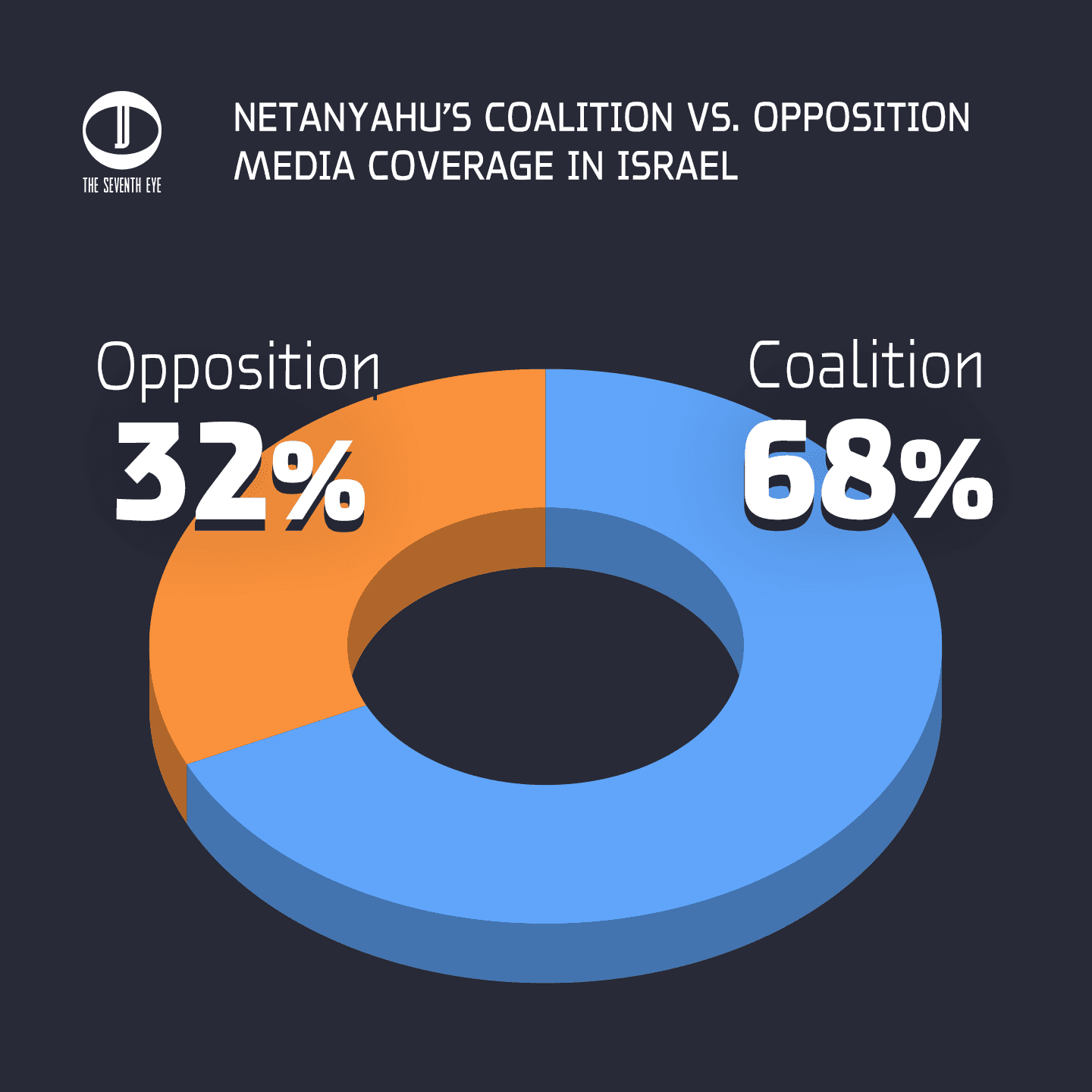
The main finding from the investigation: The coalition receives 68% coverage in mainstream media compared with only 32% for the opposition. Government members naturally receive more media coverage, but the disparity is several times greater than the actual percentage of coalition members (57%) or the support for them in the polls, and as we will see below it also extends to additional coverage categories.
This is a distinct imbalance that limits the ability of opposition members to make their voices heard and spread their messages, and gives coalition members a clear advantage in advancing their agenda. This problematic situation becomes even more significant in an election year, when media coverage translates directly into political influence.
It seems that instead of serving as a gatekeeper and reflecting the diversity of opinions in Israeli politics, the main media channels function as an echo chamber that gives a built-in advantage to one side, while weakening critical public debate and damaging the public's right to know.
The greatest coverage of the coalition: Kan 11
This unequivocal finding also contradicts the claim of Netanyahu, his associates and supporters that the Israeli media is harassing Netanyahu, persecuting him and hostile to the right-wing government. A claim that translates into a large-scale campaign by Netanyahu's propaganda apparatus against the Israeli media.
A major target of the smear campaign is public broadcasting, which is frequently accused by Netanyahu's coalition of political bias and is under constant threat of closure by the government.
Examining the data reveals that the least balanced media outlet is indeed the Kan 11 channel of the Broadcasting Corporation, but the imbalance actually favors the Netanyahu coalition: the lowest coverage of the opposition (27%) and the highest of the coalition (73%) is on Kan 11.
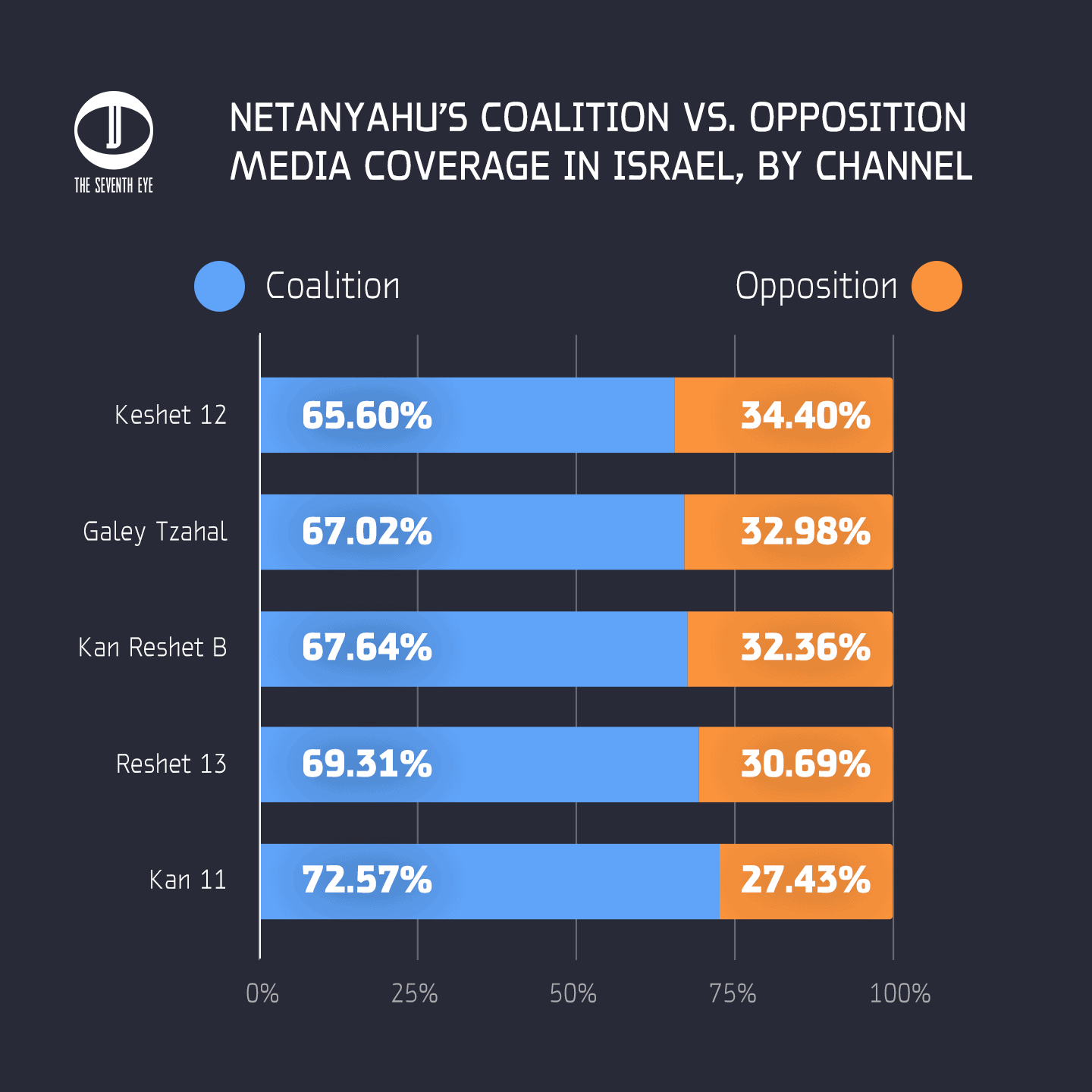
Besides Kan 11, Netanyahu traditionally often attacks Reshet 13 (and its previous incarnation as Channel 10), accusing it of serving his political opponents and the "left." However, Reshet 13 is the second channel, after Kan 11, giving the coalition overexposure: 70% versus 30%.
After Kan 11 and Reshet 13 come the other two main channels of public broadcasting: Kan B and Galie-Zahal, with 68% coverage of the coalition. The list ends with Keshet 12, with 67% coverage of the coalition; however, its relatively large opposition coverage likely stems from the boycott of the channel by ministers and MKs from the coalition, following investigations by reporters Yossi Mizrachi and Omri Maniv that exposed corruption in government ministries.
Netanyahu Gets Disproportionate Coverage
When examining the data on an individual level, the main finding is the extensive coverage received by Netanyahu, who has a strong grip on the Israeli media. The prime minister, who is accused of bribery, fraud and breach of trust, takes first place on the coverage chart with 6,548 minutes of airtime during the period examined.
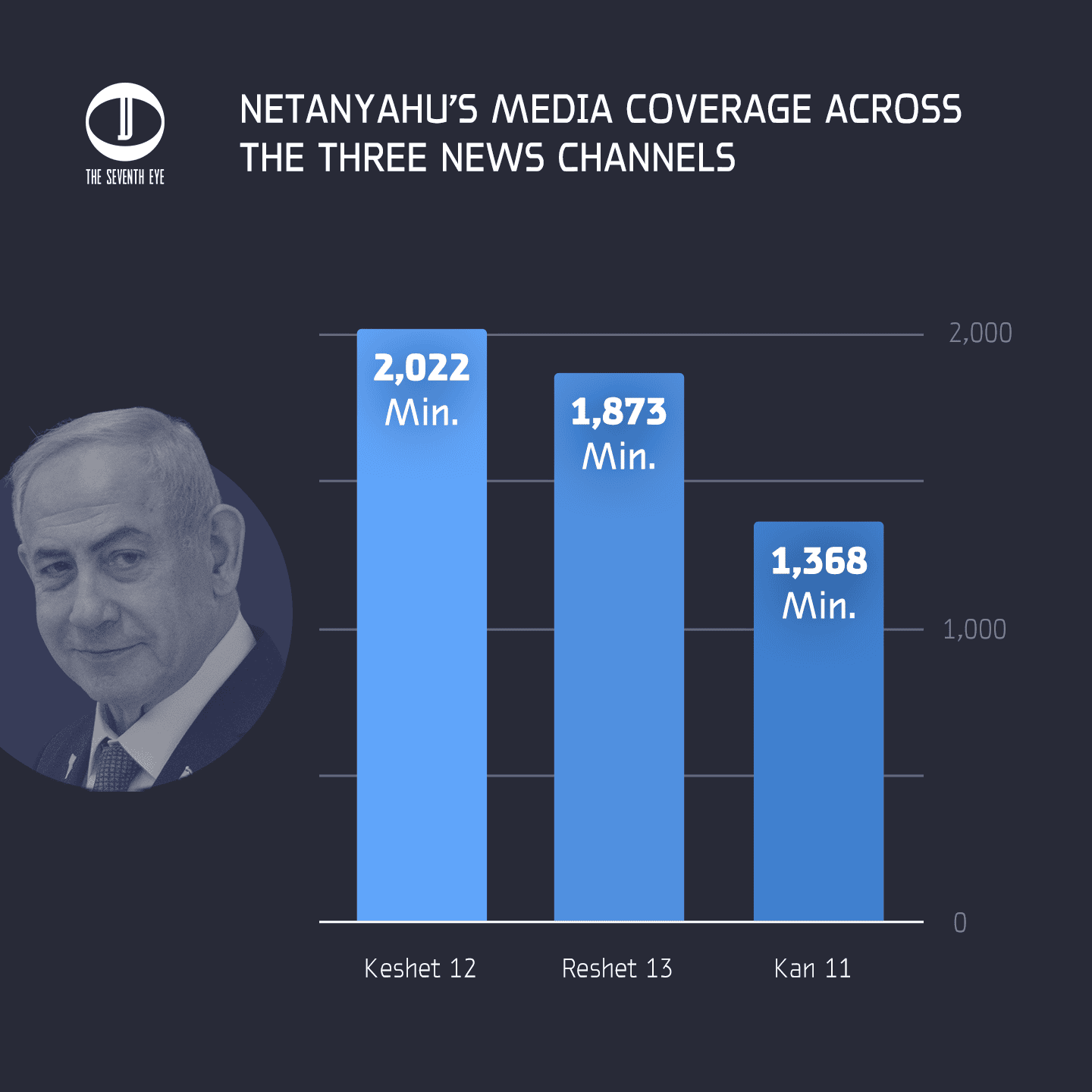
The leading channel on which Netanyahu stars is Keshet 12, with 2,022 minutes of airtime. This figure is inversely proportional to the rising incitement against the channel by Netanyahu and his government, which has increased particularly in recent months. In second place on the Netanyahu coverage chart was Reshet 13 with 1,873 minutes of airtime, and in third place was Kan 11 with 1,368 minutes of airtime.
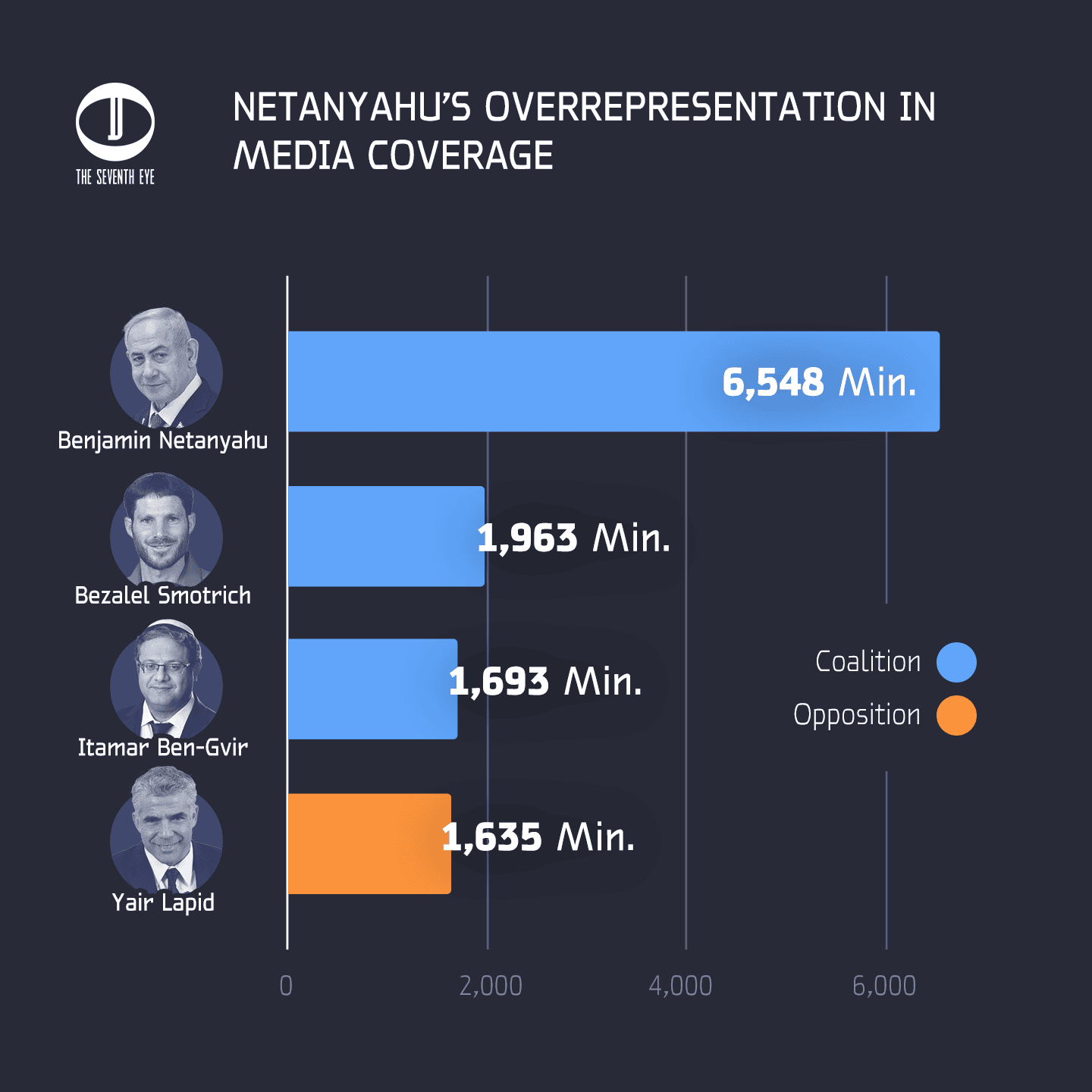
It makes sense that the politician who gets the most media coverage would be the one at the top of the political system, but the gap between Netanyahu's media coverage and that of the rest of the politicians in Israel is enormous. Netanyahu receives 3.5 times more coverage than the elected official in second place in the table (about 250%), and more coverage than the four other politicians with the highest coverage combined.
This figure is even more astonishing considering that Netanyahu has boycotted the Israeli media and has not been interviewed by them for five years. In addition, the vast majority of his statements to the media do not include questions from reporters and yet, until recently, were broadcast in their entirety on prime time news in Israel.
This figure shows that while Netanyahu is boycotting journalists in Israel, attacking them personally, and launching a massive provocation campaign against them, they continue to serve not only his coalition but also him personally.
High exposure: almost exclusive to coalition representatives
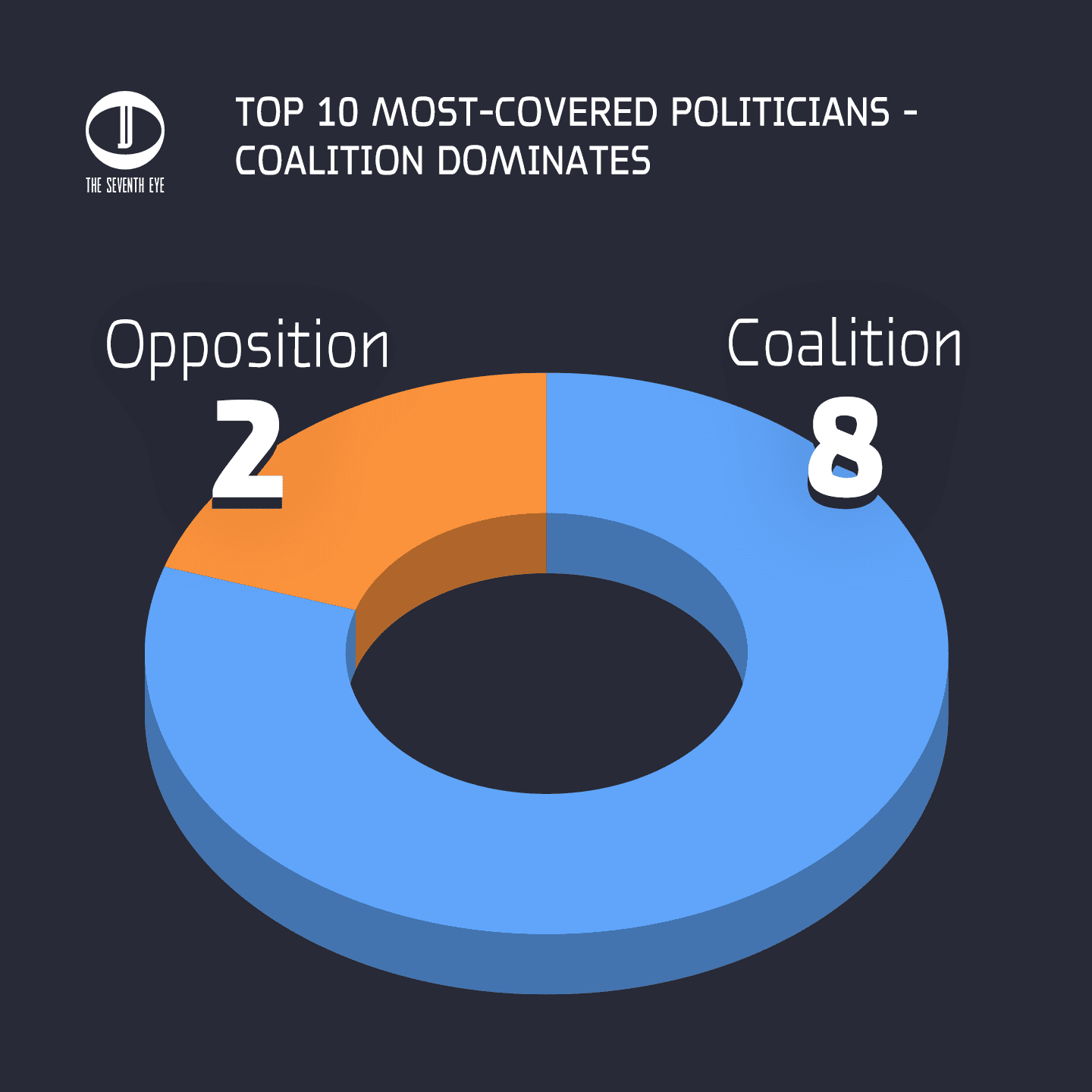
When we continue and examine the data by politicians’ identity, we find that in the top five of the most covered politicians there is only one representative of the opposition: the chairman of the opposition and head of the Yesh Atid party, Yair Lapid. The top ten are joined by only one other representative from the opposition, MK Avigdor Lieberman, chairman of the Yisrael Beitenu party.
In other words, the opposition receives one-fifth of the airtime and coverage that the coalition receives, when examining the ten most outspoken politicians in the media. The politician in second place, after Prime Minister Netanyahu, is Finance Minister Bezalel Smotrich, chair of the Religious Zionist Party, with 1,963 broadcast minutes. Following him in third place is National Security Minister Itamar Ben-Gvir, chair of the Otzma Yehudit Party, with 1,693 broadcast minutes.
It is conceivable that Smotrich and Ben-Gvir receive coverage due to their ministerial positions, but it’s also true that both are identified with a racist and provocative agenda and head extremist Jewish supremacist parties. The powerful media coverage they receive suggests that the Israeli media has completely normalized violent and racist provocation. In this context, it is also interesting to mention that Smotrich and his party are consistently below the threshold in various polls.
As mentioned, in fourth place is MK Yair Lapid with 1,635 broadcast minutes, the only representative from the opposition in the top five of the chart. However, the even more astonishing figure is the identity of the politician in fifth place: Likud MK Moshe Saada, who received 1,027 minutes of airtime, despite not being a minister or a leading MK on the Likud list.
Saada's prominence is a true black eye for the Israeli media: he is a demagogue who spreads disinformation, a politician who is waging a campaign against the law enforcement system after a dubious retirement from his position in the Police Investigations Department, and someone whom the court determined did not tell the truth in sworn testimony and who was blamed by the court for destroying a major criminal case.
The Netanyahu Edition
Another disturbing finding emerges when examining the data broken down by program. This examination found that the coalition always receives significantly greater coverage than the opposition in the main news editions — and this on the three news channels.
On Kan 11 news, the coverage data in the main edition are similar to the average coverage percentages; however, on News 12, coverage of the coalition increases to 72% (compared with an average of 67%) and on News 13 to 74% (compared with an average of 70%).
This finding is particularly disturbing because these programs receive the highest ratings and through them the Israeli public consumes most of its newsworthy information. When this information is not balanced but rather politically biased in one direction, it is not possible to take informed positions on reality and politicians.
No Arabs and No Women
Another huge gap can be identified in the lack of representation of MKs from the Ra'am, Hadash-Ta'al and Balad parties. MK Mansour Abbas, chair of Ra'am, is the Arab representative who receives the most coverage, but he only comes in 26th place among all politicians, with only 481 minutes of airtime (Abbas is also the first politician in the chart to fall below 500 minutes of airtime).
The next Arab representative is MK Ahmad Tibi from the Hadash-Ta'al party, who received 243 minutes of airtime and came in 52nd place. MK Ayman Odeh from the Hadash-Ta'al party received 227 minutes of airtime and came in 56th place in the chart.
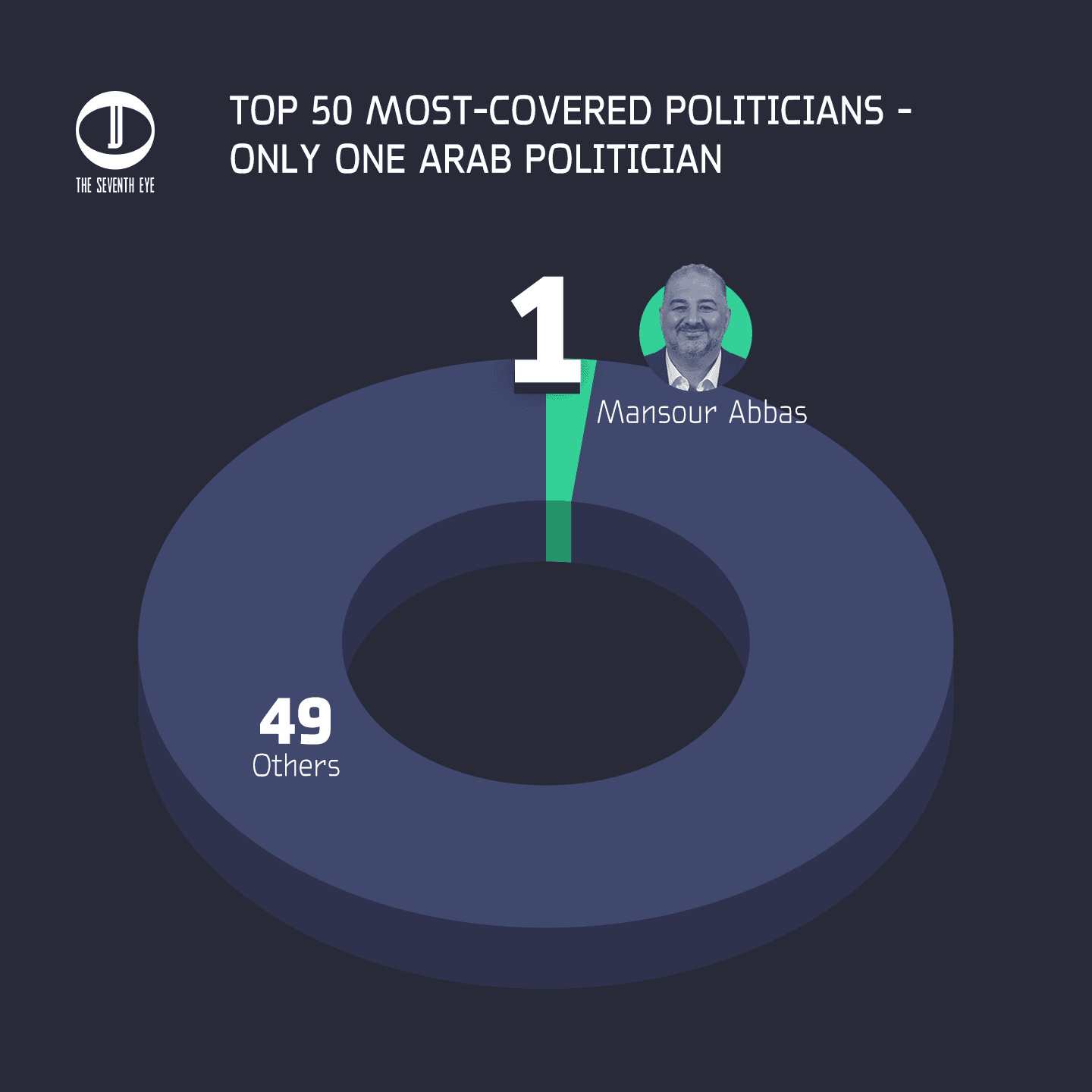
This is a significant and devastating gap, which is even more pronounced against the backdrop of rising crime and violence in Arab society as a whole. Elected Arab officials receive almost no media coverage, and the Israeli viewer is not exposed to their perspective and the issues that concern Arab-Israeli citizens. These findings are also consistent with those of the "Representation Index."
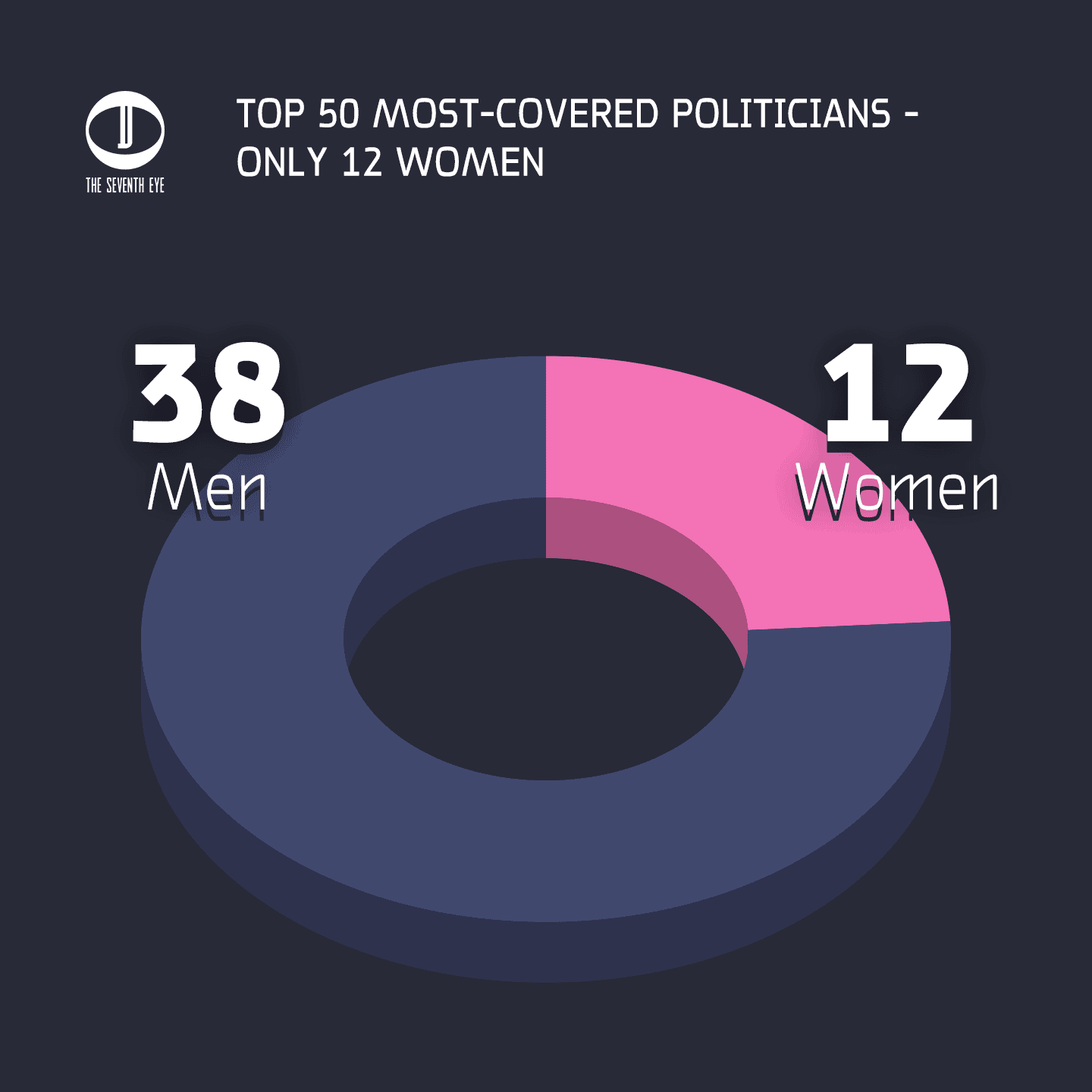
A similar significant gap is found in the degree of coverage male politicians receive compared with the lack of coverage of female politicians. Of the top 50 politicians in the media coverage chart, only 12 are women.
Only one woman made it into the top ten, Likud Transportation Minister Miri Regev, who received 881 minutes of airtime. The next woman on the chart, in 12th place with 742 minutes of airtime, is MK Tally Gotliv. This is also a sad testament to the irresponsibility of the Israeli media, which gives such significant exposure to an outspoken and inflammatory politician who spreads malicious conspiracy theories.
Immediately after MK Gotliv comes the first MK from the opposition, Merav Ben-Ari of Yesh Atid, who received 693 minutes of airtime. The next MK from the opposition, Meirav Cohen, also of Yesh Atid, is only in 31st place on the chart with 436 minutes of airtime. Next is MK and former minister Orit Farkash-Hacohen of Blue and White, with 424 minutes of airtime—half of the coverage Regev received.
The top five female politicians include Regev, Gottliv, Ben-Ari, Gila Gamliel and Galit Distel-Atbaryan: four representatives from the coalition and only one from the opposition. Media coverage status for opposition Knesset members from the Democratic Party is even more dismal: Naama Lazimi and Efrat Rayten come in 39th and 42nd place respectively, with only about 360 minutes of airtime.
Political bias in an election year
An examination of the media coverage of political players therefore reveals a clear bias by the mainstream media to the detriment of the current opposition and in favor of the coalition in general and Prime Minister Netanyahu in particular.
These figures stand in stark contrast to the claims of discrimination by Netanyahu and coalition members and reinforce the claims of opposition members about the lack of political balance — not only in the propaganda channels dedicated to serving the Netanyahu government, but also in the mainstream media.
The significance of such a reality is the perpetuation of the existing political situation and the gutting of the democratic game, certainly when the bias occurs in an election year.
This article was published in Hebrew on April 7, 2026
Translation: Harriet Brown