










The State of Israel maintains that journalists should not be allowed to enter the Gaza Strip to freely report on what is happening there, according to a response the state submitted to the High Court of Justice after a lengthy foot-dragging process: about ten months have passed since the petition was filed.
Since the war began in October 2023, the State of Israel has banned Israeli and foreign journalists from entering the Gaza Strip and reporting independently on what is happening in the area. The Foreign Press Association (FPA) petitioned last September demanding that the state cancel the ban. This was the second petition on the matter, after a previous petition from the early months of the war was rejected due to security considerations.
The petition, filed through attorneys Gilead Sher and Ran Greenwald, against then Defense Minister Yoav Gallant, Southern Command Chief Yaron Finkelman, and Coordinator of Government Activities in the Territories Major General Rassan Alian, argued that "there is paramount importance, especially in areas of increasing tension, for independent and objective coverage conducted openly and transparently, in a reliable and complete manner, in real-time and from first-hand sources, about the events in Gaza and to preserve the public's right to know."
Despite the urgency of the petition, the state requested and received seven extensions for submitting its response, and finally submitted its response only about three weeks ago, on June 20.
"Even at this time, which is characterized by a state of combat in various areas of the Gaza Strip, there is no possibility to allow the entry of journalists (in general, foreign and non-foreign) to the Gaza Strip without escort, and this is for clear security reasons, and particularly due to the risks and implications involved for the fighting and the forces operating in the Gaza Strip (as well as for the journalists themselves)," was written in the response submitted through attorneys Yonatan Nadav and Michal Danieli-Cherni.
The state's response continues to argue that preventing journalists from entering for free coverage of what is happening in the Strip is intended, among other things, to protect the lives of Gazan civilians. So far, according to various estimates, between 50,000 to 100,000 Palestinians have been killed in the Strip, about half of them women and children.
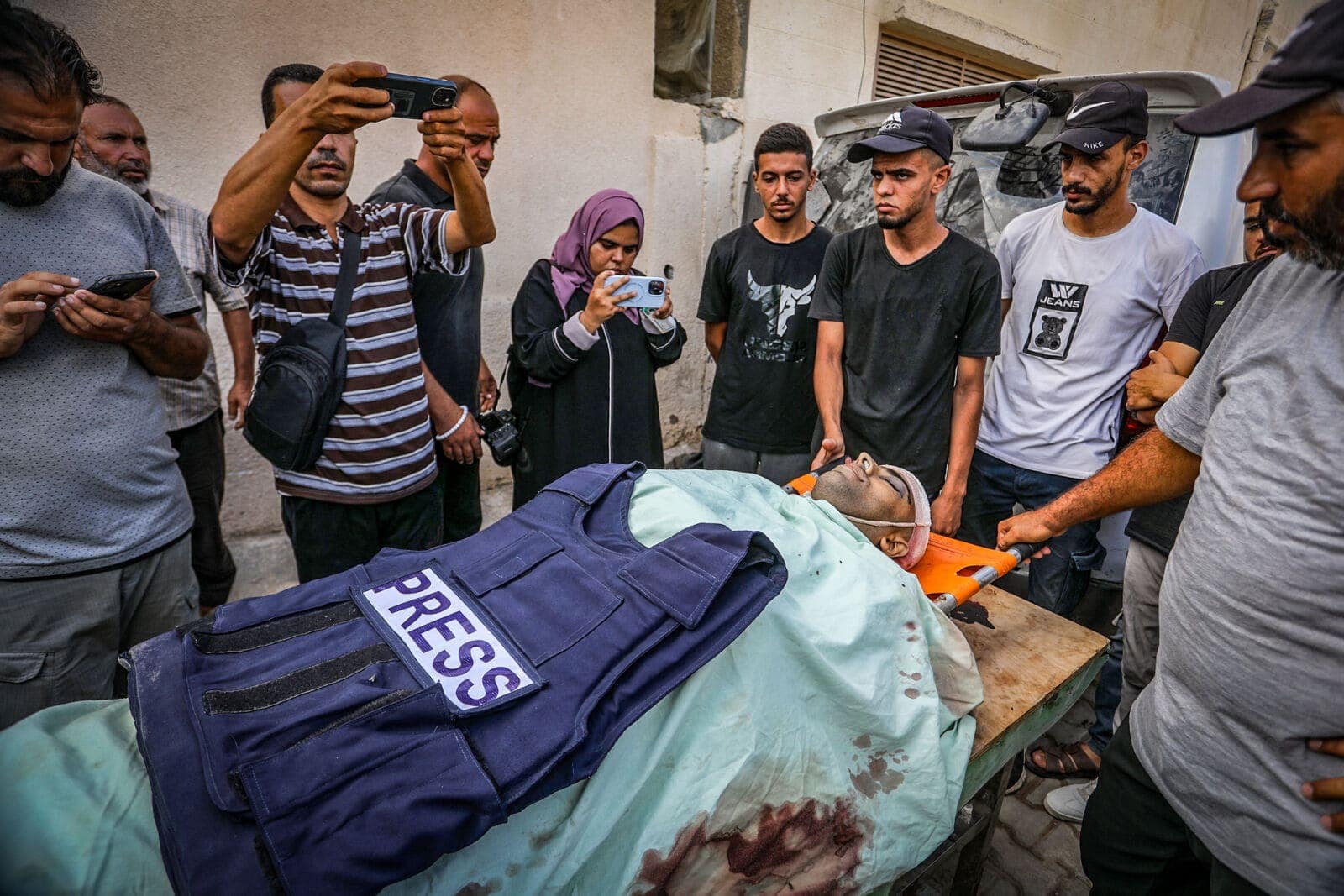
Palestinians mourn near the body of Palestinian journalist Mohammed Abd Rabbo who was killed during an Israeli military operation, outside the Al-Aqsa Hospital in Deir al-Balah, in central Gaza Strip, on August 28, 2024. Photo by Abed Rahim Khatib/Flash90
"In light of the necessity to ensure the safety of forces and civilians in combat areas," the state's response argues, "the movement of journalists in the area requires discretion and control, in order to allow forces and journalists to operate under conditions that are as safe as possible and to avoid unfortunate accidents and incidents that could endanger lives."
According to the state, the crossings between Israel and Gaza in the northern Strip area are not used for human movement but for the passage of goods, for bringing in humanitarian aid. "There is a significant security risk in adapting the Erez East and Erez West crossings for human movement through them, including providing the possibility for free passage of journalists, in view of the clear danger to their lives and to the security of IDF forces," the state argues.
Regarding the Kerem Shalom crossing in the south of the Strip, "it is essentially intended to serve for the inspection and unloading of goods transferred between Israel and the Gaza Strip" and since the beginning of the war has served as a route for bringing humanitarian aid into the Strip, according to the state.
After the conquest of Rafah and the closure of the crossing there, the state's response continues to describe, the Kerem Shalom crossing was adapted "temporarily to serve for human movement in humanitarian and exceptional cases, such as the replacement of international humanitarian teams in the Strip and for the purpose of evacuating patients in complex medical conditions who require medical treatment in a third country." However, the state clarifies that operating the Kerem Shalom crossing during the fighting "involves operational and logistical challenges," and therefore it too is not suitable for journalists' entry.
The state notes that in any case, "there is no recognized legal obligation in the laws of war in international law to allow journalists entry to a combat zone for coverage purposes." It continues to argue that the request to allow independent entry of journalists for media coverage purposes is not part of "Israel's commitment to enable and facilitate the humanitarian response in the Strip."
The state's position is that "there is no place to require it to create mechanisms for the entry of this population [journalists] to the Strip, which would require additional protection and coordination and could divert forces from their critical activity and also endanger them, and which according to the respondents' approach cannot be made possible within the framework of the current security situation."
The FPA committed that the journalists would take responsibility for any harm to them in the Strip, but the state rejects this, arguing that it fears that lawsuits will be filed against it anyway, and also because "the entry of journalists into the intensive combat areas freely is expected to also endanger the lives of residents and IDF forces staying in the area and harm operational activity, among other things due to the risk of exposing the forces and their locations."
As can be seen, here too the state justifies the ban on free coverage of what is happening in the Gaza Strip, among other things, by the need to protect the Palestinian residents of the Strip.
Behind-the-Scenes Contacts Between the Association and the IDF
Alongside the demand to reject the petition, the state notes that throughout the entire period efforts were made to allow journalistic coverage of what is happening in the Strip, with IDF forces' escort. According to the data provided by the state, since the beginning of the Gaza war, 139 foreign correspondents working for 73 media outlets have entered the Strip area with close IDF forces escort. Additionally, according to the state, 40 correspondents working for 32 media outlets entered the northern front with IDF forces into Lebanon on six different occasions. The foreign correspondents, as clarified, were brought in on 37 separate occasions.
In parallel, the state claims, 85 Israeli correspondents entered the Strip in 151 different entries. In some cases, the state notes, priority was given to foreign journalists over Israelis.
"Taking into account the fact that journalists' entries to the Strip with escort, for both Israelis and foreigners alike, are in the category of 'a limited resource' affected by the security needs of the securing forces and the intensive fighting, attention is given, alongside all other relevant considerations, also to the important purpose of updating Israeli society on the progress of the fighting, as a relevant and significant consideration," the state explains in its response. "Therefore, entries for ongoing coverage were made possible in greater quantity for local press directed at the Israeli audience."
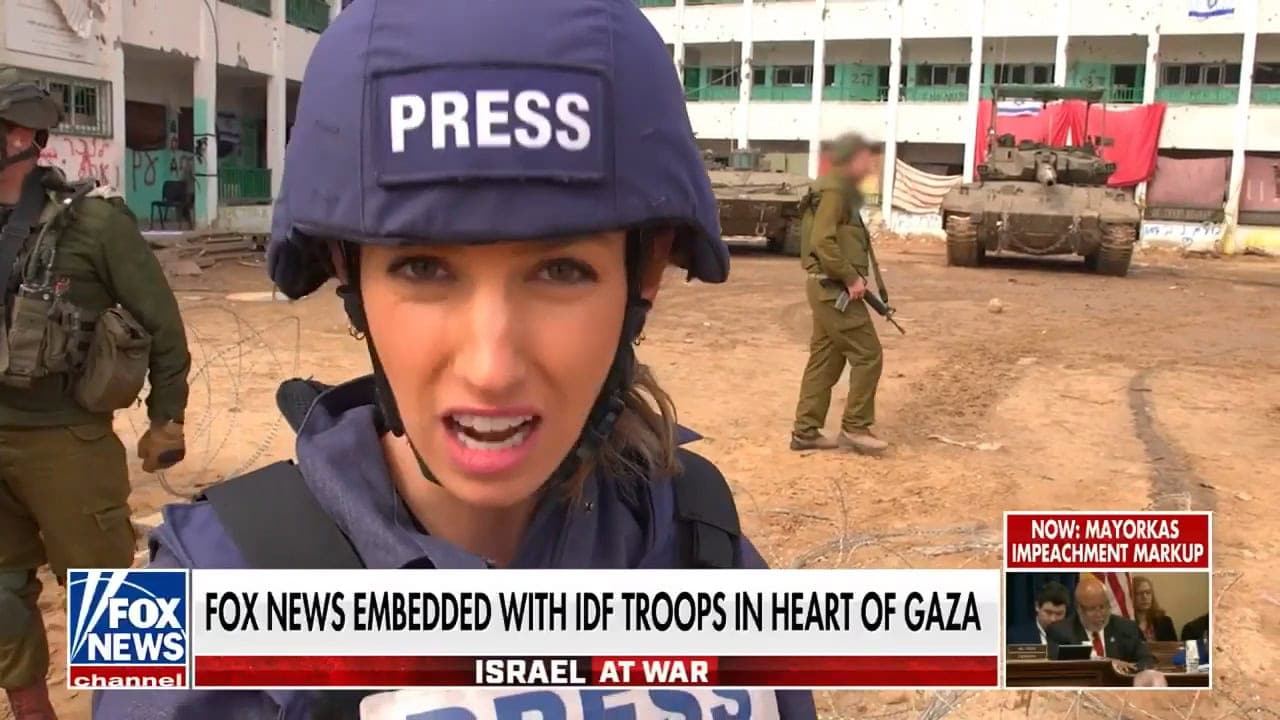
Fox News reporter Alex Hogan in a report "embedded" inside an IDF unit in the Gaza Strip, January 30, 2024 (screenshot)
Additionally, the state reveals in its response that at the end of 2024, a meeting was held between then-IDF Spokesperson Daniel Hagari and FPA Chairwoman Tania Kraemer and her deputy Joe Federman, in which the parties reached an agreement whereby the foreign journalists' organization would submit detailed monthly requests on behalf of correspondents who are interested in entering the Strip with IDF forces escort, and the army would try to prepare accordingly and arrange entry for 10-12 journalists every two weeks.
Although security circumstances did not allow the planned tours to take place at the promised frequency, the state argues that this is a "reasonable policy that balances between the various considerations" and therefore there is no place for judicial intervention.
"The respondents do not take lightly the importance of press freedom and journalistic coverage, particularly during wartime, and this also with regard to foreign correspondents, and that this is a policy that will be examined from time to time and taking into account the security circumstances," the state argues. "However, in the security circumstances currently prevailing, it is not possible to allow free movement of people between Israel and the Gaza Strip and between the Gaza Strip and Israel, and security interests must be prioritized in this context."
The State Continues to Delay
The FPA petition, which as mentioned was filed about ten months ago, was originally scheduled to be heard in April, but the hearing was postponed "due to court calendar constraints." The hearings scheduled for May and subsequently for June were also canceled, partly due to the war against Iran.
Toward setting a new hearing date, the state requested that it not be held in the last days before the summer recess (July 14-23) nor throughout several weeks after the end of the summer recess (September 21-October 10), since the state's legal representative Attorney Nadav has "flight bookings abroad that were ordered long ago, for these dates."
The court accommodated the request and set the hearing for October 23, more than a year after the urgent petition was filed, more than two years since journalists were banned from entering the Gaza Strip.