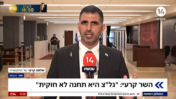










The Economic Affairs Committee of the Knesset set a new date yesterday (23.4) for the discussion on the "Ratings Nationalization Law" proposed by Likud. The meeting is expected to take place on May 13.
The bill, officially titled "Obligation to Present Viewer Data," is designed to achieve political control over ratings measurements, which are a central factor in determining television advertising rates. Additionally, it would require ratings data to be displayed on screen in a way that would benefit Channel 14, which serves Likud Chairman and Prime Minister Benjamin Netanyahu.
The Ratings Committee, the body responsible for measuring ratings and operated by television channels, advertisers, and marketing agencies, previously responded to the bill saying that its technical aspects are completely unfeasible and contradict the laws of statistics. The committee also noted that Putin's Russia is the only place in the world where the state controls viewing data.
Broadcasting bodies, research institutes, and regulatory experts have also sharply criticized the law, warning that it would severely damage public trust, blur the true picture of viewing preferences, and artificially strengthen channels politically aligned with the government.
The bill was submitted by Knesset member Shalom Danino from Likud, though he demonstrated ignorance about its details. Sources familiar with the workings behind the bill said that unlike other private bills backed by Communications Minister Shlomo Karhi, the ratings nationalization law is being pushed by Netanyahu himself. This is despite the fact that a version of the proposal also appeared in the broadcasting law memorandum that Karhi tried to advance in 2023.
The ratings nationalization law is one of two laws that Economic Affairs Committee Chairman, MK David Bitan from Likud, announced he would continue to advance, subject to amendments. Bitan made these comments at the committee meeting on January 15, when he announced he would not advance four private bills designed to harm public broadcasting, which were submitted by Likud fringe members but promoted by Minister Karhi. Since then, Karhi has been waging a war of insults and slander against Bitan.
Setting the date for advancing the law surprised several involved parties, including representatives of media organizations and measurement bodies. In conversation with "The Seventh Eye," some of those involved claimed they were not updated in advance about the meeting, and some reported receiving an invitation during the day but said it had not been coordinated with them beforehand.
MK Danino placed the bill on the Knesset table on July 8, 2024, and in a discussion this January claimed he had met with a series of stakeholders affected by the bill: "We agreed that we would formulate a common platform, with agreements."
The various parties now say there was no indication that the professional and legal "difficulties," to put it mildly, regarding the bill have been resolved.