
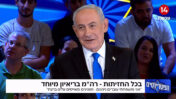




Recently, Dr. Dori Gold, former Director General of the Foreign Ministry, Israeli Ambassador to the UN and advisor to Prime Minister Netanyahu, died. On July 20, 2016, as Director General of the Foreign Ministry, Gold signed an agreement with the Chief of Staff of the President of Guinea, Ibrahim Khalil Kaba, to renew diplomatic relations between the countries. An opportunity to remember the dirty part of Israeli diplomacy, and the cases in which it also becomes farce.
A 2016 Foreign Ministry press release stated that relations between Israel and the African country had been renewed after 49 years, and Dr. Gold added that "Guinea and Israel are countries with a long-standing friendship, which existed even in the years when diplomatic relations did not exist," without specifying what the content of the relationship was during those years.
Guinea was the first country on the African continent to sever its relations with the State of Israel following the Six-Day War (1967). Most African countries joined it in another wave of severing relations following the Yom Kippur War (1973). With the signing of the peace treaty with Egypt and the completion of the withdrawal from the Sinai Peninsula in 1982, the State of Israel worked to renew its relations with the dictatorial regimes across the African continent.
In exchange for the renewal of relations, Israel has typically offered a package of arms shipments and military or police training, designed to ensure regime stability. According to the Foreign Ministry files on relations with Guinea, which were recently made public, in the case of Guinea, the Israeli "insurance package" actually contributed to the opposite result.
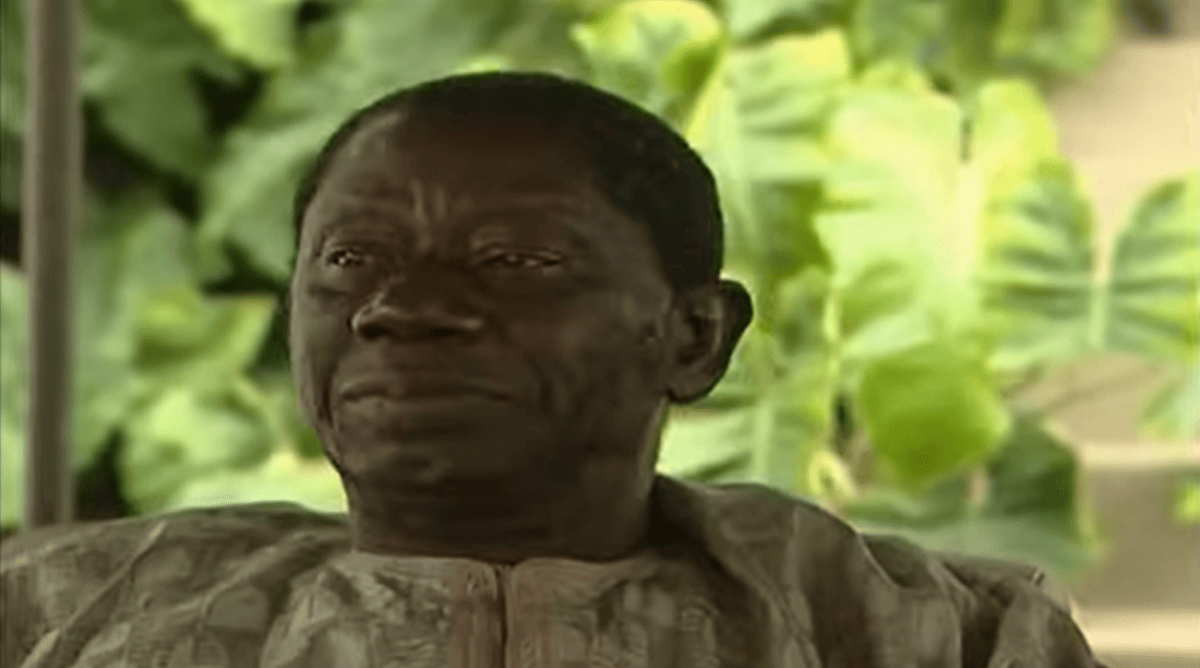
On March 26, 1984, the dictator who had ruled Guinea for 26 years, Ahmed Sékou Touré, died. A week later, a military coup took place and a junta was established under the leadership of Colonel Lansana Conté, who ruled the country until his death in 2008.
In a telegram dated April 8, 1984, sent to the Foreign Ministry by the head of the interests section at the Israeli embassy in Nairobi (Kenya), Amos Shtibel, on the subject of the implications of the coup in Guinea, he wrote that "the trend of military regimes on the continent gives Israel, in a limited time frame, comparative advantages and enables the creation of new and different points of common interests... The key question is whether we are prepared accordingly to take advantage of the opportunity and grab the bull by the horns?"
In July 1984, an Israeli delegation arrived in Guinea and met with Colonel Conté, who agreed in principle to appoint a representative to oversee Israeli interests in the capital, Conakry, in exchange for security assistance. Israel saw the importance of renewing relations because Guinea is a Muslim country rich in natural resources.
In August 1984, a Guinean delegation visited Israel to coordinate security assistance, meeting with Prime Minister Yitzhak Shamir, representatives of the police, Border Police, and Mossad. In September, another Israeli delegation arrived in Conakry, including representatives of the Mossad and Border Police, and finalized the dates of the security courses and the list of Guineans who would participate in them.
Colonel Conté explained to the Israelis that "a condition for rebuilding Guinea is that peace and order prevail within the country." According to reports prepared on the delegations' visits, it was agreed that Israeli assistance would be provided in establishing and training a "special intervention unit of approximately 90 people," on the grounds that the new regime "must first take all measures to stabilize its rule and prevent any possibility of challenges against it that would trigger a counter-coup."
The Israeli interests officer, Haim Harari, arrived in Conakry in December 1984, but the junta delayed approving his appointment due to concerns about the Arab countries response, until in June 1985 the Foreign Ministry in Jerusalem decided to remove him from there. By the time Harari left, and even though Colonel Conté had not kept his promise and had not approved his appointment, Israel wanted to establish "facts on the ground" and therefore chose to assist in establishing the special intervention unit anyway.
In early January 1985, a team of Border Guard instructors arrived in Guinea. In a report prepared by the head of the team of instructors on March 2, 1985, he reported that "the training is being carried out without any problems and according to schedule," the junta had provided "ammunition, shooting targets, weapons, pistols, police batons and gas masks," and also established "two standard shooting ranges according to our concepts." The Guinean police commissioner was present at one platoon's "fire drill" and the other platoon's "demonstration of dispersal of protests."
On July 4, 1985, a failed coup attempt took place in Guinea, during which about 20 people were killed and about 200 injured. The rebels even managed to take over the radio station and falsely announce the ouster of Colonel Conté. Following the coup attempt, mass arrests were made, the detainees were tortured, and some were executed or disappeared.
On July 23, the Foreign Ministry sent Harari to Conakry to conduct a "mapping of the coup's top brass and the role played by the people we trained." It turned out that some of them had indeed participated in the failed coup attempt. In a meeting with Colonel Conté on July 30, an Israeli representative admitted this and said that "some of the people we trained participated in the coup, and this is a serious matter."
In a telegram dated January 24, 1986, sent by a Mossad representative to the Foreign Ministry, it was written that "the special intervention unit that was trained at the time by the Border Police was completely disbanded after its commander was among the associates of the leader of the failed coup."
The remaining documents on relations with Guinea until the renewal of relations in 2016, are still confidential.