



The article before you was written in November 2023, about a month after the October 7 massacre. Sadly, it has only become more relevant.
More than a year after the outbreak of the war and the invasion of Gaza, the phenomena described here regarding the one-sided conduct and self-censorship of Israeli media, and the total disregard for the price on the Palestinian side, have become the most prominent characteristics of the journalistic coverage of the war on the Israeli side and vis-à-vis local public opinion.
The events of the war in Gaza and their coverage in the Israeli media expose the challenges and complexities of mainstream media's role during wartime, as well as the cost borne by citizens and public opinion due to its partial and one-sided reporting.
===
Since the horrific attacks in the Gaza envelope and the subsequent invasion of Gaza, the IDF Spokesperson's Unit, led by Daniel Hagari, has been highly visible and successful in its operations. The IDF spokesperson appears nightly on mainstream tv channels and new broadcasts, providing a comprehensive, fluent daily situation report, answering questions from the press, and instilling confidence in the public. His unit IDF spokesman-soldiers accompany forces embedded at the front lines, documenting the invasion and its outcomes, and disseminating information that reinforces the fighting spirit and the public’s belief in the IDF.
Israeli news outlets eagerly embraced the military spokesperson, seizing upon statements and documentation of the invasion’s successes, the heroism of the soldiers, and the IDF's humane and moral treatment of Gaza’s civilians. Traumatized by the national disaster and the relentless attacks, Israeli viewers found comfort in images and videos of soldiers fighting and the intense strikes in Gaza.
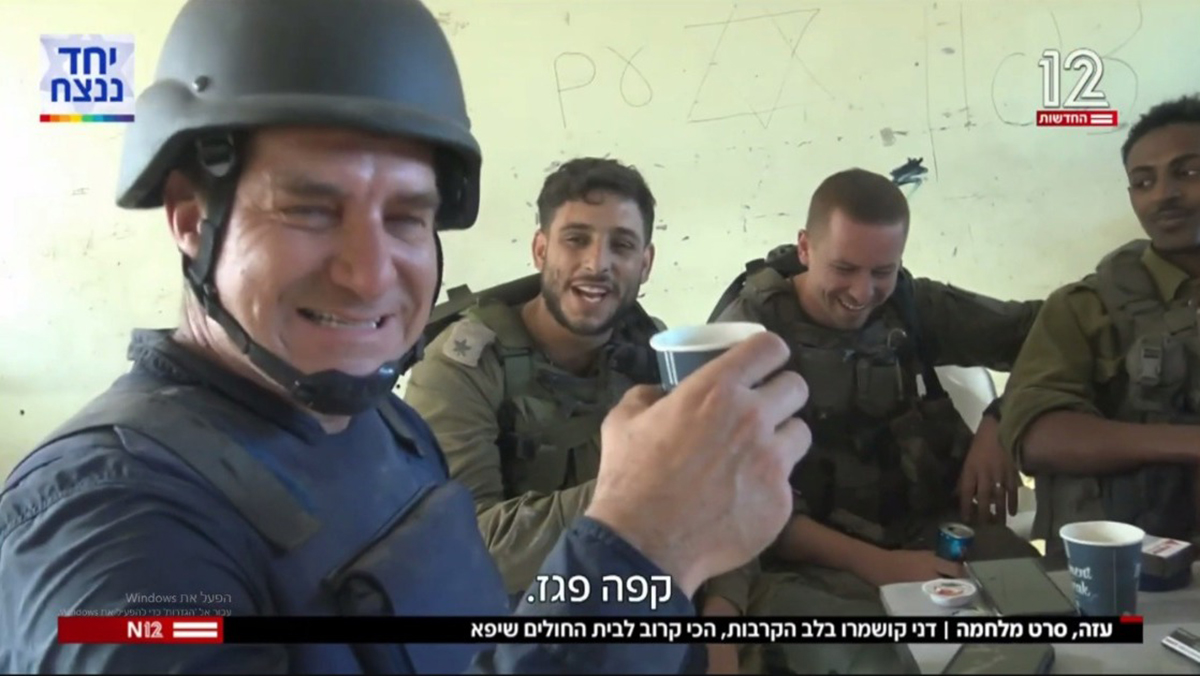
The IDF spokesperson is doing their job: to represent the Israeli army and communicate its messages. The problem begins when Israeli journalists mistake this as their job as well. The truth is that the media's role is the opposite. Journalists are not spokespeople; they are journalists. A spokesperson’s sole interest lies in their client, while a journalist’s sole interest lies in the public good.
This confusion is not new; it has always accompanied journalism. Some might say it is the ongoing tension between a journalist's identity as a citizen and as a journalist, a struggle between patriotic national loyalty and staying faithful to the truth. But that’s a mistake. As Israeli history has shown time and time again, this confusion enables the flawed conceptions that keep exploding in our faces. For a journalist being loyal to the truth is the ultimate patriotic and civic duty.
The IDF is a vital body for every Israeli citizen, like the health or welfare systems, or like national infrastructures such as the electric company or desalination plants. Each of these bodies has a spokesperson to represent it and manage its image. The job of the press is to critically examine the functioning of these important bodies, find what the spokesperson and the system wants to hide and expose failures and wrongdoing.
Journalist are supposed to do this not because they are against the IDF, the healthcare system, or the electric company - but because they are for them. State institutions, including the IDF, need critical journalism just as much as they need a spokesperson. And truth is, they need it much more. Without an inquisitive and critical eye, these important institutions will become corrupt. This isn’t rocket science; it’s just plain logic.
However, when it comes to the IDF, especially during wartime, the fog of war also clouds this common sense. Criticism of the IDF, or even factual reporting about the realities of war, is seen as anti-patriotic and invites a barrage of abuse and insults on social media. The direct loser is the Israeli public, which is denied the full picture of the war. This eventually also damages the war effort itself.
For example, it was reported that military correspondents censor themselves from reporting widespread incidents of friendly fire among IDF forces in Gaza. When issues such as friendly fire or accidents are hidden, so is the treatment of them. Another phenomenon is the concealment of information on friendly fire incidents against civilians and soldiers on the October 7th massacre events. When reality is not described as it is, it is easier for the enemy to spread false theories that deny the Hamas massacre or obscure the truth.
Another example is the near-total neglect in the Israeli media regarding the cost of the war for the Palestinians in Gaza and its implications on the fate of the hostages. The media dutifully disseminates material provided by the IDF spokesperson, images of victory, and the destruction of Hamas symbols of authority in Gaza, or of tanks and soldiers advancing through ruins. The civilians who live there are almost invisible to the Israeli media consumer. They appear either as the faces of Hamas commanders who were eliminated, or as people being helped by IDF soldiers to escape while waving white flags.
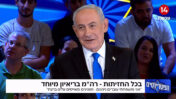
The Israeli media fears accusations of disloyalty and lack of patriotism and censors it self. Even those who believe Hamas is solely responsible for the situation of Gaza residents need to know exactly what that situation is. The absurdity is reached in places like Channel 14, which constantly presents the number of fatalities in Gaza, many of whom are uninvolved civilians (for example, children, who make up nearly half of the population of the Gaza Strip), and lumps them all together under the label of "terrorists".
Viewers thus receive a false picture of both the civilian reality in Gaza and the military campaign itself. But not only Channel 14; also Israeli news channels and websites, except for "Haaretz," hide the true reality in Gaza and are creating another false conception, as if we have not learned anything from October 6, 1973 to October 7, 2023.
Another result of the Israeli media's voluntary censorship is blindness to international public opinion. While here in Israel, we get a sanitized and one-sided image, the social networks and news channels worldwide receive and disseminate the other side of the story. Anyone watching any foreign news channel or browsing any non-Israeli news site will see the severe humanitarian cost of this war. Thousands of civilian casualties, women and infants, the elderly and the disabled fleeing for their lives, or piled in body bags.
The international media reports not only on the number of dead, injured, and refugees in Gaza, but also on the faces, names, and personal stories of the thousands of people and families whose lives have been destroyed along with the neighborhoods and towns in the north and central Gaza Strip that Hamas has turned into a terrorist infrastructure.
The vast gap between how the war and its outcomes are reflected in global discourse and public opinion, and how they are perceived by the Israeli public, is not only the product of antisemitism, anti-Israel sentiment, or progressive extremism. It is also the result of a huge difference between the information and images that the media around the world presents to its viewers about the destruction and heavy humanitarian cost paid by the civilians of Gaza, and the near-total avoidance of the Israeli media to address this.
Another effect of the Israeli media's turning a blind eye concerns the public struggle regarding the hostages in Gaza. As weeks and months pass since the Black Sabbath and the kidnapping of 240 Israelis, the public discussion about a prisoner exchange deal and the IDF’s role in returning them is growing. The media, which focuses mainly on the IDF spokesperson’s reports and the correspondents who accompany him, and hardly gives any space to the suffering and the humanitarian disaster unfolding in Gaza, feeds this public discourse with partial and incomplete information.
In a reality where public discourse and pressure have significance in the decision-making process, and there is a growing controversy about achieving a hostage exchange deal and the impact of the fighting in Gaza on it (for example, the demand for a cessation of hostilities), complete reporting on the situation in Gaza is also in the interest of the citizens here. To form an opinion and understand how to demand the return of the hostages, it is important that we receive from the media a complete and complex picture of the price this war is exacting on the other side as well, and not just the echo of the IDF spokesperson.
This concealment, or if you like, this media repression, is problematic not only in the basic human and moral sense that is usually attributed in wartime only to the good-for-nothing leftists in the best case, or to terrorist supporters and traitors in the worst. Understanding the situation and the price that the invasion and the war are exacting on Gaza - justified, necessary, and right as it may be - is a vital interest of the state's citizens and a basic professional obligation of the media.