












In recent months, it has become nearly impossible to escape the flood of strange, awkward-looking AI-generated images flooding social media platforms worldwide.
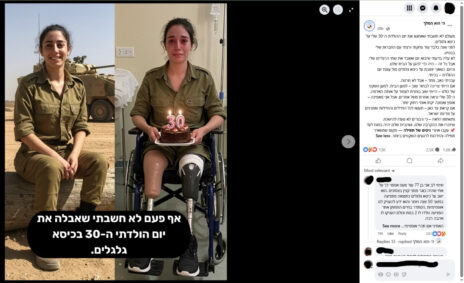
Among the most widely shared examples in Israeli Facebook groups is an image of a soldier in uniform on his wedding day, smiling and waving - despite both legs being replaced with prosthetic limbs. Another depicts a sobbing young female soldier in a wheelchair, also with prosthetic legs, holding a birthday cake with candles shaped like the number 30.
Additional images feature emotional soldiers in the delivery room, cradling newborn babies, or tired elderly men resting after a long day of labor, often accompanied by captions pleading for a blessing or some words of encouragement in the comments.
These images are not merely harmless curiosities; they represent a growing trend of AI-driven content engineered to elicit emotional reactions, exploit empathy, and maximize engagement through fabricated narratives.
The images are realistic yet disturbing at the same time. The characters in the images look very local and familiar, but there is something alienating and artificial about them. The accompanying text usually appears as a desperate and transparent attempt to receive comments or shares from the group followers. It’s an unprecedented AI social media engagement machine and nobody is about to stop it.
Yet while most of us laugh at this phenomenon or wonder what's behind it, these images are harvesting thousands of likes and shares from real people on Facebook groups and other platforms, some of them in very popular and legitimate groups, while being promoted by the platform algorithms and recommendation engines.
The interests and motivations behind these images remain opaque - but the accompanying damages can certainly already be anticipated.
This global phenomenon of synthetic viral and effective AI images tailored for social media platforms has been dubbed "AI SLOP". Similar to spam that flooded our email after we adopted it as a basic work tool, it now threatens to flood social networks and the entire internet with visual and affectional garbage.
Fake images created with artificial intelligence to collect information from surfers
The accessibility and ease of use of creating synthetic realistic images with AI tools, combined with platform algorithms' bias toward emotion-evoking and tear-jerking content, have made them a powerful tool for those seeking to build targeted audiences for future monetization, targeted distribution—or effectively spread fraud and disinformation.
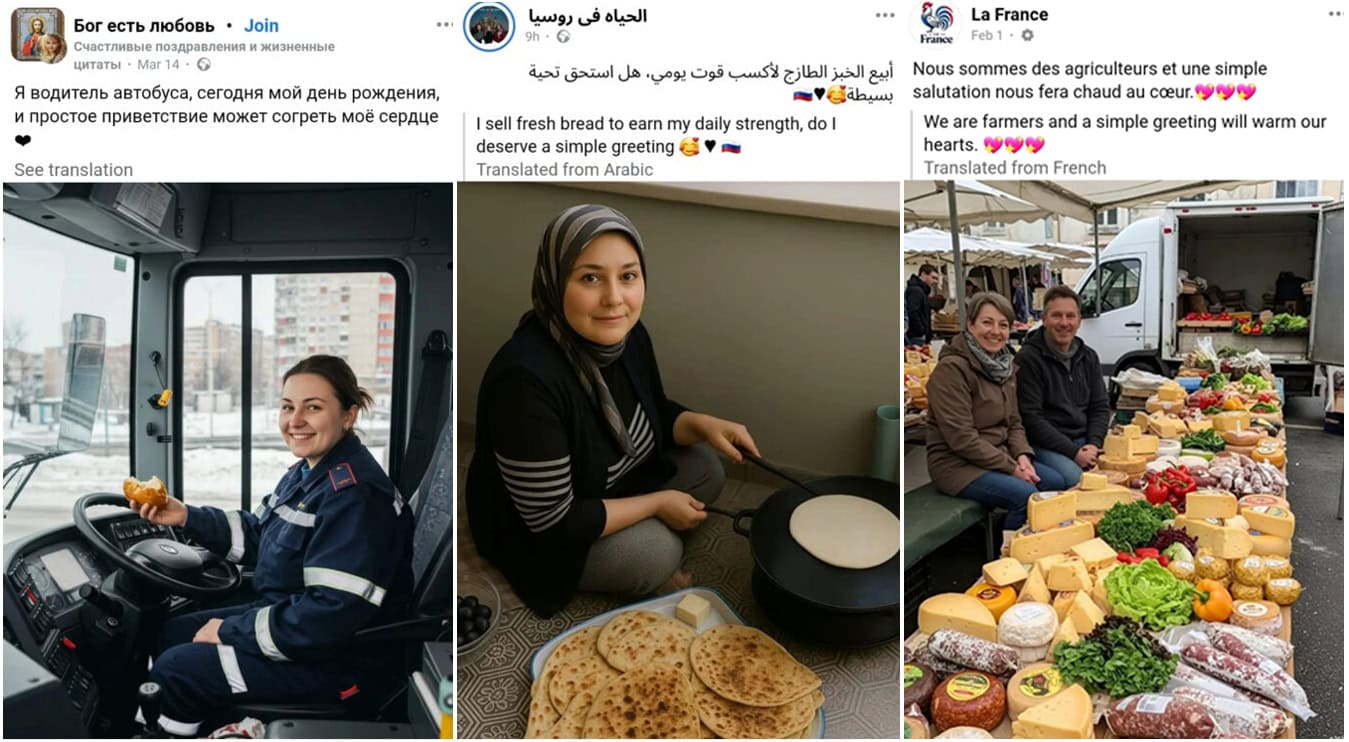
The faces and themes in these images change between countries and languages, but the principle remains the same. In the US, Spain or Argentina, its images of cleaning workers, firefighters, and hard-working doctors asking for "a simple blessing"; in France, these would be local rural farmers selling cheese, wine, and agricultural products at local traditional markets; on Arabic-speaking networks, it would be a head-covered conservative mother making pita-bread on the floor; while in cold Russia, we'd see an industrious truck driver heading out to work early on a snowy morning.
In the wake of the ongoing war in Gaza many of these images in Israel are military-related, evoking nationalistic sentiment and compassion.
Fake images created with artificial intelligence to collect information from surfers
Different faces, different contexts, and changing languages - with the same goal: to extract engagement and data from users in different countries, in order to identify and cultivate defined target audiences and turn them into convenient revenue and targets for advertisers or agenda-driven entities under the auspices of platforms’ algorithms.
They are being spread through diverse pages and groups - ranging from religious christian and conservative groups, through football or sports fan groups and nationalistic-centered theme groups, to popular viral meme pages. What they all share is the popularity and engagement they attract and their emotional focus. However transparent and strange they may seem - people around the world think it's completely real and share frantically.
In Israel, most of these images appeared in very specific groups - for example, those dedicated to sought-after rabbis and righteous figures, groups dedicated to daily Torah lessons, or groups of popular singers. There they gain popularity and engagement and sometimes serve as a springboard for collecting personal details, fundraising, or joining WhatsApp groups collecting phone numbers.
The connection between synthetic images, patriotic or religious narratives, and the emotion-driven algorithms of platforms makes these images a very powerful data collection and audience segmentation machine. The uses that can be made of them are varied and sometimes harmful and even criminal.
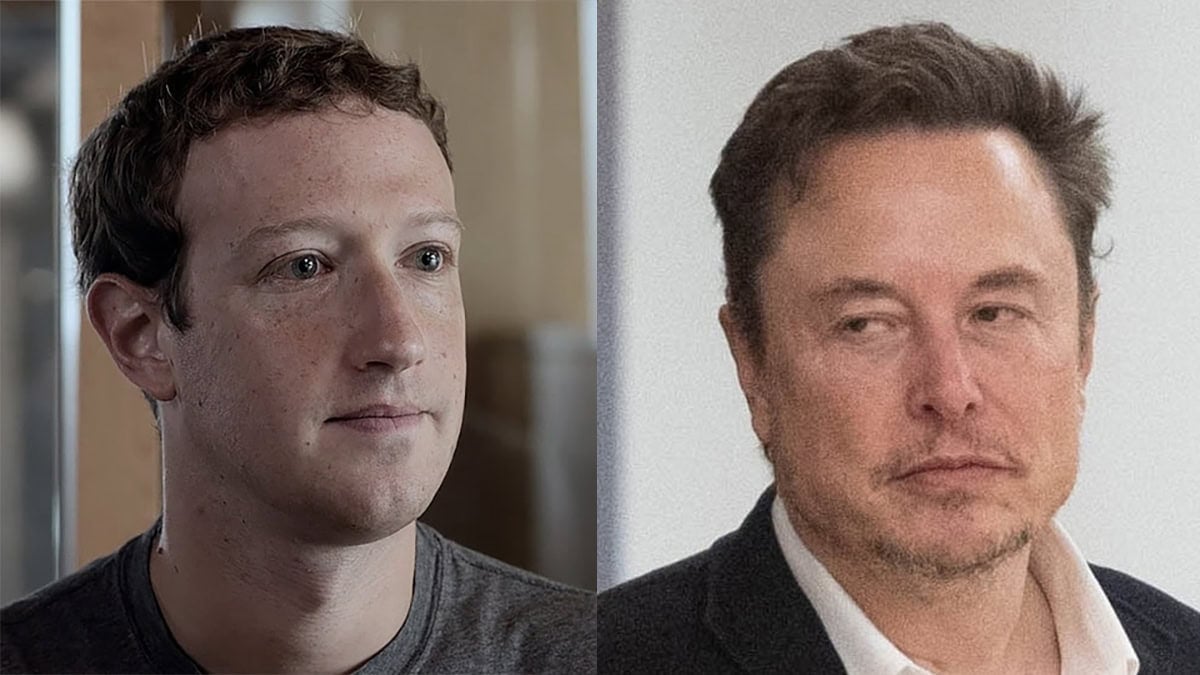
Multi-billionaires Elon Musk (right), who controls Twitter (X), and Mark Zuckerberg, who controls Facebook and Instagram (Photos: Screenshot and Kobi Gideon, GPO)
This mechanism can be very effective for advertisers and lead hunters, of course - but also for scammers who exploit the local and national context of the war and the bias of social networks to promote and recommend emotion-evoking content to squeeze likes, comments, and shares and gain significant exposure.
When this also includes fictitious fundraising or collecting phone numbers through transfer to closed WhatsApp groups it can be worth a lot of money.
Against the backdrop of elections expected to happen in Israel and other countries in the coming year (sooner or later), it's easy to understand that these viral tools and the creation of engagement through synthetic emotion-evoking images could become a very powerful weapon in the war for consciousness and public political discourse. It also falls into the hands of scammers who exploit the compassion and emotion of elderly or traditional populations like ripe fruit.
But beyond this, the massive distribution and flooding of these generative and emotional images is also a real epistemological threat - a direct assault on our ability to believe what we see and on the weight of truth and facts on social media.
As the platforms become saturated with such images and texts, our ability to believe what we see will gradually erode until we simply don't believe anything. In a short time, we may become a society where it's impossible to conduct discussion or public debate on any topic because there are no facts or visual evidence that can be agreed upon.
The current hunger and humanitarian crisis in Gaza and the implications of the war in general are good proof of this - even the worst and most difficult images that were checked and verified by journalists and eyewitnesses have become a subject of political and factional confrontation for many Israelis who refuse to confront the gravity of the situation.
Verified visual testimonies from disaster and conflict areas are gradually losing their power to convince and serve as a basis for discussion and decision making.
Those who should take responsibility for this story are, of course, also - and perhaps primarily - the platforms. Automatic tools that can assess whether an image is generated by AI creation are improving rapidly. Combined with the obvious and emotion-driven captions, this shouldn't be too complicated a task for moderation and flagging.
Meta apparently doesn't want to hear about it, and there's currently no protection or friction mechanism on the platform that alerts or warns users when an image is probably synthetic. Actually the opposite is true, in practice the platform algorithm takes an active and proactive role in distributing and recommending these fake images and amplifying their reach.
What currently stops platforms from protecting users is not AI technology, but human policy. Decisions made by managers and lawyers. The unwillingness to take responsibility for the content that the platform promotes and its social and political role.
This plays into the hands of scammers and manipulators, it will harm the purity and integrity of elections and basic principles of any democracy in Israel and elsewhere - and it will primarily harm the ability to conduct proper public discourse.
Zuckerberg, Mus and their ilk currently prefer to close their eyes and not take responsibility for this slop and synthetic garbage, until it hurts their revenue - or until the whole of society pays the price.
Edan Ring is a communication lecturer and researcher, VP of Community and Society at the Israel Internet Association
The Article was first published in Hebrew on August 18.